
The Soul Behind The Flame

Turns Out, Eggplant and Trauma Cook the Same Way
Those who know me know that I have a deep love for charred food. Since the dawn of cooking with fire, humanity has been trying to master it. I’m not talking about acrid, burnt food just overcooked and forgotten. I’m talking about intentional char. A dish where fire becomes an ingredient. One dish stands out as one of the hardest to cook correctly but we’ll get to that.
First, let’s talk about something that might seem unrelated: mental health.
Sounds crazy, right? That cooking could help your mental health? For years I heard chefs say, “Cooking saved my life.”And I didn’t get it. I used to think, How the hell can a career with long-ass hours, no weekends, and barely a personal life actually save someone? But stick with me.
There’s nothing more primal than cooking over open fire. And I don’t mean turning on your gas range, lighting your propane smoker, or plugging in your pellet grill. I mean real, open-flame, out-of-your-control fire the kind that demands total presence. The kind that doesn’t give second chances.
Cooks those of us who live in this chaos we are wired differently. We’re constantly under pressure: prep lists, tickets, labor cuts, payroll, inventory, managing staff, managing ourselves. The restaurant industry leads in addiction and substance abuse. So again, how does cooking save a life?
I’ve been doing this for over 30 years. I can tell you this craft demands your full attention. Every second. Because if you’re not present, you’ll get burned literally and figuratively. I’ve seen horrific accidents. I once saw a prep cook lose his footing and catch himself elbow-deep in 350-degree oil. I had to rip a red-hot sauté pan out of a coworker’s hand once because she grabbed the handle without a towel. These are reminders: the kitchen doesn’t care if you’re distracted.
So, when my friends in recovery say, “Cooking saved me,” I finally get it.
For many, the kitchen becomes a place of focus, of purpose, of identity. It forces you to be present. To care. It’s like that fortune cookie I once got: “Choose a job that feels like a hobby, and you’ll never work a day in your life.” Cooking gave me purpose. It still does. And serving others? That’s sacred. Feeding people really feeding them isn’t just transactional. It’s deeply human.
After Bourdain’s death, I realized I should’ve never stopped talking about my own suicide attempt. Cooking taught me that we all need to feel to exist fully. Security and nourishment are the most basic of human needs. And sometimes, all it takes is a hot meal to remind someone they’re not alone.
When Hurricane Milton hit, our development got wrecked. People were without power, without food. I had a generator. I had heat. So I fed my neighbors. Simple hot meals but they were so grateful. They still thank me. And that’s when it really clicked: this is how cooking saves people.
And now, let’s go back to that dish I mentioned.
Baba Ghanoush.
Let’s talk about eggplant and fire.
Cooking with open flame brings out deep, complex layers. Eggplant, when charred correctly, is magic. I throw it over charcoal until the skin is ash-gray. I add some wood for smoke. The second that eggplant hits the heat, you hear that sizzle that life-giving hiss. Dr. Frankeggplantstein is alive.
The skin blackens, splitting open, steam bursting out. The “meat” inside begins to transform, trapping smoke and flavor. That flesh soaks in everything. It becomes creamy, smoky, rich. If done right, it’s one of the sexiest bites you’ll ever taste.
And here’s the metaphor:
We are all eggplants.
No, seriously stay with me. Eggplants start as seeds. They need sun, water, nurture. They need to be cut from the vine before they reach us. But inside? They carry bitterness specifically, a compound called solanine. If not treated right, eggplants taste bitter. Just like life.
We all have moments that leave us with “a bad taste in our mouths.” A breakup. A betrayal. A fall. Like the first time you crashed your bike as a kid scuffed knees and hurt pride. You wanted to quit. But someone your parent, your coach, your friend told you to get back on.
That’s life. We crash. We burn. We char. But we also rise.
Some chefs salt eggplant first, pulling out that bitterness. Just a small act, and the transformation is stunning. That’s what life does to us. Every experience, good or bad pulls a little bitterness out and adds something new in its place.
Me? I prefer the char. That smoky, seductive, soulful flavor that only comes from standing in the fire. It’s deeper than roasting. More primal than grilling. If you do it right, it transforms every thing without changing much at all.
We, too, transform with age. We get seasoned. We get scarred. We learn. We mature. Like charred eggplant, we develop complexity and depth. And like cooking with fire, we can’t always control the flame but we can learn to dance with it.
And maybe just maybe, that’s how cooking saves us.
Leftovers Taught Me More About Life Than Any Therapist Ever Could
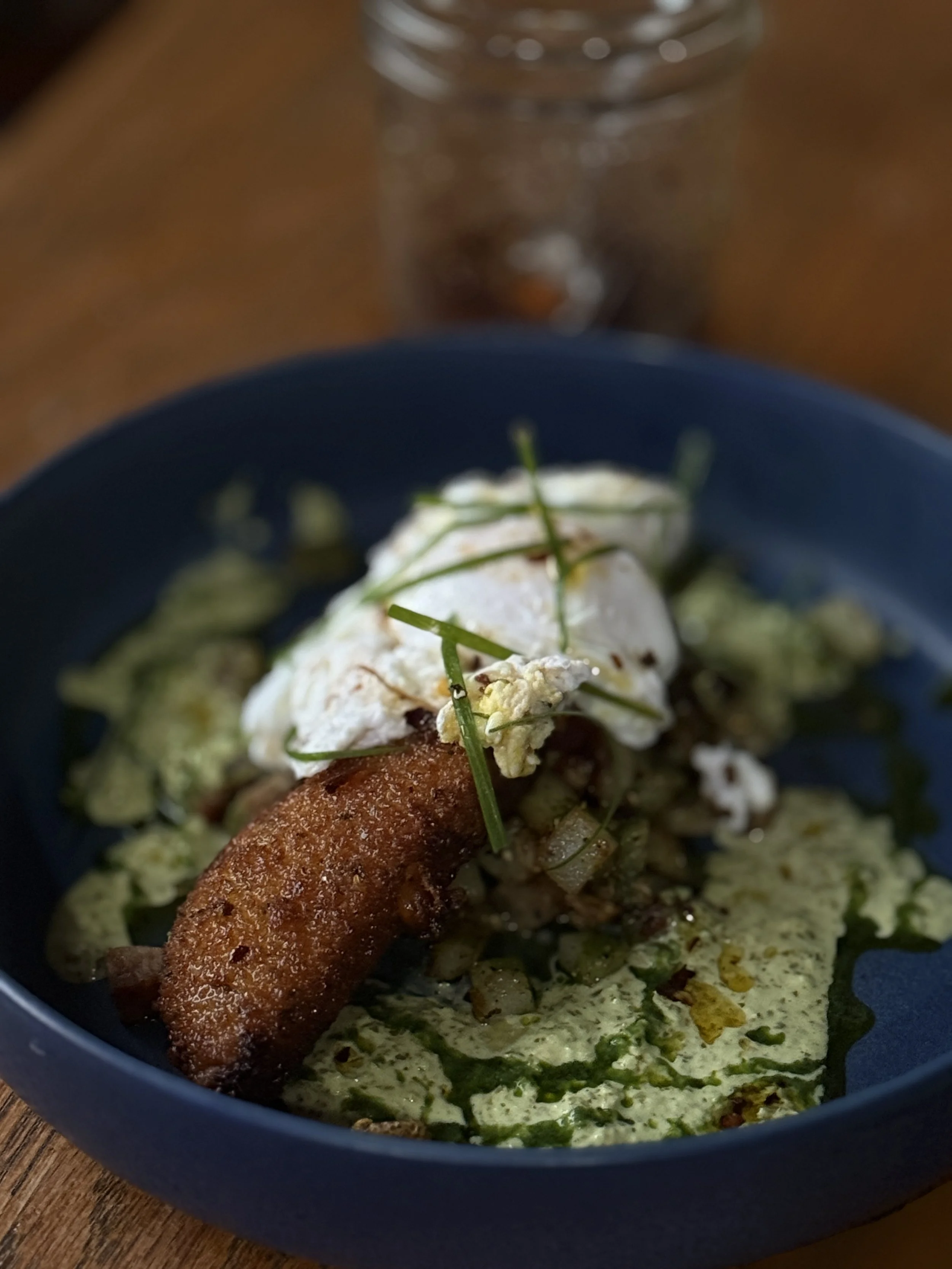
How is it possible that leftovers can teach you about life? How are they even connected? It is really simple. Recently I was out to dinner with some friends that had come into town. We met at a local Italian restaurant. We actually ended up having some; LEFTOVERS. My mind started racing, what am I goin to do with three slices of Italian sausage and one fried mozzarella. As my mind started seeing the food matrix, it hit me. I added potatoes, poached eggs, scallions. I saw the fried mozzarella as the English muffin and then I pivoted because I didn’t want to treat the potatoes as a side, I wanted them to be the co-star. The poached egg—creamy, soft, fat and texture. It was perfect in my head. Scallion oil, my PTSE sauce and then the garlic chili crisp. It was packed with flavors and textures. Just what I wanted to wake up my taste buds and get my day off right!
I sat down, broke the egg and let that yolk pop, slowly releasing the yolk. It looked like lava slowly moving down the volcano. The yolk running slowly over the potatoes and part of the fried mozzarella. The first bite, I got hit with, crunch, heat, fat, creaminess and flavor bombs. Salty and smokey from the sausage, caramelized onions and garlic layered a savory umami punch. It all just hit! Totally what I wanted and NEEDED. As I sat, this thought popped into my view. Why do we call them leftovers? To me, it carries a negative stigma, like mental health itself. We call them leftovers because they have been cooked once and we just couldn’t finish the dish so we WANT and NEED to experience the magic of this dish again. It’s this primal desire to have that dopamine rush again. When we heat the food up, it just never hits the same way. If you are nodding your head, FUCK YES, HE GETS ME! Welcome to food addiction. That is what I searched for every time I would eat. I have a new view on food. It is not a leftover. It is something to be reimagined. As Disney called his artists, Imagineers. They invented, reinvented, reimagined stories. Why can’t we look at leftovers the same way. That got me to think about how many times I have reinvented myself. I started to see this parallel between leftovers and reinvention. It is like life itself. I know, it sounds hippieish I get that, but stay with me.
Life, the red thread that is interwoven between all of us is bones and water. We chefs call it the base of our stock. You add mirepoix, aromatics, carrots, celery, onions, bay leaf, garlic, shallots, ginger. You bring it to a boil and the bubbles pull out the flavor, nutrients and impurities. White foam rises and you skim it off. If you don’t, it sours the stock. As it simmers, the water reduces and the flavors come together but the taste is still flat. You add salt. Suddenly it wakes up. The flavors deepen. You catch whispers of garlic and shallots, sweet touches of carrot, spice from the ginger. Then you strain the stock, remove the bones and vegetables, and what you are left with is the broth. Now you can build the soup. You add spices, aromatics, sauté them, deglaze with the stock, fortify it, layer it, tweak it, until you reach your vision of perfection. You let it rest one last time and then serve.
Life is never the same twice. We are constantly adjusting and seasoning ourselves, chasing a version of perfection that keeps shifting. I never thought in my life that leftovers would teach me this. Reinvention is not bad. It is survival. Leftovers prove it. They remind me that if I stay present I can take scraps and turn them into something craveable. Same with life. You either toss it in the trash or you imagine it into something new.
Life Lessons from Brisket: From Shepherd’s Pie to FOX 13’s Brisket Hash
Childhood Sundays with Brisket
I have a lot of food memories. One of the strongest is Sunday brisket. My mother would braise it in a rich beef stock, and my father would slice the meat. The moment that aroma hit, I was in a trance. Like a shark circling chummed water, I couldn’t resist. If I was allowed, I would have eaten my weight in brisket.
And when there were leftovers, that’s when the real magic happened. Shepherd’s Pie. No shortcuts, no microwaves, just homemade mashed potatoes, caramelized onions, and brisket layered into her famous green cassoulet dish with the wicker basket holder.
I always wanted to “help,” but let’s be real, I just wanted to eat scraps. When she built that pie, layer by layer, it was like Close Encounters of the Third Kind.
And here’s the truth: my mother was my dealer. Her drug wasn’t crack. It was brisket, caramelized onions, and mashed potatoes stacked into a Shepherd’s Pie. One spoonful and I was hooked.
When she pulled it from the oven, golden and bubbling, the first spoonful was pure theater: the crunch of potato giving way to onions and brisket beneath. My mother wasn’t just cooking, she was the Willy Wonka of savory food.
Food as Addiction, Food as Healing
Fast forward: I became a chef, and food became more than memory, it became my drug. The dopamine rush of flavor was my escape from abuse, chaos, and silence. At 10 or 11 years old, Shepherd’s Pie wasn’t just comfort food. It was survival.
But addiction cuts both ways. Food once numbed me, and nearly killed me. Today, after decades in kitchens, a suicide attempt, and the long road through food addiction, I see food differently.
It’s not my crack cocaine anymore. It’s my therapy.
The plate is no longer my canvas, it’s my therapist’s couch. Each dish tells my story: complex, scarred, layered with intention. Food, finally, is healing me.
Resilience on a Plate
When I rewrote my mother’s recipe for Craveable Obsessed, I added smoke, crunch, and depth, because that’s who I’ve become. A chef who’s been charred, scarred, but not broken.
Food has taught me mindfulness, patience, and resilience. It gave me a voice when I was silenced. It gave me a second chance at life.
From Shepherd’s Pie to FOX 13’s Brisket Hash
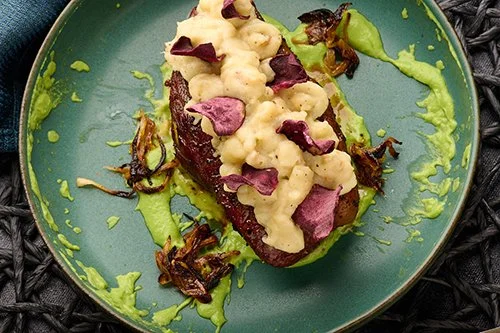
That’s why this week’s FOX 13 Dinner DeeAs segment was so meaningful. I shared Brisket Hash with Garlic Chili Crisp, another dish rooted in my childhood but reimagined through resilience and creativity.
👉 Watch the FOX 13 segment + get the recipe here.
At the same time, my book Craveable Obsessed just marked its one-year anniversary, and was honored 4th in the world at the Gourmand World Cookbook Awards in the Food & Mental Health category.
Brisket taught me patience as a child. Now, it symbolizes resilience, intention, and presence, lessons I carry forward in every dish, every story, and in my upcoming docuseries From the Fire.
If this story resonates, pick up a copy of Craveable Obsessed: Journals of a Food-Addicted Chef. Or follow the journey of From the Fire, where a chef share the battles they barely survived, and the food that saved them.
For me, food was never just about flavor, it was about survival. Craveable Obsessed is my journey through addiction, silence, and healing. I grew up struggling with dyslexia, and only later in life discovered I also had ADHD, battles that shaped how I saw myself and how I used food to cope.
The book tells the story of how food nearly destroyed me, and ultimately saved me. If you’ve ever felt broken and had to rebuild yourself through the things you love, I hope my story shows you that resilience is possible.
And I’m not stopping there. My next project, From the Fire, will share raw, unfiltered stories like mine from other chefs who’ve faced the dark side of the kitchen and lived to tell it, because food doesn’t just heal the people we serve. It heals us, too.
Honoring Flavor, Honoring Myself

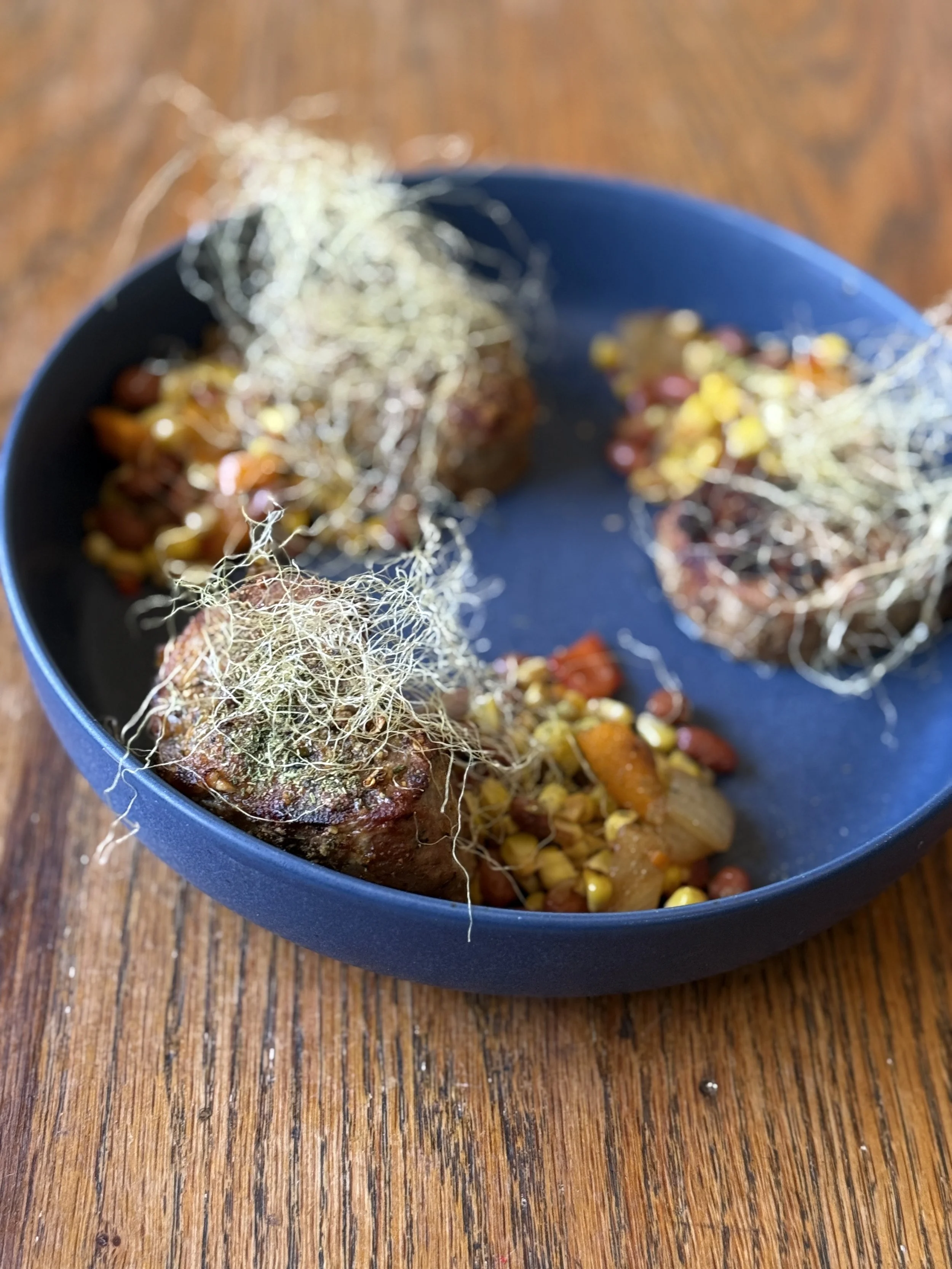
Miso herbed seared pork tenderloin | pink bean charred succotash | crispy corn silk
This dish is more than a plate. It is a meeting point between the cultures that shaped the food world and the journey that has shaped me.
When I use kasoori methi, cardamom, and fenugreek, I am paying respect to the Indian subcontinent, the cradle of spice that transformed global cuisine. When I braise pink beans, Cuban style, I honor my Floribbean roots. When I fold in miso and kimchi, I am drawing from Asian traditions I deeply admire.
But it is not just about the ingredients. It is about what they are teaching me. About restraint. About intention. About understanding that healing is not loud or showy. It is quiet, steady, and humble. This dish taught me that. And every time I cook like this, I heal a little more.
It is knowing that I am aware of my past, making sure I am healing, moving forward, learning, and most of all, believing in myself.
This is what the blog is about.
Not just showing respect for food and history, but honoring the healing that happens when we cook with heart.

Matzo Ball Soup Wasn’t Supposed to Save Me—But It Did
Jewish Penicillin: What Matzo Ball Soup Really Healed
Jewish Penicillin
noun
A traditional Jewish chicken soup, typically with matzo balls, believed to provide comfort and healing properties—especially when someone is sick.
⸻
It’s funny to think that a simple soup could hold so much meaning. But matzo ball soup?
It’s not just a dish. It’s a time machine. It’s protection. It’s therapy with a side of schmaltz.
According to Haaretz, matzo ball soup has been around since at least the 12th century. Maimonides—yes, that Maimonides—claimed in his book On the Cause of Symptoms that chicken soup could relieve colds, nourish pregnant women, and even cure asthma and leprosy.
(Now that’s a Yelp review.)
⸻
The First Spoonful
Growing up in a Jewish household, matzo ball soup was our go-to when we weren’t feeling well. I was born in a time when boxed matzo ball mix wasn’t the norm. You made them. From scratch.
Let’s be real: there are two types of people in this world—those who love “floaters,” and those who are just plain wrong. Dense matzo balls? That’s stucco. Use them to patch a wall.
Most cultures have a cold remedy soup. But matzo ball chicken soup? That one hits different.
It’s sacred. It’s the warm hug that showed up when everything else felt unsafe.
⸻
The Seder Food Orgy
Passover was a food orgy. Two nights. Two sides of the family. And yes—food orgy is the correct term.
“Chef, how many courses are in a traditional seder dinner?”
Answer: Too many. Your brain will explode.
Matzo ball soup was always the first real food—after wandering the symbolic desert for what felt like 40 years. It came with yelling across the house:
“Bernie, how many balls do you want?!”
Now read that in Fran Drescher’s voice. You’re welcome.
“I’ll have two with a carrot!”
“Are they floaters? If not, I don’t want any!”
⸻
Memory, Trigger, and Truth
We always say “simpler times.” But typing those words triggered something.
Simpler for who?
I flashed back to my younger self—and saw the truth:
The abuse. The silence. The fear. Matzo ball soup wasn’t just food. It was a shield. It was protection.
My grandparents? Guardian angels. Their presence brought peace. When they were around, people behaved. That soup was peace. It was the hug that got you through the meal without breaking down.
⸻
Time Travel with Schmaltz
Food is the only real time machine we have.
Ratatouille nailed it when Ego took that first bite and went straight back to childhood.
Not long ago, I made matzo ball soup for a close friend. He took a bite and said:
“I could follow your recipe to the T and it would never taste like this.”
That stopped me cold. Until then, it was just soup. Something both sides of my family made. But in that moment, I realized—it wasn’t just what I made.
It was why.
That soup came from memory. From scars. From love. From protection. It wasn’t just anti-inflammatory. It was a fucking emotional safety net.
⸻
So, What Does It Represent?
Matzo ball soup is healing.
It’s memory.
It’s armor.
It’s me, learning who I’ve become—and honoring who I’ve always been.
And yes… I’ll still take two with a carrot

Bone Deep: Lessons From Osso Bucco
Let me say this—there are some foods that bring up really cool vibes. Osso Bucco is one of them. And I want to be clear: our industry beats the hell out of us. There were so many times in my career I asked myself, why the fuck am I doing this to myself?
When someone asks me for advice, I tell them: Find your balance early. Don’t let this industry suck the life out of you.
And when someone says, “I want to be a chef!” I immediately cringe. In my head, I’m screaming, for the love of fuck’s sake, don’t say TV!!!
Then I go into it:
“Do you like your family?”
“Do you like hanging out with your friends on Friday and Saturday nights?”
“Do you like holidays?”
“Do you like having time to sit?”
We have a saying: Eat it now, taste it later. I’ve had a hell of a learning experience. And now, at this stage in my life, I’ve come to realize something: I hold something no one can ever take from me. I come with knowledge. I come with life experience.
In the past couple of months, I’ve heard words like: resilience. Brave. Loyal. Patient.
Those are things people say they see in me. And to finally start seeing what others have seen for so long… I’m still processing that.
Which brings me to this story.
I have a tough exterior—always have. But after time, and the right kind of heat, that exterior breaks down. What’s revealed? Complex flavors. That’s me. That’s Osso Bucco.
One of my favorite dishes of all time.
I don’t know why this dish grabbed my cheeks, turned my face toward her, and forced her name into my mouth—but damn it, she did. This dish made me her bitch, I can proudly declare.
Before I knew how to cook, Osso Bucco was just an awful, unwanted cut. Guess who got stuck with it? That’s right—the poor. And what did they do? They made fucking magic.
Start with salt. Let it rest. Then add tallow to a pan and get it hot—like 50 Shades of Grey hot.
Sear the meat on all sides. Let that crust develop.
SSSHHH… trust me. Let it happen.
Then comes the sexy part. Let the heat do its thing.
Brown your vegetables.
Now the star of the show enters: tomatoes. Let them cook down. Let them have their release.
Yeah, it sounds sexual.
And yes—I meant it to. Because what you’re really reading—between the lines—isn’t just a recipe. It’s a story. A metaphor. A goddamn journey of flavor being built from the ground up.
When that tallow hits the meat, magic happens. The fat absorbs flavor, then shares it with everything else in the pot. It’s a full-blown food orgy.There’s a reason carrots, celery, and onion are called mirepoix.
Now think about biting into a raw carrot—what do you get?
Crisp. Slight sweetness. Earthiness. It’s fibrous, it’s basic.
Now think about that same carrot, stewed in garlic, meat drippings, tomato, onion, red wine, bay leaf, salt, and pepper.
What do you taste? You taste sex.
Your taste buds are screaming with pleasure.
It’s not just a carrot anymore—it’s a carrier of dark, rich, deep flavor. It’s tender. It’s seductive. That carrot went through some shit to get to your plate.And that’s the flavor profile. But more than that—that’s the lesson.
Somewhere along the way, I cracked a code. No—not the code. But a code.
I looked at that tough piece of meat and fell in love with not just the flavor, but with what it represents. The resilience it takes to cook it right. The time. The patience. The transformation.This dish is not easy.
But the reward at the end? It’s so fucking worth it.
Sound familiar?
I look back at the younger me—thick-walled, hard-headed, burnt out. And now, with time and the right heat, that tough meat… it becomes something beautiful.
I smoked my Osso Bucco because I wanted to play the Riddler—make it even more complex. I wanted time to develop the flavor I wanted my way. I added Thai chilies. Coffee. I smoked it with Tandoori masala because I needed that heat to go deep.
This wasn’t just food. This was expression. This was me saying: life is hard, complex, painful—but there are sweet moments hiding inside if you know where to look.
I paired it with polenta—because that dish also holds meaning for me. Infusing it with lemon? That brought brightness. Fennel? Why the fuck not. It added another layer of soul.
And the miso paste in the broth? That was the damn move.
The best part?
When that marrow shoots out all at once—oh my God. That’s the icing on the cake. That’s the reward. That’s the moment.
Because time breaks down everything.
We age.
We grow.
We shift our view.
Just like Osso Bucco—we go through stages. We transform. We become richer, more complex.
And when you finally taste the reward of that time—
it’s fucking breathtaking.

Bullets
Bullets
According to Unbabel, the most complex languages to learn are Mandarin, Arabic, Japanese, and many more. I disagree. Communication itself is the most complicated language to master.
The English alphabet has twenty-six letters; we can all agree on that. Those twenty-six letters combine to become some of the most potent weapons known to man. They hold more energy and power than all the nuclear arsenals worldwide. Think about it: those same twenty-six letters can be arranged to destroy a person and lift them higher in the next breath than they’ve ever been.
As children, our race wasn’t about schooling. It wasn’t about learning everything we could or being the best at this or that. Our race was to become adults. We used to say, “When I grow up, I am going to…” Then we did grow up. And now, as adults, there are more memes than ever about not wanting to be adults anymore. But such is life! According to Monash University, the phrase “such is life” may have been Ned Kelly’s last words before he was hanged. The Cambridge Dictionary states it may have originated from the Latin Sic vita est hominum. Who would have thought you’d be learning that today?
Words cannot kill, but they can inflict a pain so deep that someone may want to die. Those twenty-six letters can ignite emotions that cause people to lose themselves, to spiral out of control. Words can be arranged like bullets, shattering a heart into millions of pieces. The wounds left behind by careless words can create a darkness like no other. And yet, those same letters—rearranged—can lift, heal, and support someone at their lowest.
On my journey to being the best version of myself, I have learned to process what is said to me. This practice gives my mind time to think and lets my emotions flow through me so that I can find the correct response. I realize that setting boundaries is essential to mental health. We have the ability to make our points without destroying the other person. It is not about winning; it is about being happy. Read that again: It is about being happy.
Trust me, I have my share of days when I don’t feel like adulting. Anyone who is an entrepreneur knows that feeling all too well. There are days when every front of life feels like a losing battle—the sense of collapse, loneliness, and the fear that everything you love is fading. You think, I know so many people—surely, they’ll come try my food! Or this is so different; everyone will want to experience it! You constantly ensure you have enough gigs lined up to stay afloat, but financial survival isn’t the only reason we do what we do. Once in a while, you create something for someone, and their response reminds you why you started in the first place. They use those twenty-six letters to lift you.
Ultimately, life would be better if we used what we have more wisely. We have two ears and one mouth—it’s time to use them proportionately. How much better would our world be if we spoke with empathy first? If we asked ourselves how we would react if someone said this to our child, how different would our conversations be before speaking? There’s a saying in the restaurant industry: If you wouldn’t serve it to your mother, don’t serve it to a guest. Why don’t we apply the same standard to our words? If you wouldn’t say it to someone you love, why say it at all?
The next time you have a difficult conversation, remember this: the words you load into your mouth can never be taken back. You have the power to destroy someone—or to lift them. Choose wisely.
Sunshine State Secrets: Unraveling Florida's Culinary Quirks & Conundrums!
It all begins with an idea.
I have to admit that, growing up in Florida, I never had that sense of "my home!" What do I mean by that? Simple, When people move from New York, for instance, they are diehard New Yorkers! When I traveled, I never thought saying I was from Florida was hip or Kool. I was actually embarrassed to tell people that I was from Florida. I mean, come on, zombie bath soap face-eating people! How about those "hangers" or "chads" from that election? What about all those "Florida man...did this" in the news?
As a chef, I have always wondered what Florida is known for besides the BSC! Hear me before you start blasting your emails about what is genuinely Florida. If I say cheese steak, what city instantly comes to mind? If I had to say deep-dish pizza, what city or cities would you say? Last one, how about redfish being blackened? I have always struggled to determine what Florida is known for regarding cuisine. Are we known for Key Lime Pie? Hell, do we even grow Key Limes in the State? If you do a Google search, you will find the University of Florida chimes in on the topic, which is quite eye-opening. "The Key lime was carried by the Arabs across North Africa into Spain and Portugal and was brought to the Americas by Spanish and Portuguese explorers in the early part of the sixteenth century (Ziegler and Wolfe 1961). The lime became naturalized throughout the Caribbean, the east coast of Mexico, Central America, tropical areas of South America, and the Florida Keys. Commercial production in Florida in Orange and Lake Counties was evident by 1883. Later, small commercial plantings occurred in the Florida Keys (~1913 to 1926) and Miami-Dade County (1970s to early 2000s). Today, there is little to no commercial Key lime production in Florida, although it remains a popular home landscape fruit tree.
Key limes are grown in warm subtropical and tropical regions. Major producing countries are India, Mexico, Egypt, and various countries in the West Indies." According to the website https://edis.ifas.ufl.edu/publication/CH092#. So, Key Limes was brought here rather than from Florida. Our quest marches forward. We are a peninsula surrounded by three sides of water. Our climate varies from Key West in the south and the Panhandle to the North. After living in this State for over fifty years, I discovered we have a peach season. Mind you, the peach season is as long as a brain fart.
I narrowed down my search on Google. I typed, "What is Florida cuisine?" and found a blogger with the answer. According to https://www.tastingtable.com/1218051/iconic-florida-foods-you-need-to-try/, here is what Florida cuisine is. Number one is Key lime pie - um, Key Limes are not even grown in Florida! Number two is the Cuban sandwich. Call me crazy, but the name states CUBAN, not FLORIDIAN. Number three, Stone Crab Claws, okay from Miami, used to be dirty food back in the day. Apalachicola Oysters comes in at number four. As a Floridian and a chef, I stay away from these guys as our waters are not the cleanest—number five lists pink shrimp as a Florida shrimp. I have to dive deep into this one.
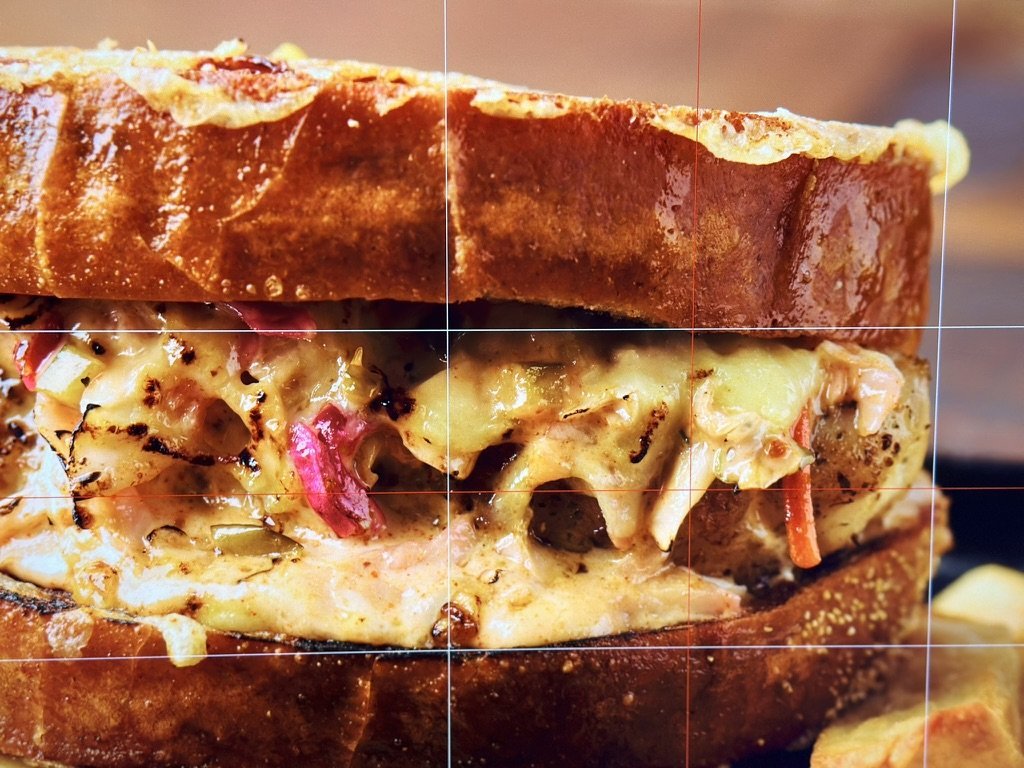
Vannamei are a type of shrimp. They come from Indonesia and are, for me, flavorless. Pink Shrimp or Brown shrimp are "shrimpy" in flavor, and Florida is known for peel-and-eat shrimp loaded with butter and cajun spice. How does that make it Floridian cuisine? Fried Grouper sandwich or, as we know it, Grouper Rueben. It can be fried or grilled. The fish is commonly served on grilled rye bread with cole slaw, Swiss cheese, and Thousand Island dressing. It is a swap-out sandwich. Take the sauerkraut from the OG Rueben and the corned beef, add the grouper and the slaw, and there you have it. How is that Floridian Cuisine? Sour Orange Pie comes in at number seven.
Let me know if you are from Florida and your grandmother made this pie. I have never heard of or seen this pie before! Now that I live on the West Coast, this is a Tarpon Springs thing, not a Florida thing, a Greek Salad with potato salad. Yes, there is a story of why, but I still don't understand it. The next one is a Manhattan Clam Chowder, not Minorcan Clam Chowder. This chowder is from St. Augustine, Florida, and adds the Datil pepper to it. It also comes from the Spanish colonization of Florida, so is it truly Florida? The Pan con Minuta - the fried fish sandwich, comes in at ten. Is this Florida cuisine?
Rum cake and conch fritters are next. Let me say that these two are NOT Florida at all! Fried gator bites, okay, maybe, but can't you get a gator Po boy in Nawlins? Rounding the bottom of this article, I am researching the following: The Frita Cubana, Guava Pastelito, Ceviche, and Dole Whip (what the hell is that). Let's take the last one because it is funny. Dole partnered with Disney in the 70s and developed this iconic drink for...wait for it, the tiki bar at, you guessed it, Disney Land. Wait, if my memory serves me correctly, Disney Land is in California, and Disney World is in Florida; how does that...
If you type in "What is Florida cuisine?" the first thing that pops up is a Wikipedia definition. It states, "Floribbean cuisine is a fusion cuisine found in Florida. It is influenced by Caribbean cuisine, Cuban cuisine, Jamaican cuisine, Puerto Rican cuisine, Haitian cuisine, and Bahamian cuisine." Growing up, I was blinded by the notion that my State had nothing to offer. I felt that my State provided nothing to the culinary world. If you think about where you would want to go on a culinary journey, is Florida one of the places you want to eat? It wasn't until recently that I figured out what the cuisine of my great State is. There is not one definitive answer that anyone can come up with. What I love about the cuisine of my State is that there is no clear-cut definition of our cuisine. Florida is a state that is transient at best. We have had such an influx of people from so many cultures that they have defined Florida cuisine.
When Florida was being developed and the railroad was being built, we had an influx of slave labor, and with that came some incredible cuisines. Throughout Florida's rich history, we have had so many culinary defining moments, and I lived through one of the biggest and was so fortunate to be a part of it. The year was 1981. The Iran Contra thing was in full swing. Cocaine was also a hot import, and Cuba opened its prisons, and people came by the thousands. I remember being a teenager and seeing the tent cities under the 836 and the 826. When people ask where I am from, I always say, "North Cuba! AKA Miami!"
To me, Florida is a true melting pot of the world. There is no Chinatown or Little Korea. We have parts of Florida known for a particular influx of people. Take Carol City or Overtown, known for its Haitian population. Southwest 8th Street in Miami is known as Little Havana. Every year, the US celebrates Latin Heritage Month from September 15th to October 15th. I get to celebrate it every day.
Today, I embrace the influx of cuisines and cultures to Florida. I find that ethnic cuisine is full of flavor and taste-bud-blowing. Chef Anthony Bourdin said best: "When someone cooks for you, they say something about themselves. They tell you who they are, where they come from, what makes them happy." I genuinely believe this to be so true. When you eat at a restaurant specializing in their country's cuisine, embrace what they cook for you. We should never have a cuisine assimilate itself so much that it loses its origin. The reason why we travel is to try new things and see unique places that we have just read about. Why should we eat American food in Paris? As Americans, we have this notion that we know what a country is known for by its cuisine.
Is that true? Take, for instance, the national dish of Jamaica. Is it Jerk? Nope, not at all. Ask someone from Jamaica, and they will tell you. We have chefs like Michelle Brienstein, who comes from a Cuban-Jewish background, and she has given us Jewban cuisine. Locally, we have Chef Norman Van Aken/Chef Allen Susser, who created "Floribbean cuisine." Floribbean cooking takes cuisine from the Caribbean/South America/Central America/ West Africa. It combines the natural resources of the land and the techniques they have learned from other cultures to create these excellent flavor meals we see today. One of the most American cooking styles is from a little island in the Caribbean. The Taino are indigenous to Puerto Rico and developed a cooking method called Barbacoa, which is not the beef cut but the actual cooking method. The word later became the word we know today as Barbecue or BBQ. Some great, talented chefs have embraced this cuisine and are doing things that would excite your taste buds into a frenzy! How about a guava and cheese rugelach? How about Latin spiced pink shrimp/ Florida fresh corn grits/Florida goat cheese/blistered Florida tomatoes? Have you ever wondered how Jerked Cantonese duck would taste? Well, in Miami, you could find that.
In honor of Latin Heritage Month, we all should embrace the authentic cuisine of Latin America and try something so different that you may find something you love. We may not have the Philly cheese steak, the NY pizza, or the cheesecake, but we have so much flavor that the rest of the country has never had or will have. It is time that Florida makes its mark as a culinary Mecca!

Cooking with Soul: Redefining Perfection in the Kitchen
It all begins with an idea.
I was taking a quick break, thumbing through my Apple screen, when I came across someone asking, “What’s the best coffee?” That got me thinking about the concept of “the best” in food. It's become so subjective! Just think about how many different Oreo flavors there are!
Let's talk cookies for a second. Are you a soft cookie, not a soft kitty, warm kitty, little ball of fur - squirrel moment? Do you like crunch? If you do like crunch, how much? Are you one of those "I love the edges crispy crunchy nomnomness with that soft warm center!" Food has so many layers, so how can you say X BRAND is the best? If all it takes is slap a label on it, it's the best. Hell, if that is what it takes for something to be the best, then my BACON is the best!
I feel a new journey brewing for my taste buds and imagination. I want to experience, taste, and truly live in the moment with food. What does it mean to find the best? The definition of “best” is “of the most excellent, effective, or desirable type or quality.” But my question is: best for whom? As chefs, we push ourselves daily for this elusive notion of perfection, raising the bar so high that it's almost intangible.
I love dark chocolate for many reasons, but primarily for its raw intensity. It tells a story, and the chocolatier's skill in manipulating those flavors creates a complex bite that can leave you breathless—those Meg Ryan “I’ll have what she’s having” moments!
So, do you like dark chocolate? If you do, I hope you felt that picture I painted. If not, I may have lost you—until now.
I’ve always been told I’m a perfectionist, and just typing that gives me chills. Those twelve letters have affected me deeply! But I’ve realized that perfection has been my villain, holding me back. The power of words can be stunning!
As I sit here, reflecting on “THE BEST,” I’ve awakened to a profound truth: it wasn’t perfection I was seeking; it was simply to exist. I don’t need validation from others or my food to know that I deserve to exist. No more chasing likes, awards, or views.
It’s time for the next chapter. It’s time to embrace my imperfections because they are even more craveable than the best. Why? Because now, I’m cooking with my soul.