
The Soul Behind The Flame

The Unicorn
The Myth of Work Life Balance in the Restaurant Industry
Before the first ticket prints.
Before the rail fills up.
Before the fryer starts screaming and the grill flares up.
There’s family meal.
Someone throws together something quick for the staff. Nothing fancy. Whatever we have on hand. You grab a plate and shovel it down as fast as possible. Not because it tastes bad. Because service is about to start. Prep isn’t finished. Stations still need to be stocked. Someone forgot something on the prep list.
You eat it fast.
Real fast.
So fast you barely taste it.
We have a saying in the industry.
Eat it now.
Taste it later.
After thirty five years in kitchens, I’ve started to realize that saying applies to more than just family meal. It might actually describe our entire lives. Because for decades we’ve all been chasing something that feels just as mythical.
The unicorn.
Work life balance.
This mystical creature embodies what a lot of us want to find.
It’s not Old Nessy from the loch.
It’s not paparazzi chasing Bigfoot.
It’s not the elusive Irishman guarding his pot of gold.
No. It’s not the remains of Jimmy Hoffa either.
I am convinced mankind will figure out time travel before we find this creature. At least for those of us in the restaurant industry. Since the first restaurant opened its doors, we have been chasing this beast.
It goes by many names.
Lady Amalthea.
Twilight Sparkle.
Rarity.
Celestia.
In the restaurant industry we call it something else.
Work life balance.
I have spent more than thirty five years trying to find it. How exactly do you find a unicorn when you work days, nights, weekends, holidays… sometimes seven days a week? While researching for this article, I stumbled across something called Work Life Balance Tips for Hospitality Professionals. Within the first paragraph they had good news for all of us.
Strategies.
Time management.
Ways to reduce burnout and still enjoy your job while maintaining a life outside of work.
Well sign me the fuck up for this TED talk. Then I kept reading.
Set boundaries.
Avoid answering work related calls or texts on your day off.
Communicate your availability with your manager.
And my personal favorite.
Learn to say no.
Bless your heart. Then I saw this line. According to Harvard Business Review.
Now I have a serious question. Did the person who wrote this ever actually work in a restaurant? Not visit one. Not write about one. Work in one. Did they ever close on a Saturday night and then have to be back for brunch the next morning? Did they ever work a fourteen hour shift and still hear the ticket printer in their head when they tried to fall asleep? Did they ever stand on the line while the rail kept filling and you knew you were about five minutes away from getting buried alive in tickets? If the answer is yes, then I have a follow up question. How long did they last? Because learning to say no in this industry used to be the fastest way to make sure you were never scheduled again.
Then there’s the advice about prioritizing your health.
Stay hydrated.
Eat well.
Get enough rest.
Let’s talk about eating well. One of my favorite comments when someone finds out I’m a chef is this: “You must get to eat great food all the time.” If you’ve ever worked in a restaurant you’re probably laughing right now. But if you haven’t, let me explain something. Chefs and line cooks don’t eat during service. Not because there isn’t food. There’s plenty. We don’t eat because there’s too much going on. You’re focused on prep.
Getting your mise en place ready.
Stocking stations.
Finishing prep lists.
Cleaning equipment.
That’s just the physical stress.
Then comes the mental load. How deep in the weeds are we about to get? Am I about to get yelled at by chef? Did I drop that call? Which server is about to screw something up?
Then the home stress creeps in.
How much did I drink last night? Will my car start when this shift ends? Is my kid’s school going to call today?
So no.
We don’t eat.
Your stress level is so high there is no room for food.
Then there’s the advice about getting enough rest. This one makes me laugh and cry at the same time. The math sounds great on paper. “My shift ends at 10 PM. I should be asleep by 11:30. That gives me seven to eight hours.” Reality doesn’t work like that. You finish a fourteen hour shift and drag yourself home thinking you cannot wait to get into bed. Then you take a shower. And suddenly it happens. Not a second wind. More like the seventeenth. Then throw kids into the mix. Who gets them ready for school? What if that’s the only time you see them all day? As a father, my daughter may never fully understand the sacrifices I make for her.
And that’s okay.
That’s my job.
Then there are days off. Bless their heart. Most of the time it isn’t even a full twenty four hours. Usually it’s a Monday. You wake up. Get the kids ready. Pack lunches. Run errands.
Laundry.
Groceries.
Clean the house.
Pickups.
Drop offs.
Homework Core Math fuck off!
Dinner.
And somehow that was supposed to be recovery. So after thirty five years in this industry…
I still haven’t found that unicorn.
But something interesting happened along the way.
That saying we use in kitchens…Eat it now. Taste it later. It doesn’t just apply to family meal. It applies to how we live. Push through the shift. Deal with the chaos. Handle the pressure. Tell yourself you’ll process it later. Later when things slow down. Later when the season ends. Later when life gets easier. But later rarely comes in this industry.
Now all I really want is some sort of balance. I’ve surrounded myself in food my entire life. My addiction is food. My ADHD runs perfectly when I’m on expo or buried in prep.
There is nothing more satisfying than watching someone take a bite of tiramisu. That cloud like texture. Deep coffee notes. Parle G cookies soaked in Indian filter coffee melting before your eyes.
For me it’s not about ego.
It’s not about hearing someone say “your food.”
It’s about touching someone’s soul.
It’s about creating a memory that stays with them long after the plate is cleared.
That’s why I cook.
For thirty five years I thought the unicorn was work life balance. But maybe we’ve been looking at it the wrong way. Maybe the unicorn was never balance. Maybe the unicorn is the moment someone takes a bite of something you made and their whole world slows down for just a second. Maybe the unicorn is knowing that in an industry built on chaos, fire, pressure, and exhaustion…
you still chose to feed people anyway.
Because chefs understand something most people never will.
Eat it now.
Taste it later.
Unforgettable or Replaceable
There is one thing that strikes something primal in us.
Think about what that ancient trigger could be. It signaled survival. Safety. Food. Community. Ritual.
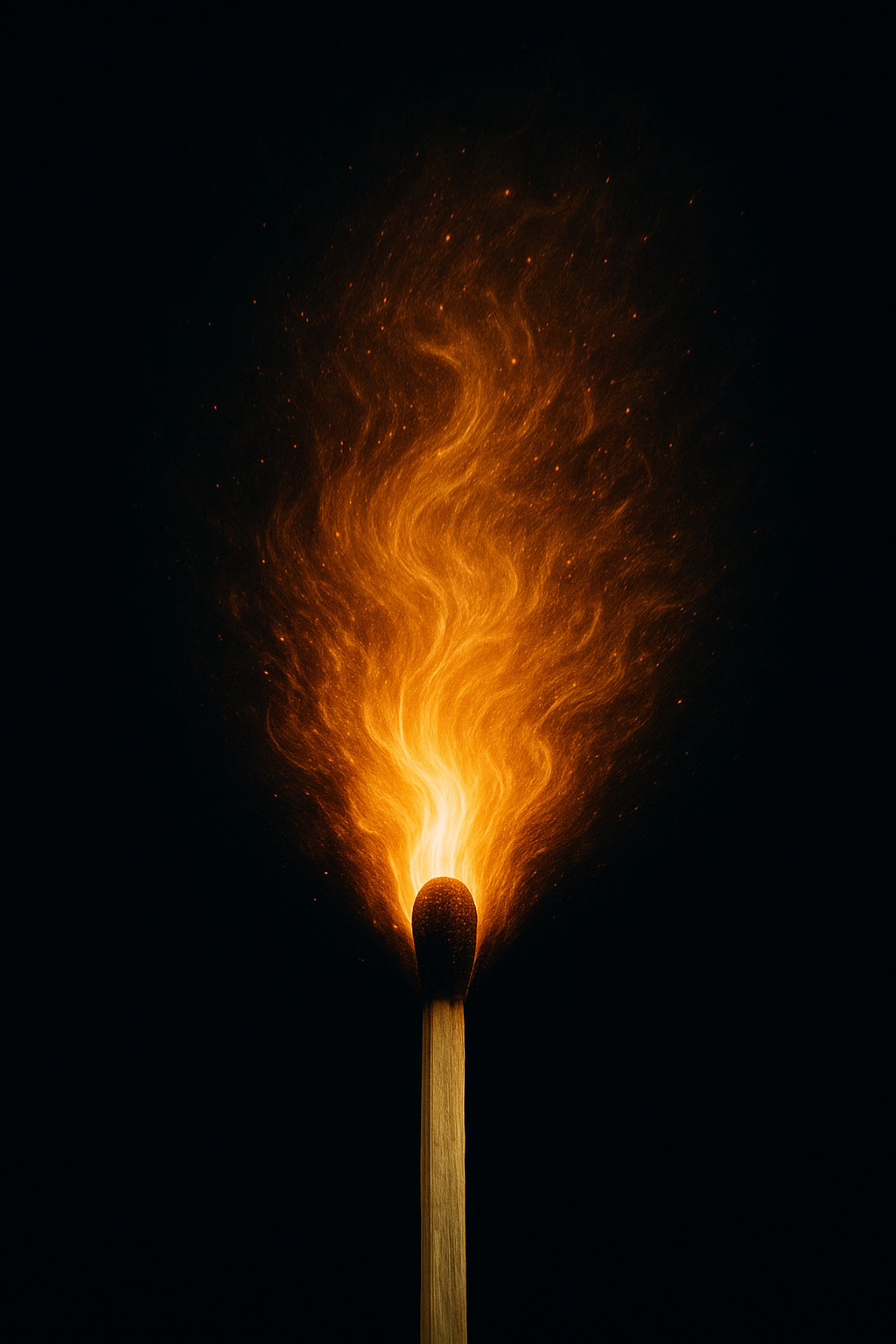
Fire.
Before fire meant dinner, it meant life.
Archaeological evidence shows controlled fire use dating back roughly four hundred thousand years, with charred materials and fire cracked tools discovered in sites like Suffolk, England. Fire gave us warmth. Protection. The ability to cook. To gather. To tell stories. Without fire, there is no civilization. Without smoke, there is no memory. Egypt left symbols for life carved into stone. The Ankh. A symbol of eternal life. But without heat, without transformation, without flame, do we even get there?Now let me connect this to restaurants.
Egypt left hieroglyphics. We leave memories.
How do you remember things?
In school I was taught repetition and association. I learned that once I wrote something down after reading it, it stuck. But there is one thing that creates memories for me that last a lifetime.
Food.
I have said it before. Food is a time machine.
Ask someone, when you are sick what is the meal you want? They do not say calories. They do not say macros. They do not say plating. They say comfort. Because comfort is memory.
Science backs this up. The limbic system governs memory and emotion. Smell has a direct pathway to the amygdala and hippocampus, bypassing much of the brain’s logical filtering process. Before you consciously process what is happening, your body reacts. Flavor is not just taste. It is retronasal olfaction. It is sight. It is sound. It is aroma. It is environment. It is memory. We talk about the tongue like it is the star. Sweet. Sour. Salty. Bitter. Umami. We talk about plating like it is everything. We eat with our eyes. But smell is the gatekeeper. The scent of smoke did not mean brisket for thousands of years. It meant survival. Safety. Tribe.
Now let us bring it to something simple.
Bacon.
When you read the word bacon, you do not see B A C O N.
You hear the sizzle.
You see the fat rendering.
You smell the smoke.
Your body reacts before your brain catches up.
The smell of bacon does not ask permission.
It prepares you.
That is power.
COVID Changed the Ritual
COVID did not just close dining rooms. It stripped away immersion. It took away shared air. Shared smell. Shared energy.
In 2019, United States restaurant industry sales were approximately 767 billion dollars. At the height of the pandemic, on premise traffic declined nearly fifty percent and millions of workers were displaced.
But here is what most people miss.
The industry did not just lose revenue.
It lost ritual.
It lost the sensory experience.
Delivery normalized. Decision cycles shortened. Guests began subconsciously asking one question. Is this worth leaving my house for? If you are just serving good food, you are invisible. And here is the uncomfortable truth. Full service restaurants operate on average net profit margins of roughly three to five percent. For every one hundred dollars spent, the restaurant may keep three to five dollars after everything is paid.
Everything means
Food costs
Labor
Rent
Utilities
Insurance
Repairs
Linen
Credit card processing fees
Cleaning chemicals
Smallwares
Marketing
Taxes
Waste
Spoilage
And that is on a good month. Now compare that to other industries. Luxury fashion houses often report gross margins exceeding forty to fifty percent. Apparel retail commonly operates near forty percent gross margin. Many professional service industries maintain net margins in the ten to twenty percent range. Restaurants operate on razor thin margins. Yet someone will drop eight hundred dollars on designer shoes without blinking. They will spend three thousand dollars on a handbag because it feels worth it. But let a chicken dish hit thirty dollars and suddenly everyone becomes a financial analyst.
Let us talk about that chicken.
If chicken thigh meat spikes more than twenty percent in two weeks, which commodity volatility has absolutely done in recent years, can I simply raise the price and protect margin?
Maybe.
But now I am fighting perception. Food is daily. It is emotional. It is local. It is compared.
If your guests are just eating, you are competing on price. And competing on price in a razor thin margin industry is slow suffocation.
Sensory Is Not Fluff. It Is Strategy.
There are restaurants doing this intentionally.
Alinea integrates theatrical plating and environmental choreography.
Ultraviolet in Shanghai builds entire courses around shifting light, sound, and scent.
The Fat Duck pairs audio with dishes to alter perception.
Disney engineers scent throughout its parks to anchor memory.
But you do not need Disney’s budget. Pull into a strip mall. You are headed somewhere else and it hits you.
Garlic.
Soy caramelizing.
Wok hei.
That charred breath of a hot wok.
You stop.
You look.
You were not planning on Chinese food.
Now you are.
That is sensory engineering without a multimillion dollar build out.
Or you are sitting at a casual restaurant and a sizzling cast iron platter walks by.
Smoke.
Peppers.
Onions.
Protein caramelizing.
The front door opens.
Welcome to Chili’s.
They figured it out.
If they are just eating, you are competing on price.
If they are inhaling, reacting, remembering, you are competing on memory.
Mumbai Marked My Soul
Last October I was in Mumbai. I cannot tell you the names of everything I ate. But I can tell you what it felt like. Vada pav from different vendors. Subtle differences in chutney, heat, bread texture. Mohammad Ali Road. The noise. The chaos. We tight roped across flooded streets in the rain. Thunder cracking overhead. A storm drain erupting like a fountain.Then that first bite of Nahari. It was like Morpheus handed me the red pill. The matrix opened. It was not just the food. It was the rain. The smell of the street. The sound. The heat. The adrenaline. That memory will outlive any menu description. That is multi-sensory encoding. That is why travel marks your soul. Not because you needed a break. Because you made memory.
The Real Question
Restaurants operate in one of the tightest margin environments in the United States economy. COGS volatility is constant. Proteins fluctuate. Produce fluctuates. Oil fluctuates. Labor increases. Rent increases. Utilities increase. Luxury brands build margin into the product. Restaurants build value into the experience.
So here is the question.
Why are you not designing the air?
You do not need a diffuser. You have a kitchen. Smoke coconut for your island event. Let seafood breathe with the sound of the ocean. Rebuild ritual. Because food can be replicated. Recipes are searchable. Delivery is frictionless.
Memory, Memory is not.
There is an old saying in this industry.
What is the difference between a customer and a guest? A customer pays and leaves. A guest remembers how you made them feel. We forgot that we are not in the food business. We are in the hospitality business. Food is the entry point. Experience is the product. You can have the best food in the world and the worst service and you have the recipe for the kiss of death. You can have great service and decent food and survive. But when you combine extraordinary service, intentional flavor, and a sensory experience your guest has never had before, you stop competing on price. You start building memory. There will always be another restaurant. There will always be another menu. There will always be another thirty dollar chicken dish. There will never be another experience exactly like the one you choose to create. In a world where everything can be copied, delivered, reverse engineered, and price compared, Hospitality is the last unfair advantage.
Light the fire.
Design the air.
Make them feel something.
Because if they are just eating, you are replaceable.
But if they leave talking about what happened to them in your room,
You are unforgettable!
Inevitability
This past week I got news that three people earned their wings. The first one hit me hard. A high school friend, someone who went in similar directions in the culinary world. We “talked” through Messenger. January was the last time.
My memories of him became vivid.
Driving around, grabbing lunch off campus.
Cruising the Fort Lauderdale strip.
Skipping class to go to the beach.
A friend, a neighbor from back in the day, lost a loved one. I remember him. I remember the family: three boys and one girl. Flashes of images from growing up on that street zoomed in. A red Firebird, windows open, music thumping.
A simpler time…
It’s funny. I see people on social and think, when did they get old?
Then I catch my reflection.
I am… well seasoned.
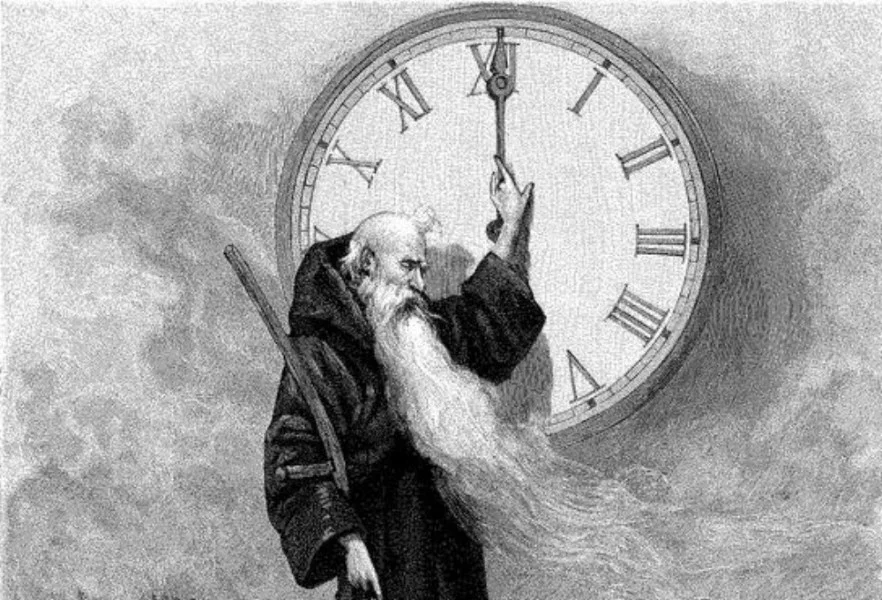
We all fight the biggest losing battle we have: time.
It’s a constant reminder that we have a choice, to let time take us over, or to leave our mark. Life is the ultimate video game. We all talk about second chances, but how many of us are actually using that “extra life” to make one count?
I still don’t know what kind of death is worse, the unexpected, or the slow goodbye.
I was in my late 20s when I lost my grandmother, Nana Gert. She didn’t drive, so once a week I’d head down and take her grocery shopping. One day, while listening to Bocelli, we got onto the subject of death. At the time, she was in the middle of an eleven-year battle with cancer. I told her when it was her time, to go be with Papa.
In a cruel way, sickness gave me time. Time to say everything I wanted to say. Time to spend real moments together. Time to create memories that still live with me.
My two grandfathers’ deaths were different. Sudden. Unexpected. I was left only with memories, one of them plagued me for a long time. I carried guilt for years. His death taught me something, though. It taught me to spend time with his wife as cancer slowly took her from us.
We have an old saying: “Time heals all wounds.”
That’s not true.
The saying should be: “Time numbs the pain.”
For the survivors, the loved ones left wondering, questioning, the emptiness never truly goes away. Nothing replaces the love that person gave you.
I guess today I realize this:
Make as many memories with your loved ones as possible.
Stop saying, “We have to spend more time together,” or “We need to keep in touch.”
Just pick up the phone.
Text.
Call.
Show up.
Make memories.
Inevitability, we can make memories before time wins.
Uncomfortable Is Normal
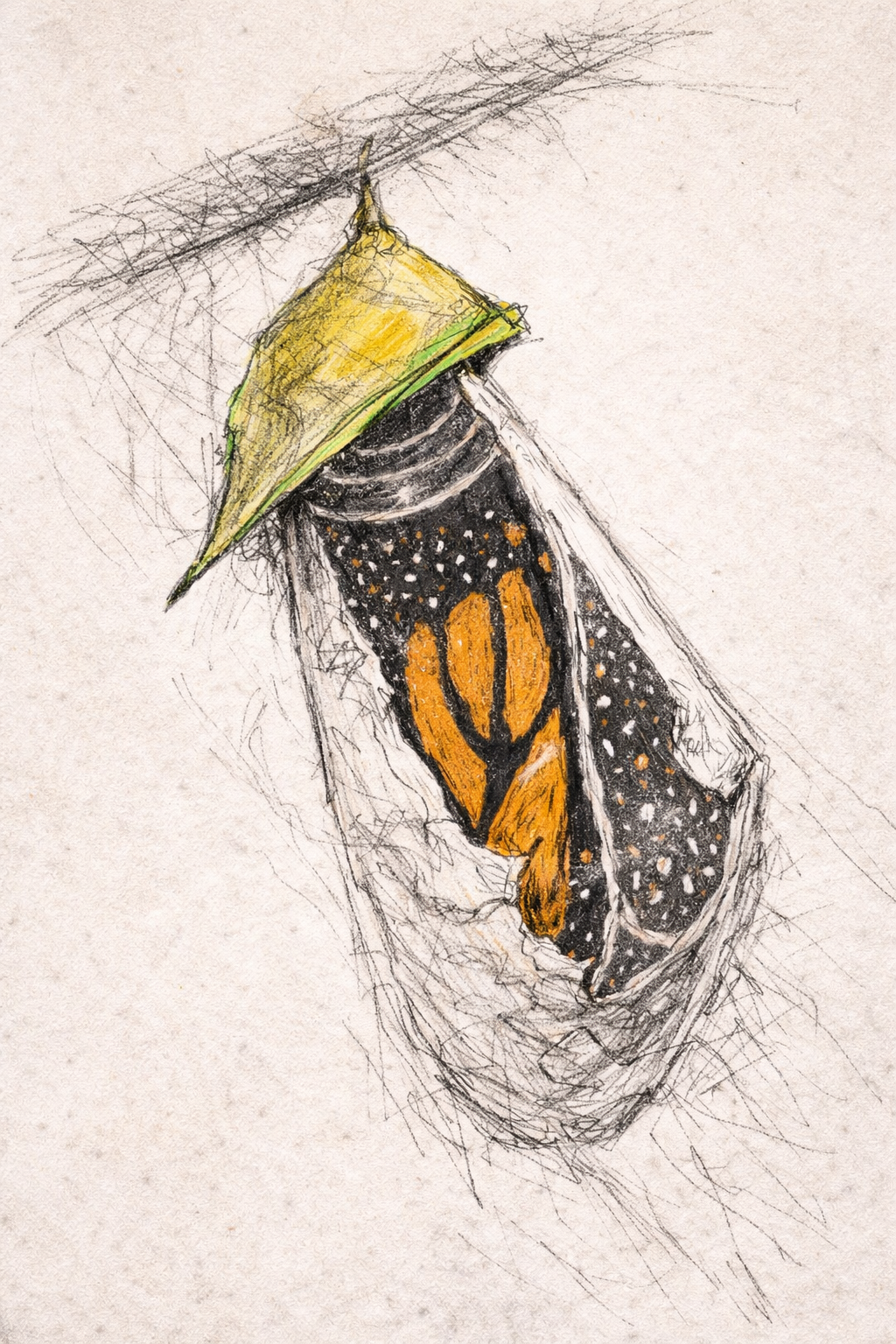
Growth feels painful because you’re trying to break out of your own cocoon.
The person you once were has trapped the person you’re becoming.
Version 2.0 has no room to stretch.
What we call pain isn’t really pain, it’s struggle.
The struggle of breaking free from what once felt normal.
From patterns that felt safe simply because they were familiar.
The fear you feel isn’t a warning sign.
It’s anxiety about the unknown.
It’s standing at the edge of something new without a map.
The shift happens when you stop seeing that feeling as fear
and start seeing it as anticipation.
When your mindset changes from
“I hope I don’t fail”
to
“I hope I learn and grow into a better version of myself.”
That’s where growth actually begins.
We always hear phrases like “growth isn’t pretty” or “you have to work harder to change” when we’re in our darkest places.
Yet when we’re health-conscious, eating well, and taking care of ourselves, we don’t think in those terms at all.
It’s all about perception.
It’s mindset.
There’s always that one person who says, “You can’t see it now, but one day you’ll understand why.”
Growth isn’t a leap of faith.
It’s believing in yourself.
It’s not about failing, it’s about learning.
And having the ability to forgive yourself for making mistakes.
Einstein defined insanity as doing the same thing and expecting a different result.
Sometimes our patterns don’t protect us, they harm us.
We become comfortable. Set in our ways.
So ask yourself:
Is it really fear of the unknown,
or fear of doing something different?
When we were kids learning to ride a bike and we fell, no one said,
“Well, you failed. Let’s move on.”
We got back on. Again and again.
Until the training wheels came off.
So maybe the real question is this:
Isn’t it time to remove your training wheels?
Wrinkles — Not Just a Mark of Age
Some of you know my story. For those who don’t, here’s the beginning. My father took his last breath on December 30, 2017. He always said he wouldn’t live past 76, and he made that happen. He gave up on life, on family, on his only granddaughter.
At best, my father and I had a toxic relationship. In the months before he died, he would call me crying. He told me he didn’t feel like a man. He said he didn’t feel useful, or part of anything. He told me he had no purpose. And I knew what that meant, because I’d seen it before.
When I was young, my father used to bring me to work. There was a man there named Jack. He was much older than everyone else in the office. I remember his wrinkles, his grey hair, the smell of his cigarettes. Jack worked like a madman. One night, my father came home and told my mother Jack had retired. A month later, Jack was gone. My father said maybe Jack didn’t have anything left to live for.
How ironic that years later, my father followed that same path.
He had left the stock market business in 2008 but never stopped talking about how useless he felt. My father was 30 years older than me. He left behind a legacy of someone who gave up. A legacy of pain that he inflicted on me as a child. He never saw his granddaughter grow into the incredible human she is today, earning straight A’s and inspiring me to be a better man. He never saw my book published. He never saw me win fourth place in the world for that book. He never saw me receive one of the highest honors from The American Culinary Federation — The Presidential Medallion.
The only piece of advice he ever gave me was about taxes. He said, “I don’t mind paying taxes. It means I’m making money.” That stuck with me. Maybe because when he stopped making money, he felt like he had nothing left to contribute.
I look at pictures of him now and sometimes think it’s time to shave my beard. Part of me wants to move on from the marks he left on my soul. Maybe it’s because I see him in me, and I don’t want to become who he was at the end of his life. The grey in his beard. The age spots. The wrinkles. He used to joke that his best friends were his doctors.
Now I look in the mirror and see a man who looks more and more like him. A man who’s endured hardship. A man who has fought through dyslexia and ADHD. A man who’s battled depression and once nearly drowned himself just to escape the pain.
But I also see something else.
I see a man who’s overcome adversity. A man who’s fallen off the bike of life and climbed back on, bruised but determined. A man who’s fought to break a cycle of abuse and build something better with his daughter. A man who’s found the strength to talk about the things men aren’t supposed to talk about. A man who doesn’t care if someone calls him weak for speaking the truth.
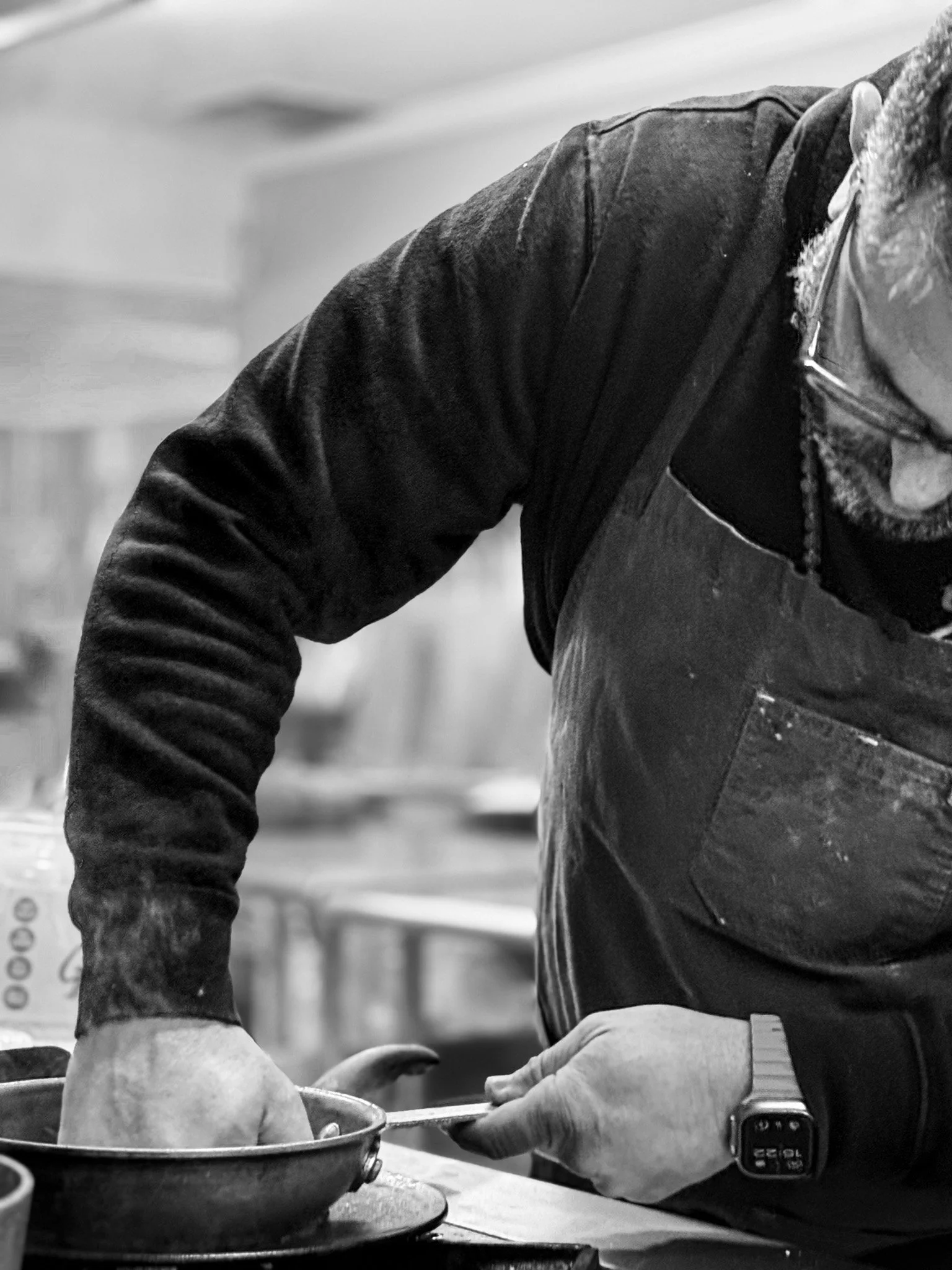
I can see my skin changing now. The lines. The grey. The spots. I can feel myself evolving into a different part of my existence. Not weaker. Seasoned. The kind of seasoned that comes with earned wisdom. I can choose to see aging as decline or as proof that I’m still standing. Wrinkles aren’t a death sentence. They’re a record of the storms we’ve weathered.
Every wrinkle on my face is a scar, a story, a battle won. I’ve earned every single one of them.
My wrinkles aren’t signs of age. They’re proof I lived.
My Toy Story
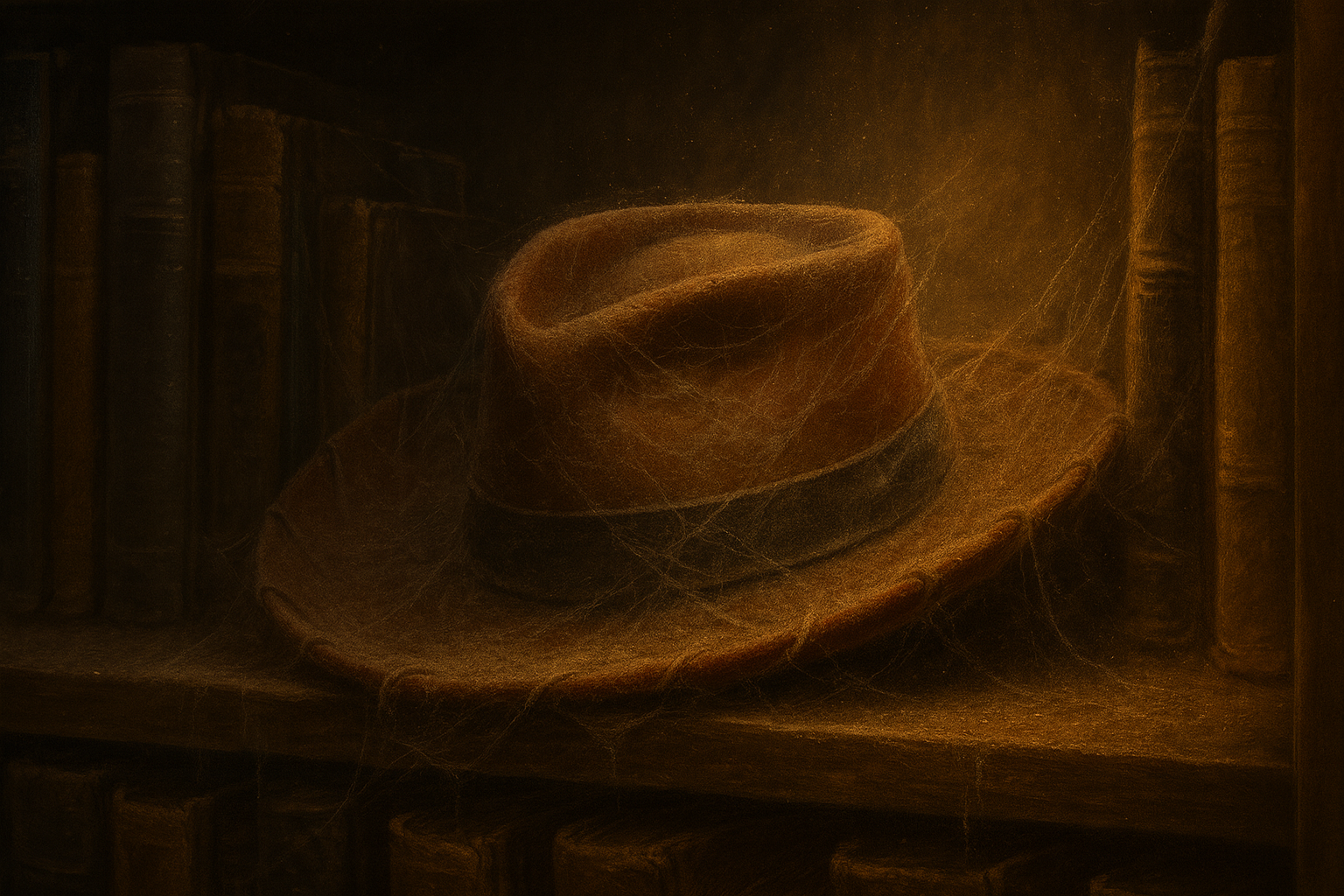
Sometimes there are days I feel like Woody on the shelf, collecting dust.
Then I’m reminded, I’m the one who taught my Andy why I mattered in the first place.
I’m appearing on a podcast about mental health, and during the pre-panel meeting, the topic turned to why so many young men are struggling.
I sat there listening. At first, I wanted to interrupt. To jump in. But then a voice in my head said, “You have two ears and one mouth.”
So I sat.
I listened.
And I heard where they were coming from. But I also wanted them to understand where I was coming from.
I have never said this out loud: one of my biggest fears is death. Not death itself, but leaving this earth without fulfilling why I was here.
And now, at my well-seasoned age, I worry about how much longer my body can keep performing at the level it has for decades.
I work in an industry that doesn’t always value wisdom. It values showing up early, never calling out, moving fast.
Woody wasn’t scared of being thrown away because of his hat.
He was scared because he thought his story no longer mattered.
That fear, of being seen but no longer needed, cuts especially deep for those of us who’ve built our entire identities on showing up, leading, creating, performing.
I remind myself of my own words:
“Every wrinkle is a story. Every scar, a lesson. Every grey hair, gratitude for having been there.”
We don’t control how long we get here. All it takes is a blink of an eye to leave behind whatever legacy we’ve built.
I think of my father’s story often. I carry that weight because I was given a second chance.
Thirty-seven years ago, I almost ended my life. I’m still here, so I live my life trying to show others: you are not alone.
I guess I’m just trying to be that shiny antique model, hoping someone still wants me.
But maybe, just maybe, it’s not about being wanted.
It’s about being remembered for what I taught them.
What does legacy mean to you — not the one you inherit, but the one you leave?
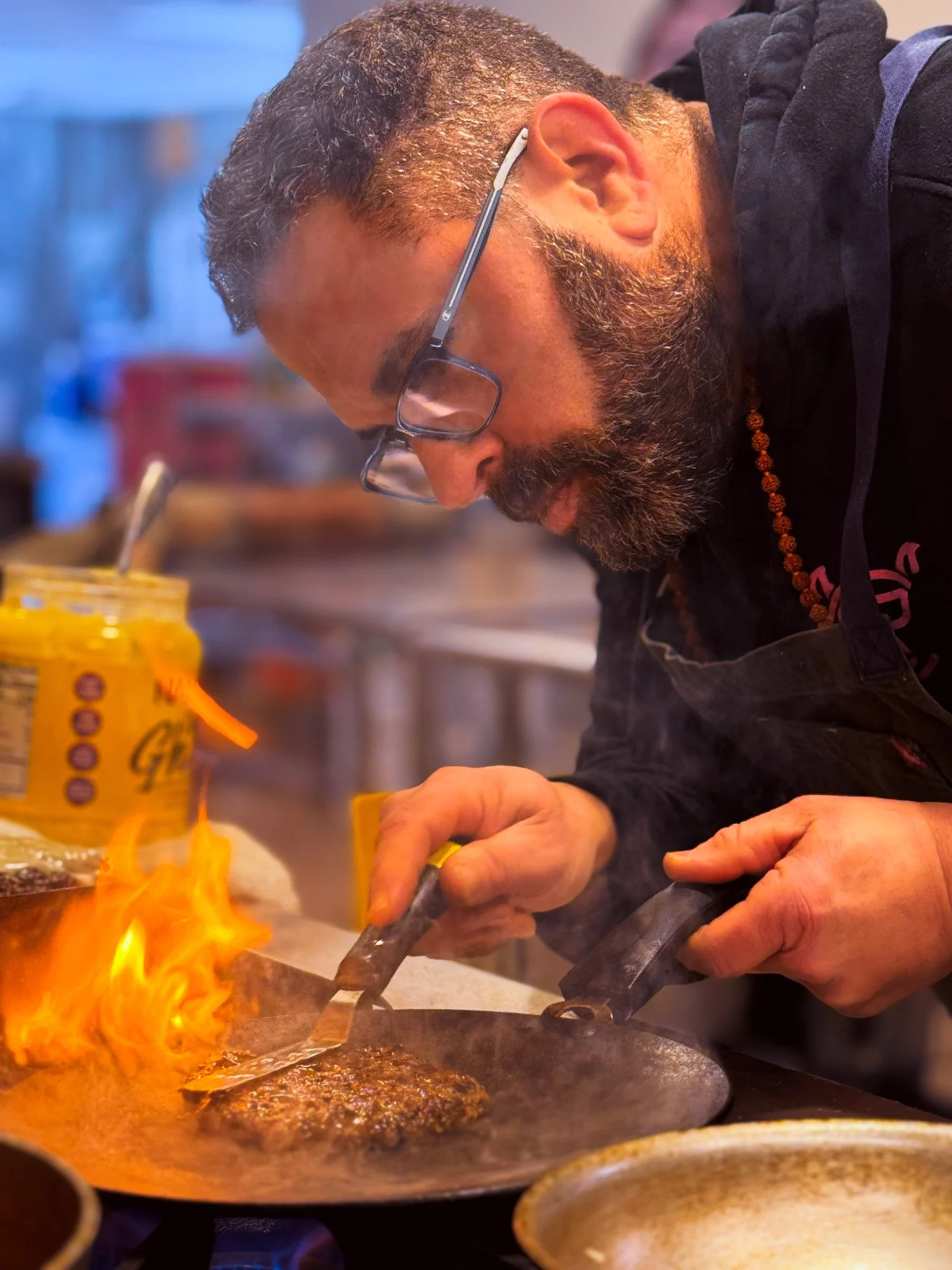
The Fire Didn’t Break Me. It Built Me.
I’ve always heard that I have amazing resilience.
I used to just blow that off.
I can’t afford to give up, not at this stage of my life. So when someone said, “Jeff, you’re resilient,” my gut response was always, “What other choice do I have?”
It wasn’t until I came to Germany that I finally understood the meaning of the word.
“The capacity to withstand or to recover quickly from difficulties; toughness.”
Resilience is so much more than a definition. It’s a pulse. A quiet fire that doesn’t die out, even when everything else does.
I’ve always thought of Germany through the lens of history, Jews are still here, and the Nazi party is long since gone. But standing here, I see it differently. I see the resilience of the German people. They didn’t erase their history; they embraced it. They faced it. In 1945, every major city looked nothing like it does today.
A couple of nights ago, the temperature dropped to the upper thirties. We were driving to our next city when I heard from the front seat:
“Okay Jeff, you’re on.”
“For what?” I asked.
Then came that look. The one that says you know exactly what we mean.
“THE Soup.”
Let me back up. I make a pretty damn good matzo ball soup. My inner circle talks about it every time I make it. And if someone’s left out, they’ll find out and make damn sure I include them next time.
Only this time, I’m not in the U.S. I’m in Germany.
Thank goodness I packed the most important ingredient, matzo meal. All I needed now was a chicken and some mirepoix. We stopped at Aldi. I didn’t find a whole chicken, but I found enough to make it work. I rendered the fat from the thighs and legs, built my layers of flavor, and let the broth come to life.
My philosophy is simple:
The more flavorful the broth, the better the matzo balls.
And as I prepped, moving through that familiar dance, the “I’m about to make a dish that hugs someone’s soul” dance, I forgot where I was for a moment.
I used to think of Germany as a place of darkness. A place that robbed millions of their lives just for being who they were. 1.5 million children under 13, my daughter’s age. And here I was, in Schwalmtal, making an iconic Jewish soup.
It might as well have been called Resilience Soup.
Dachau flashed in my mind.
The gas chambers. The ovens. The hooks where they hung prisoners.
And yet, we are still here.
I’m not religious. Hell, I’m tattooed seven times over (and I’m planning more because there’s still too much blank canvas left). But for me, resilience isn’t about faith. It’s about survival. It’s about how, through every hit I’ve taken in life, I still find the sliver of light to hold onto.
When I speak about mental health, I show a slide, nine faces. Nine people close to me who took their own lives. Eight of them are family. That image hits me every single time.
I’ve moved my family to help others only to be buried under the rubble of my own life.
I’ve been suffocated by trauma.
I’ve stood on the edge of ending it all.
And yet, I cook.
I dance in the kitchen.
I find that small light and push forward.
A few days ago, we hiked over 1,200 feet up to Neuschwanstein. That might not sound like much to some, but for a guy from flat-ass Florida, where “mountains” are trash dumps, that was my Everest.
My heart was pounding at 145 bpm. My brain kept whispering, “You’re 54. What are you trying to prove?”
I wasn’t proving anything. I just wanted to see the damn castle.
Then came the death bridge. Stairs. Of course.
But something in me whispered, “You got this.”
Step by step, I crossed that bridge. I looked left and there it was, the castle. And in that moment, every ounce of pain, sweat, and self-doubt was worth it.
Cooking the soup in Germany taught me something real.
Resilience isn’t just something people say about me.
It’s something I live.
Every damn day.
I keep pushing forward to be the best version of who I am, not because it’s easy, but because it’s necessary.
What has food taught you about your resilience?

The Sacrifice That’s Killing You (And How to Stop)
I’ve burned myself for plates that weren’t even mine to eat. This isn’t just about food — it’s about what we lose when we never choose ourselves.
We all do it in some form or fashion. If you’re a parent, you do it for your kid. If you’re married, you do it for your partner. Hopefully, it’s reciprocated.
But here’s the truth I’ve learned: when you sacrifice yourself too much, you lose who you are. When you’re a giver surrounded by takers, they’ll drain you dry. That’s why boundaries matter, not because you don’t care, but because without them you get pulled into the darkness.
Being a giver means constantly reassessing relationships, choices, and decisions. It’s too easy to fall into the rut of pouring into others and waiting for something in return that never comes. That’s one of the Four Agreements: no expectations.
Think about it. We get angry when someone doesn’t respond the way we wanted. But did we ever actually set that expectation, or did we just assume? In those moments, we’re not really failing them: we’re failing ourselves.
Communication is the hardest thing we do as humans, no matter the language or the body language. Example: one parent calls the other, says, “The kid’s sick, came home from school with a fever.” The other responds, “Man, tomorrow was my day off, that sucks.” How does that land? Maybe the second parent was just venting, frustrated that nothing ever goes as planned. Maybe the first parent hears it as selfish, as if their partner doesn’t care. Daycares are Petri dishes. We make plans, and G-d laughs.
And then there’s work. Now that I’m a father, I understand why my dad was the way he was. In his mind, and mine, it was always about providing for the family. I understand even more now when my father once called me crying, saying he didn’t feel like a man because he wasn’t working, because in the housing bubble he lost everything. At the time, I didn’t get it. Now I do. More than ever, I get that.
Chefs are wired for sacrifice. Burnt arms. Aching backs. Sore feet that never stop throbbing. Missed holidays. Empty seats at your own table while you make sure everyone else eats. We give ourselves away one plate at a time. I’ve given up opportunities to keep the peace. I’ve stayed in toxic relationships far too long because walking away felt like failure. I’ve sacrificed jobs. I’ve sacrificed myself.
But here’s the part nobody tells you: there comes a point when the only way to stop sacrificing is to make the sacrifice for yourself. Let that sink in.
Because if you don’t, your body, your mind, your spirit: they’ll all quit on you long before you’re ready.
So here’s my challenge to you: look at where you’re bleeding yourself dry. Ask yourself if the people, the job, the habits you’re sacrificing for are truly worth you. And if they’re not: cut them loose. Choose you. Not because it’s selfish, but because it’s the only way you’ll have anything left to give here.

Craving Life: The One Thing That Finally Pulled Me Back From the Edge.
I love a great challenge, who doesn’t? I’ve never been a great speller and I’ve always heard, “You write like you speak.” Grammar? Not my strong point. Growing up, I was told over and over that I wasn’t good enough or smart enough to achieve anything. “You wear your emotions on your shoulder!”that was a favorite. And my personal favorite: “You aren’t a leader, you’re a follower!”
It doesn’t even matter who said those things anymore. What mattered was the loop those words created in my head. The self-doubt was suffocating. People would tell me, “One day I’m going to turn on the TV and you’ll be there,” or “You’re such a talented chef, you just have to believe in yourself!” But here’s the truth: I never believed in myself. I second-guessed every decision. And I committed the highest crime against myself—self-sabotage.
Sure, maybe some of those people thought they were using reverse psychology to motivate me. I’ll never know. But I do know this: there comes a point when you can no longer blame the trauma that hurt you. The negative voices in your past do not get to dictate your future.
My turning point came in October 2003, when my ex-wife asked for a divorce. That moment set me on a journey to find myself. Twenty years later, I’m still on that ride, and what a roller coaster it has been.
My addiction to food ran so deep I was willing to let it kill me, even though I have a daughter I want to be here for as long as I can. For years I couldn’t understand why my father never changed his ways to stay alive for us. When I was finally diagnosed with food addiction, I recognized how much food had controlled him too. It was his coping mechanism, his only refuge in the storm.
And I see it everywhere people wrestling with addictions that rule their lives, people who really need just one thing: someone to listen.
When I was eighteen, thinking about ending it all, I had no one to turn to. When I finally told my parents what I had almost done, my father’s response was brutal: “He’s just looking for attention!” I wasn’t looking for attention, I was screaming for help. I wanted to be heard, to be seen, to be acknowledged.
Years later, after Chef Bourdain took his life, I stood in front of hundreds of strangers and told part of my story. That night I realized how much I needed to share it.
I didn’t write this book for awards or accolades. I wrote it for the people who believe they’re walking through hell alone. Some have told me, “I could never be that open,” while others have said, “You tell too much, you shouldn’t.” Honestly, I have no fucks to give about that. I don’t even know who buys the book or reads it, until I get the texts, emails, and phone calls.
Not long ago, a friend, family now, called me and said, “I didn’t know who else to call. I’m ready to jump off the edge.” I heard the pain in their voice. Then they said, “I read your posts. I see you. Everything you’ve been through, and you keep going.”
That hit me hard. It reminded me that the real work is to keep finding the silver lining and just keep going. It’s not about giving up, it’s about learning how to learn from the world. And I’ve learned who truly supports you and who shows up no matter what.
Last August, I launched the book. This June, it was honored as one of the best mental health books in the world. Over 222 countries submitted entries, and mine was among them. Shocked doesn’t even begin to cover it.
But the real reward is the messages I get: “Thank you. You saved me.” Listen, I haven’t saved anyone. I’ve simply helped guide them toward saving themselves.
To everyone who has purchased the book, sent me a message, or reached out: you got this. Thank you for seeing me, I see you.
If you haven’t picked up the book yet and want to know more, you can find it here: https://a.co/d/4wjNlIF.
Leftovers Taught Me More About Life Than Any Therapist Ever Could
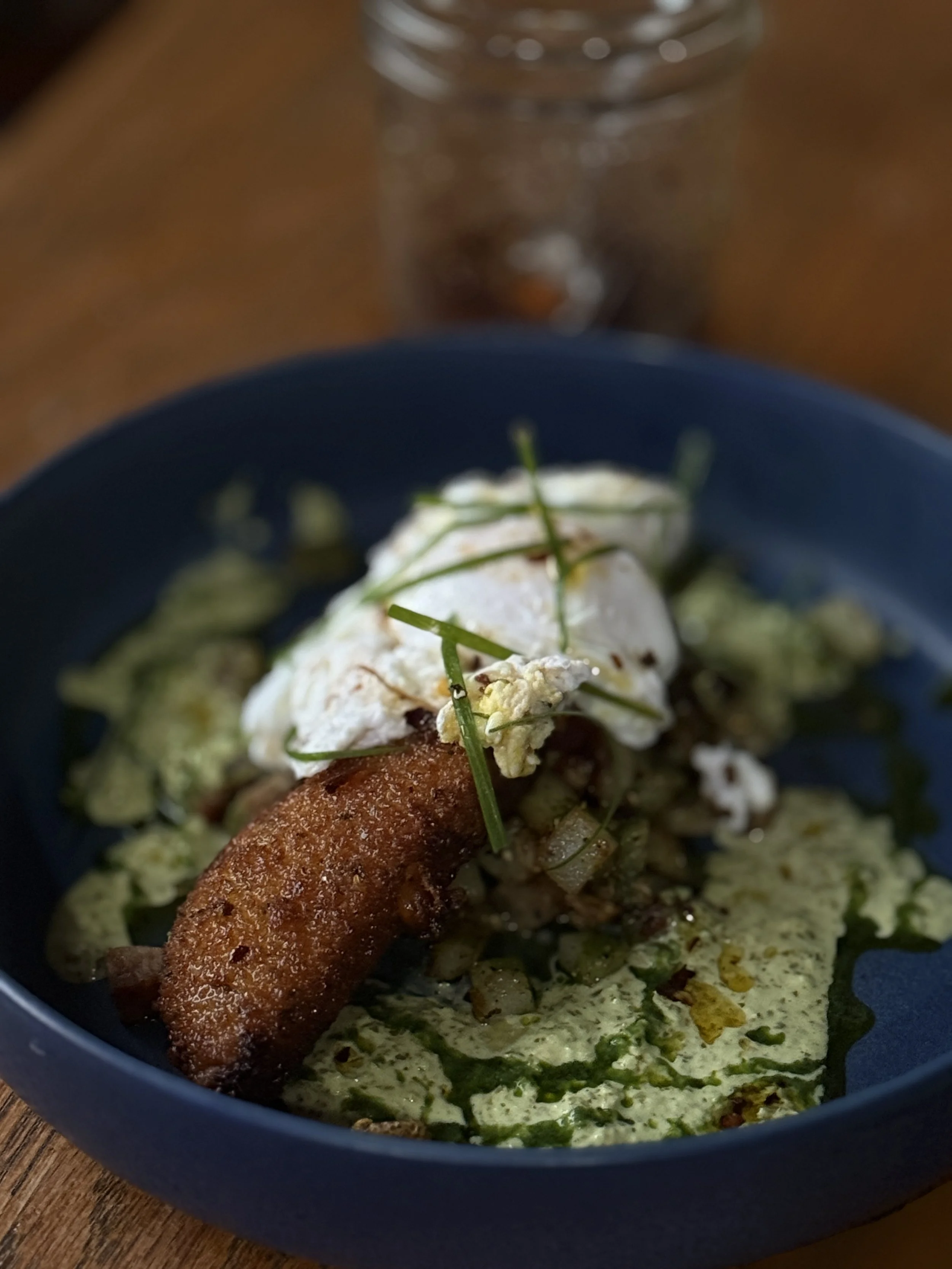
How is it possible that leftovers can teach you about life? How are they even connected? It is really simple. Recently I was out to dinner with some friends that had come into town. We met at a local Italian restaurant. We actually ended up having some; LEFTOVERS. My mind started racing, what am I goin to do with three slices of Italian sausage and one fried mozzarella. As my mind started seeing the food matrix, it hit me. I added potatoes, poached eggs, scallions. I saw the fried mozzarella as the English muffin and then I pivoted because I didn’t want to treat the potatoes as a side, I wanted them to be the co-star. The poached egg—creamy, soft, fat and texture. It was perfect in my head. Scallion oil, my PTSE sauce and then the garlic chili crisp. It was packed with flavors and textures. Just what I wanted to wake up my taste buds and get my day off right!
I sat down, broke the egg and let that yolk pop, slowly releasing the yolk. It looked like lava slowly moving down the volcano. The yolk running slowly over the potatoes and part of the fried mozzarella. The first bite, I got hit with, crunch, heat, fat, creaminess and flavor bombs. Salty and smokey from the sausage, caramelized onions and garlic layered a savory umami punch. It all just hit! Totally what I wanted and NEEDED. As I sat, this thought popped into my view. Why do we call them leftovers? To me, it carries a negative stigma, like mental health itself. We call them leftovers because they have been cooked once and we just couldn’t finish the dish so we WANT and NEED to experience the magic of this dish again. It’s this primal desire to have that dopamine rush again. When we heat the food up, it just never hits the same way. If you are nodding your head, FUCK YES, HE GETS ME! Welcome to food addiction. That is what I searched for every time I would eat. I have a new view on food. It is not a leftover. It is something to be reimagined. As Disney called his artists, Imagineers. They invented, reinvented, reimagined stories. Why can’t we look at leftovers the same way. That got me to think about how many times I have reinvented myself. I started to see this parallel between leftovers and reinvention. It is like life itself. I know, it sounds hippieish I get that, but stay with me.
Life, the red thread that is interwoven between all of us is bones and water. We chefs call it the base of our stock. You add mirepoix, aromatics, carrots, celery, onions, bay leaf, garlic, shallots, ginger. You bring it to a boil and the bubbles pull out the flavor, nutrients and impurities. White foam rises and you skim it off. If you don’t, it sours the stock. As it simmers, the water reduces and the flavors come together but the taste is still flat. You add salt. Suddenly it wakes up. The flavors deepen. You catch whispers of garlic and shallots, sweet touches of carrot, spice from the ginger. Then you strain the stock, remove the bones and vegetables, and what you are left with is the broth. Now you can build the soup. You add spices, aromatics, sauté them, deglaze with the stock, fortify it, layer it, tweak it, until you reach your vision of perfection. You let it rest one last time and then serve.
Life is never the same twice. We are constantly adjusting and seasoning ourselves, chasing a version of perfection that keeps shifting. I never thought in my life that leftovers would teach me this. Reinvention is not bad. It is survival. Leftovers prove it. They remind me that if I stay present I can take scraps and turn them into something craveable. Same with life. You either toss it in the trash or you imagine it into something new.

What a Year Later Looks Like on a Healing Journey
Healing Isn’t Linear
A year into my healing journey, I’ve learned one truth: healing is not linear. It’s not pretty. It’s roadblocks, two steps forward and seven steps back. It’s questioning every decision you make.
The darkness can consume you, enveloping you like the moon blocking out the sunlight. Along the way, you realize who is truly your support, and who is just there for convenience.
The pain of the past can cripple you to your very soul if you let it. But I’ve learned my past doesn’t shape my future. My past shaped me into who I am. It gave me the courage and strength to discover who I want to become.
Breaking the Cycle
As a child, I was told: “You will be the same way your father is to you, as his father was to him.” I will always hear those words.
One day, in a heated discussion, my daughter told me: “You are just like your father. What he did to you, you are doing to me.”
That hit my soul. I remember looking at her, taking a breath, and saying: “You will never know that pain of what my father did to me.” I walked away, but in my head a voice whispered: “You stopped it. You broke the cycle.”
That moment gave me a power I will never be able to fully put into words.
My Superpower
My father told me often: “You are weak. You wear your emotions on your sleeve. You wear your heart on your shoulders.”
He meant it as an insult, and for a long time, I believed it. I felt weak. Less of a human.
But now I know: it’s my superpower.
Showing emotions is not weakness. Holding them in is.
And for someone who once tried to end their life, I can tell you, it is not weakness. Suicide is not about giving up on life. It’s about life giving up on you. It’s about fighting until you are so exhausted the battle feels over. It’s about being so alone that not a soul seems to care.
The Power of One Hello
Humans need connection. We crave it. It’s what sets us apart from other animals.
When you hear about someone taking their life, maybe you think: “Why would they end it? They seemed so happy, they were always helping others.”
But here’s the truth: the ones always “there” for others often have no one there for them. Read that again.
One story has never left me. A rabbi told of a retired San Francisco detective who retraced the steps of people who jumped from the Golden Gate Bridge. One note stuck with him:
“If just ONE person says hello to me, I won’t do it.”
A single word—HELLO—could have saved a life.
Fire and Mindfulness
Food has taught me mindfulness. I used to cook while thinking about fifteen other things. Now, I cook with intention.
Live fire is my teacher. Fire can be deadly. It demands presence. It is primal, unforgiving, and simple. No molecular gastronomy, no tricks, just essence. Fire teaches resilience, patience, and presence.
Through food, I’ve learned to slow down, breathe, and stay in the moment.
Why I Keep Telling My Story
My journey has taught me to keep telling my story. The messages I get,“Thank you, please never stop sharing,” they are my “hello.” They are my reminder of my mission: #justonelife.
One year later, that story, my book Craveable Obsessed: Journals of a Food Addicted Chef, placed 4th in the world at the Gourmand Cookbook Awards.
But here’s the truth, it isn’t my story for me. It’s for you. It’s for anyone who thinks they’re going through this alone.
I know firsthand how dark life can be. I tell my story so you’ll never feel like you’re the only one.
👉 If this resonates, share a hello with someone today. You never know whose life it might save.
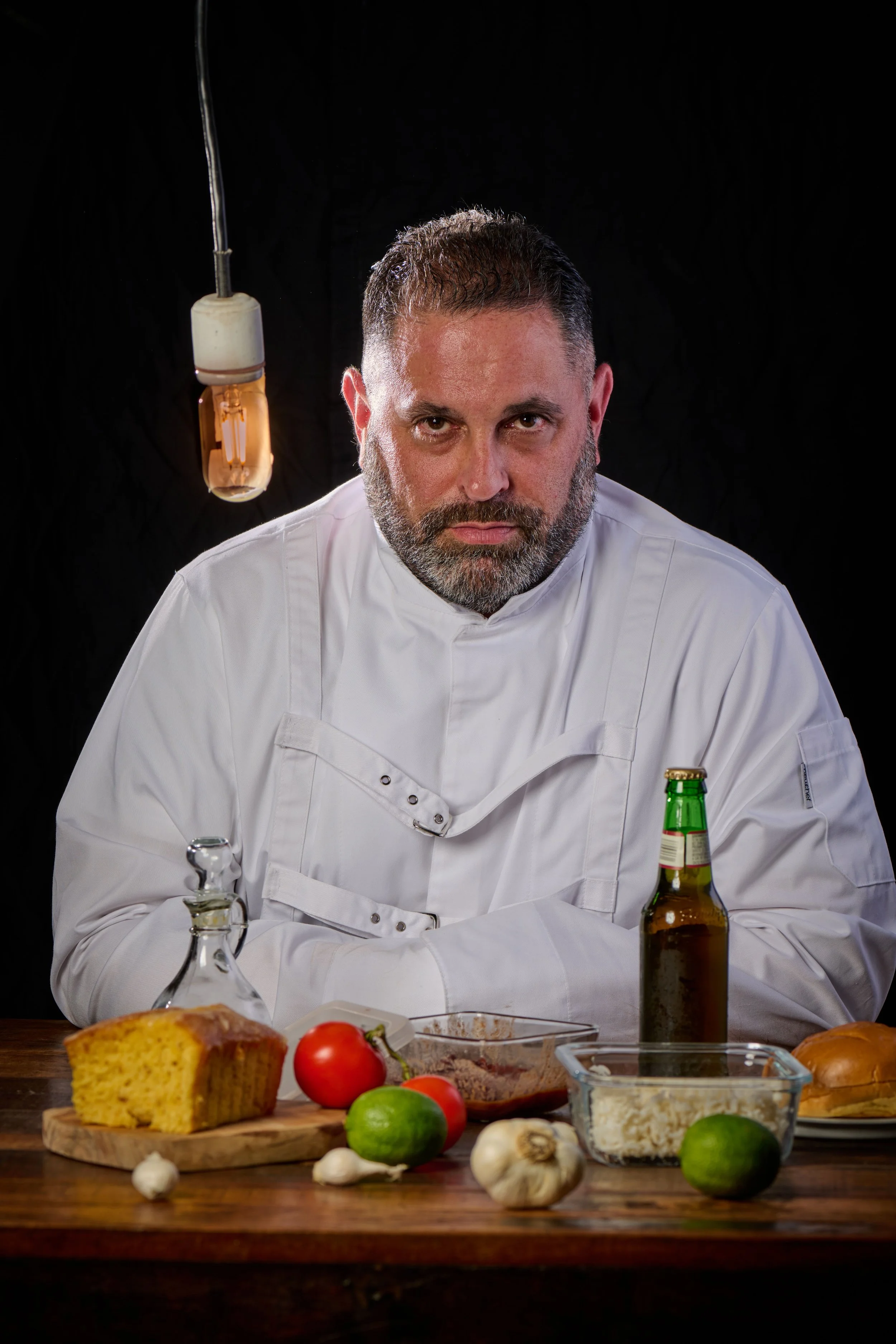
The ‘Stupid Kid’ Who Won a World Cookbook Award
Last August I released Craveable Obsessed: Journals of a Food Addicted Chef.
It took me seven years to figure out what to write about.
Seven years of circling my own story. Seven years of hearing echoes of what I was told as a kid: “You’ll never amount to anything.”
I hated reading. I hated spelling even more. And nothing filled me with more sheer panic than a spelling bee. That moment of being mocked, laughed at, called stupid.
I read slow. I felt illiterate. And I carried that shame everywhere I went.
Breaking Silence
People say I boast too much now. That I “toot my own horn.”
What they don’t understand is this: I was told to stay silent. I spent years feeling unheard, unseen, a burden. I don’t tell my story for me. I tell it for the people sitting in their own hell thinking they’re alone.
Planting the Seed
I got to know Amelia Levin through a chef’s networking circle. One day we were talking and she said: “Why not write about mental health and cooking?”
That seed sat with me. But my mind doesn’t move in straight lines, dyslexia, ADHD, it fires like a pinball machine. I chased systems and notebooks trying to organize myself, not realizing what I was really searching for: my story.
Growing Up “Stupid”
I was held back in third grade. My family had a meeting without me and decided I should be pulled out and sent to private school.
My head translated that into one message: “See? You’re stupid.”
By junior year, my GPA was a 1.4. I almost ended it all. Senior year I clawed back, graduated with decent grades. In college, at 20, I finally found out I was dyslexic. My pediatrician told me he hadn’t told me earlier because he “didn’t want me to use it as a crutch.”
Back then I wanted to put his head through a wall. Now I see it differently. But that knowledge, that all the shit I went through might have been different. I cannot change my past, it is what made me: ME!
And just last year, I was diagnosed with ADHD. Another layer. Another loop inside my head I had to fight. But instead of collapsing under it, I made a choice: to see what I’ve accomplished despite never knowing.
The Book That Wasn’t Supposed to Happen
Becoming an author was a pipe dream.
I asked questions, I picked the brains of chefs and writers. A Master Chef once told me he wrote his newsletters as if he was speaking to himself starting out. That stuck.
Still, people close to me said things like, “I haven’t read your book. I don’t like your style of writing.”
News flash: I didn’t write it for you.
On June 27th, 2025, when the Gourmand Cookbook Awards announced winners, I braced myself for nothing. I told myself: It’s okay. You didn’t win. You wrote this for people who need to hear they’re not alone.
Then I saw my book cover. I’d actually placed. Fourth in the world.
Me. The stupid kid. An award-winning author.
Family, Forgiveness, and Fire
Some family members don’t speak to me anymore. I’m okay with that.
But then one cousin texted me: “I read your book. I know you more than ever. I know myself even more.”
That floored me. That’s why I tell my story.
And then another family member reached out, someone who said, “I’m sorry for what you went through.” They weren’t the abuser. They didn’t owe me an apology. But they felt it.
I told them: don’t apologize. Don’t take on blame that isn’t yours.
I think back to my father’s last words to me: “I’m sorry. I’m sorry for what I did to you and made you feel about yourself.”
Forgiveness changed me. Forgiving him. Forgiving myself for replaying that loop over and over. The weight that lifted when I finally let that go, impossible to put into words.
From Pipe Dream to FOX 13
On August 21, 2025, I went on FOX 13 Tampa and cooked a dish from my book.
Food isn’t my coping mechanism anymore. Food is how I tell my story.
An old friend said to me recently: “Twenty years ago you always said you wanted to cook your food. Now look at you.”
Life is smoke, fire, char. But that’s what forges us.
I am an award-winning chef. An author. A father.
Not in spite of what I went through, but because of it.
Final Word
You can change your stars.
It takes strength. It takes resilience.
And it takes refusing to let anyone else write your ending.
If you haven’t picked up Craveable Obsessed yet, maybe my story will help you on your own journey.
👉 Watch my FOX 13 segment here
I want to share my deepest gratitude for everyone who has reached out, texted, called, or emailed me to say how Craveable Obsessed has touched their lives. Every message reminds me why I wrote this book. It tells me these conversations about food, mental health, and resilience matter. Thank you for allowing me to be a part of your journey while sharing mine.
#justonelife
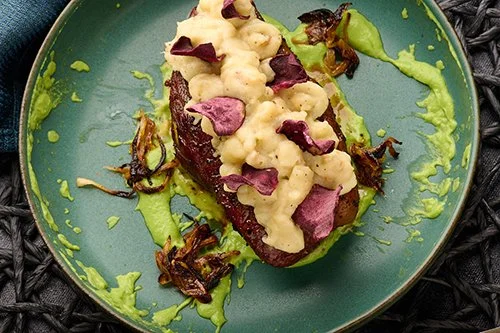
Life Lessons from Brisket: From Shepherd’s Pie to FOX 13’s Brisket Hash
Childhood Sundays with Brisket
I have a lot of food memories. One of the strongest is Sunday brisket. My mother would braise it in a rich beef stock, and my father would slice the meat. The moment that aroma hit, I was in a trance. Like a shark circling chummed water, I couldn’t resist. If I was allowed, I would have eaten my weight in brisket.
And when there were leftovers, that’s when the real magic happened. Shepherd’s Pie. No shortcuts, no microwaves, just homemade mashed potatoes, caramelized onions, and brisket layered into her famous green cassoulet dish with the wicker basket holder.
I always wanted to “help,” but let’s be real, I just wanted to eat scraps. When she built that pie, layer by layer, it was like Close Encounters of the Third Kind.
And here’s the truth: my mother was my dealer. Her drug wasn’t crack. It was brisket, caramelized onions, and mashed potatoes stacked into a Shepherd’s Pie. One spoonful and I was hooked.
When she pulled it from the oven, golden and bubbling, the first spoonful was pure theater: the crunch of potato giving way to onions and brisket beneath. My mother wasn’t just cooking, she was the Willy Wonka of savory food.
Food as Addiction, Food as Healing
Fast forward: I became a chef, and food became more than memory, it became my drug. The dopamine rush of flavor was my escape from abuse, chaos, and silence. At 10 or 11 years old, Shepherd’s Pie wasn’t just comfort food. It was survival.
But addiction cuts both ways. Food once numbed me, and nearly killed me. Today, after decades in kitchens, a suicide attempt, and the long road through food addiction, I see food differently.
It’s not my crack cocaine anymore. It’s my therapy.
The plate is no longer my canvas, it’s my therapist’s couch. Each dish tells my story: complex, scarred, layered with intention. Food, finally, is healing me.
Resilience on a Plate
When I rewrote my mother’s recipe for Craveable Obsessed, I added smoke, crunch, and depth, because that’s who I’ve become. A chef who’s been charred, scarred, but not broken.
Food has taught me mindfulness, patience, and resilience. It gave me a voice when I was silenced. It gave me a second chance at life.
From Shepherd’s Pie to FOX 13’s Brisket Hash
That’s why this week’s FOX 13 Dinner DeeAs segment was so meaningful. I shared Brisket Hash with Garlic Chili Crisp, another dish rooted in my childhood but reimagined through resilience and creativity.
👉 Watch the FOX 13 segment + get the recipe here.
At the same time, my book Craveable Obsessed just marked its one-year anniversary, and was honored 4th in the world at the Gourmand World Cookbook Awards in the Food & Mental Health category.
Brisket taught me patience as a child. Now, it symbolizes resilience, intention, and presence, lessons I carry forward in every dish, every story, and in my upcoming docuseries From the Fire.
If this story resonates, pick up a copy of Craveable Obsessed: Journals of a Food-Addicted Chef. Or follow the journey of From the Fire, where a chef share the battles they barely survived, and the food that saved them.
For me, food was never just about flavor, it was about survival. Craveable Obsessed is my journey through addiction, silence, and healing. I grew up struggling with dyslexia, and only later in life discovered I also had ADHD, battles that shaped how I saw myself and how I used food to cope.
The book tells the story of how food nearly destroyed me, and ultimately saved me. If you’ve ever felt broken and had to rebuild yourself through the things you love, I hope my story shows you that resilience is possible.
And I’m not stopping there. My next project, From the Fire, will share raw, unfiltered stories like mine from other chefs who’ve faced the dark side of the kitchen and lived to tell it, because food doesn’t just heal the people we serve. It heals us, too.
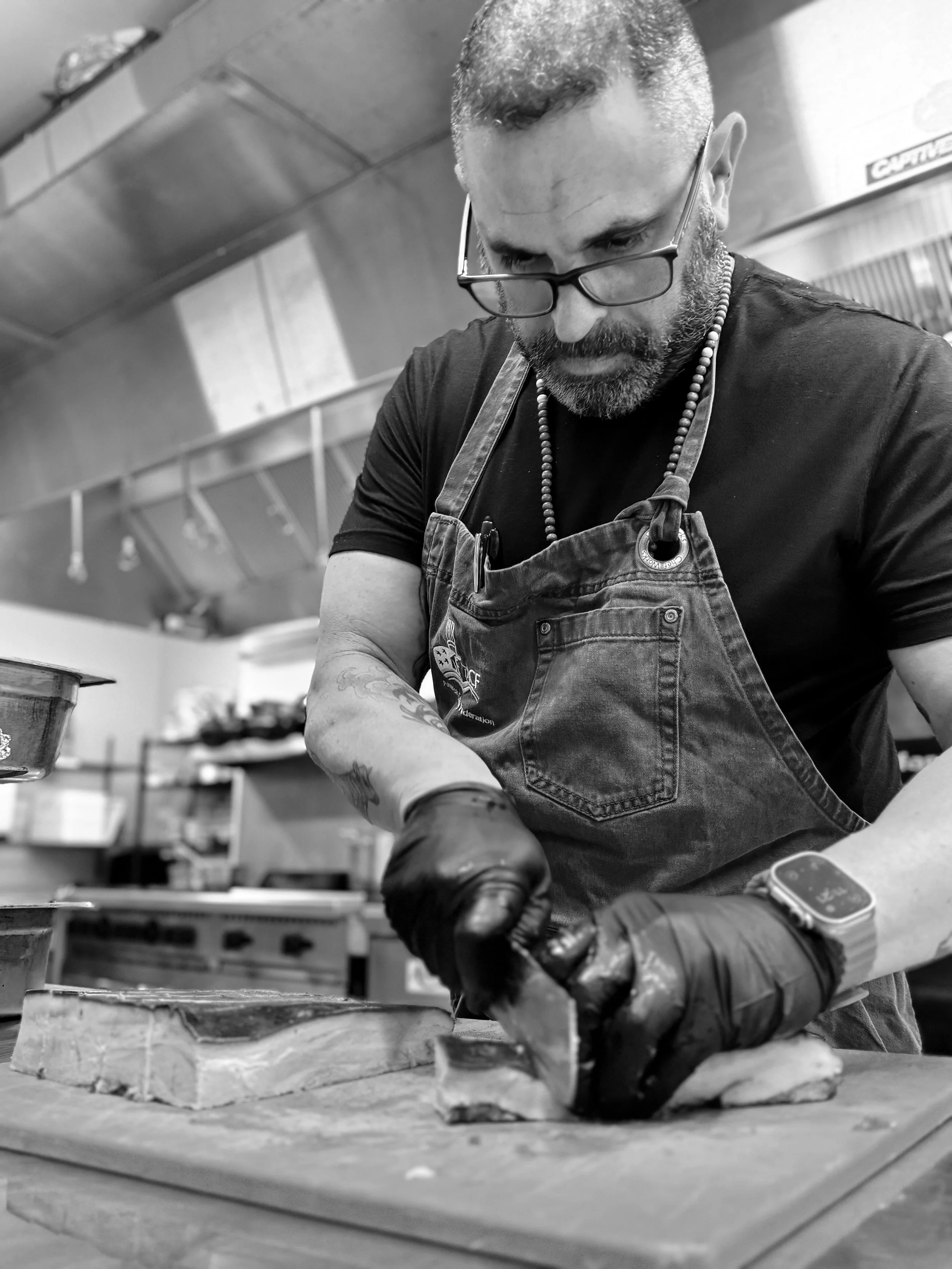
I am THAT Old Guy Now!
Back in My Day…
It was a different lifestyle back then. Like Chef Bourdain said, “Food is sex. My favorite kitchen colleagues are drunks, junkies, and ex-cons, all profane beyond imagination… They dressed like pirates.”
I remember giving the older cooks shit if they didn’t move as fast as me. Turns out life has a funny way of flipping the script.
In my generation, if you worked a ten-hour shift, that was “banker’s hours.” You said “Oui, Chef” no matter what. I remember sitting in food safety courses hearing, “If you have these symptoms, stay home.” Stay home? There was no such thing.
I’ve gone to the ER, gotten meds, and gone right back to finish my shift, not for a bonus, not for praise, but because I didn’t want to let my team down.
The Toll We Pay
When I was the property chef at the Marriott Singer Island, I was cooking through the “dead zone” between lunch and dinner when my vision tunneled and my knees buckled. I hit the floor. A FOH manager happened to walk by, scooped me up, and got me to the hospital.
When I came back, HR sent me home to rest. A while later, I was terminated. At the time, I thought, I literally gave you my all.
It took ten more years to realize the truth: my mental and physical health were more important than any shift.
But my generation? We wore burnout like a badge. “It’s what we do. You signed up for this shit.” No empathy. No compassion.
Breaking the Cycle
I made a vow: I would never be that chef. I knew the feeling of being treated like a piece of shit who meant nothing unless you hit someone else’s version of perfection. I came from a family of abuse, my job wasn’t going to become my abuser too.
So I led differently.
When a cook put up bad food, I didn’t scream. I’d ask, “How would you rate this?” They’d usually admit, “It’s shit, Chef.” Then I’d ask, “Would you serve this to your mother?” That conversation changed more cooks than any screaming ever could.
When someone nailed a dish, I stopped the line. “Who made this?” I’d shout. Nervous hands would go up. “What’s wrong with it?” I’d pause, then say, “Absolutely nothing. This is perfection. Show everyone how to plate it exactly like this.”
The smiles. The pats on the back. That’s leadership.
The Generational Gap
Today, Gen Z gets called lazy. Sometimes by their own peers. Recently, I sold my 7.5-foot smoker, “The Beast,” and the 20-year-old buying it told me flat out, “Yeah, my generation is lazy.”
Here’s the thing: Gen X loves to haze the “new kid” just like we were hazed. But if you can’t find good help, maybe the common denominator is how you treat people.
Hospitality turnover averages 74% annually: five times the national average. In restaurants, it’s over 75%, with some segments over 100%.
Training a single new FOH employee costs 28 hours and $868. BOH? 36 hours and $1,062. That’s before you factor in the cost of wasted product during training.
Keep hazing your people if you want. But when you have to close because no one will work for you, don’t blame them.
The Mental Health Crisis We Ignore
Now the part that no one wants to talk about:
• Suicide rates for male chefs: 66.9 per 100,000, nearly double the average for working-age men (32.0).
• Female chefs: 32.9 per 100,000.
• 52% of food service workers cite mental toll as the main reason for leaving their jobs.
• In the UK, 50% of hospitality workers have reported thoughts of self-harm or suicide at work.
• Youth (10–24 years old): 11.0 per 100,000, up 62% since 2007. It’s now the second leading cause of death.
Let that sink in: for high school students, suicide is the third leading cause of death.
The Choice We Have to Make
When a cook asks for a mental health day, you can roll your eyes. You can call them weak or lazy.
Or you can ask yourself, What if this is the day they don’t come back at all?
We go above and beyond for guests every single day. But for ourselves? For our teams? We demand they be robots.
All they’re asking for is balance. And we shame them for it.
It’s time to stop. Time to drag this industry out of the dark ages. Time to demand work-life balance as fiercely as we demand a perfect plate.
I’ve been to the darkness. I’ve worked through the pain. I’m still here.
And this old guy wants to make damn sure the next generation makes it too. If your team fears you more than they trust you, you’re not leading, you’re breaking them.
The next time you call a cook lazy, ask yourself, are you pushing them to grow, or pushing them over the edge?
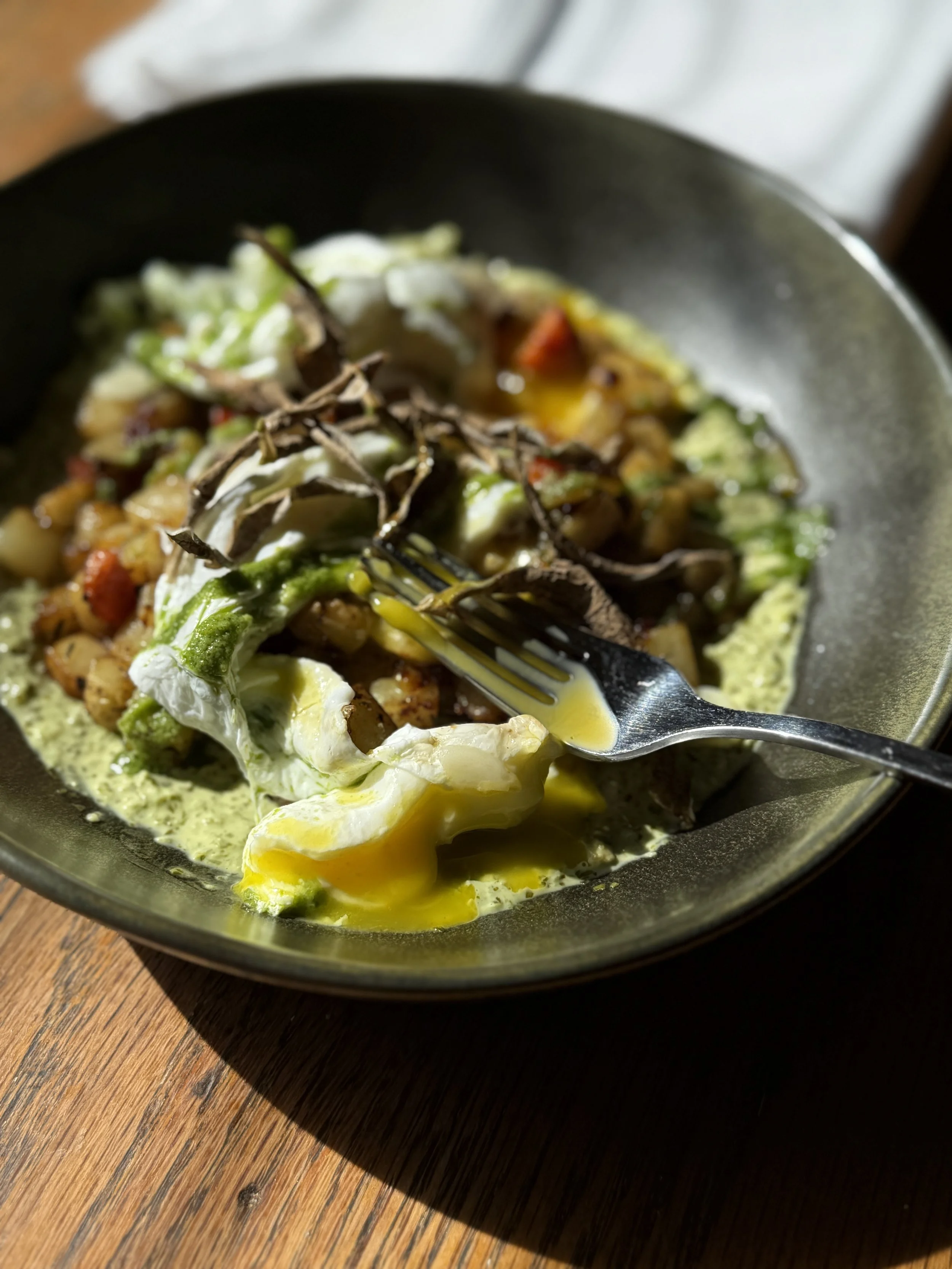
The Addiction That Follows You Everywhere
I don’t have all the answers about food addiction, just mine.
And here’s one of the first: I used to say, “I wish I were addicted to drugs, gambling, or alcohol.”
People called me out for that. But here’s why I said it: they can technically stop that act. I can’t stop eating.
Before opioids, food addiction was the number one mental health–linked killer. And it’s not just binge eating, it’s bulimia, anorexia, even exercise bulimia. I had a friend who counted every calorie, then burned every one off.
For me, it was everywhere: birthdays, funerals, holidays, hurricane parties, life's most significant events, all wrapped in food. I’d finish breakfast and already be plotting lunch and dinner. Dieting? Like putting a Band-Aid on a severed artery. This was deeper.
Food was my drug, my dopamine hit. It didn’t matter if the day was incredible (“time to celebrate”) or absolute shit (“food will fix this”).
People say, “Just change your mindset.” Easy? Easy is breathing. When food has been your coping mechanism for years, plus the trauma underneath, you can’t just flip a switch.
My shift came when I stopped making food the reward.
It’s not “I ate dinner, now I deserve ice cream” or “rough day, so I need soup for a hug.” Now, food is fuel and a story.
Cooking used to be killing me. Now it’s saving me.
Chefs in recovery often say, “Cooking saved my life.” I used to think, “Well, it’s killing me.” Then my friend Keith started asking, “Where are you?” when I cooked. That was his way of saying: be present. ’ Be mindful.
It turns out that science backs it: cooking can lower depression, build confidence, improve social connections, and boost mood. It works through mindful focus, creativity, tactile engagement, and the neuro-nutritional link between what you eat and how you feel.
Now, cooking and writing are my coping mechanisms. I push myself outside my comfort zone, try new cuisines, and stay present in the process. I use food to slow the chaos of the world, to feed not just my body but my soul, and the souls of others.
This is my story. My proof that change is possible.
If I can shift, so can you.
The Losses We Don’t Name, But Still Feel
When people hear the word grief, they usually think of losing a loved one. The dictionary calls it “deep sorrow, especially that caused by someone’s death.” But grief wears many faces.
It’s the ache of losing your youth, the energy, opportunities, or body you once had. It’s the shock of a life-changing medical diagnosis like cancer. It’s waking up after a car accident to find you have lost a limb. It’s recovering from a stroke and realizing you can’t even sign your own name.
Grief also shows up in quiet moments. The loss of a marriage, a friendship, or a lifelong dream. It can come from losing your career, financial stability, your community, or even your sense of self.
Grief is not just about death. It is about any loss that changes your world and your place in it.
When we talk about mental health, we tend to jump straight to depression, bipolar disorder, addiction, anxiety, PTSD, eating disorders, ADHD, autism, personality disorders, or schizophrenia. What we forget is that grief can rattle your mental health just as much as any of those conditions.
We even have the five stages of grief:
1. Denial
2. Anger
3. Bargaining
4. Depression
5. Acceptance
They are not a straight line. Just like with healing from trauma, we can loop back, skip ahead, or stall in one stage. It is that “two steps forward, one step back” dance.
I have my own way of mourning, just as you do. I remember the date. I remember the person. I honor them. I light a candle for their life and what they meant to me. That comes from my upbringing, my religion, and how it views death. I have been told I focus too much on the loss and not enough on the celebration. Maybe that’s true. Maybe it isn’t. But no one can tell me how I should grieve.
December 30th — my father’s last breath.
June 24th — my grandfather went in for a procedure and never came home.
February 9th — my grandmother passed after an eleven-year fight with cancer.
September 9th — my other grandfather was gone.
They will never know the comfort I felt when they came over every Sunday for dinner. I felt safe with them there.
This topic came back to me during a recent call about mental health. A chef friend told me his mother has cancer. My own mother fought and beat stage four lymphoma eleven years ago. Then, a couple of months ago, she called. I saw her name on the phone and knew it would not be good news. I was right. The scans were positive. She didn’t know yet what type or how aggressive it was, only that it was back. She’s been in treatment since.
I have not shared this news widely. There are reasons for that. But I did tell my friend, “The only good thing about cancer is that it gives us time to be with our loved ones. We get the chance to tell them how much we love them. We take time for granted until the universe forces us to slow down.”
When my grandmother was nearing the end, I told her, “When it’s your time, go. Be with Pop and be at rest. You don’t need my permission, but I want you to know that I love you and I want what’s best for you.” I don’t know why I said it, but I am glad I did. Both my grandfathers died suddenly. I never got to say what they meant to me. I made sure she knew.
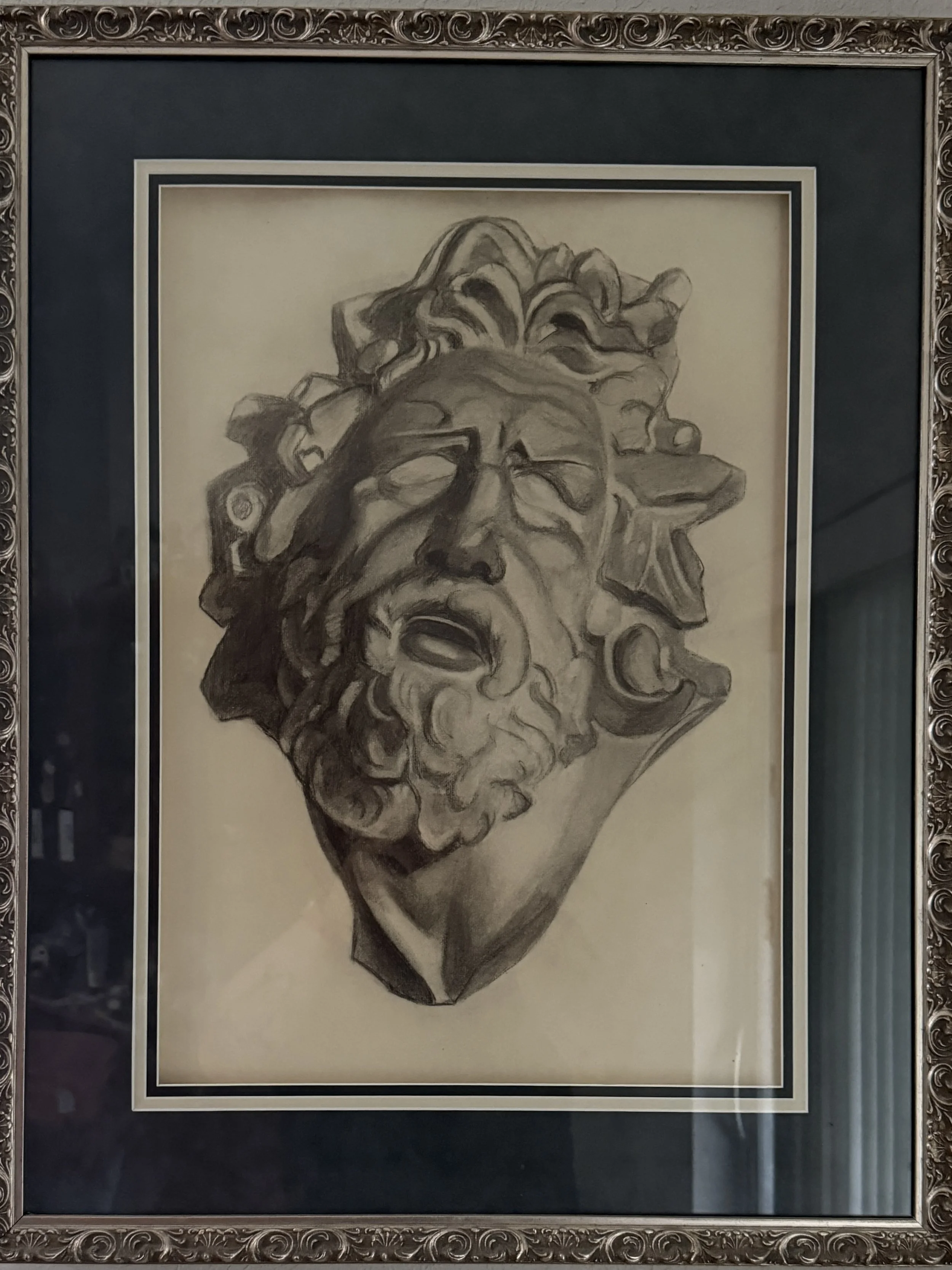
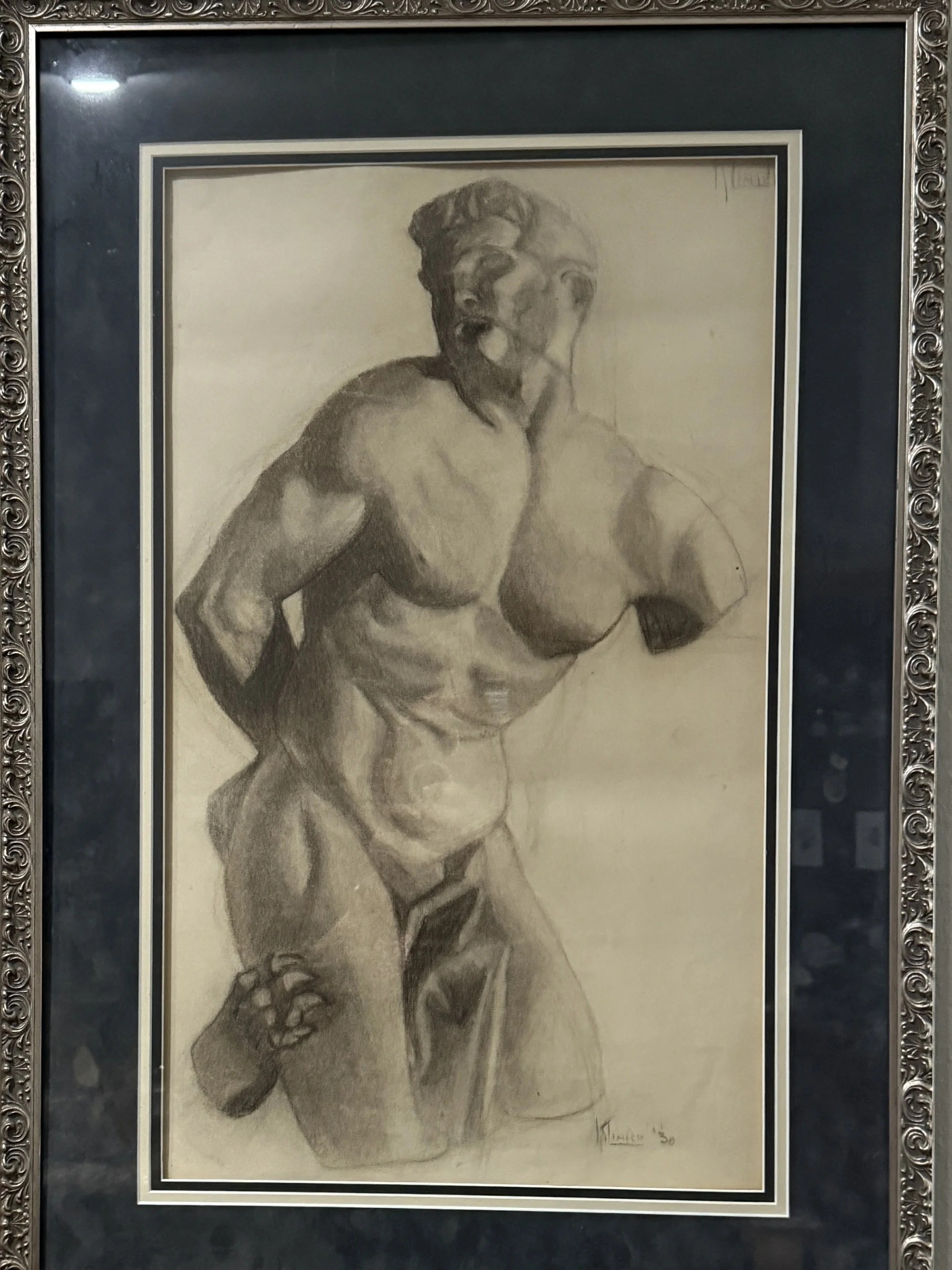
Towards the end, before she passed away, she showed me her charcoal drawings. I had never seen them. They were signed “Klimic”, her maiden name. She had twelve pieces. I was the only one who knew they existed. Ironically, there were six of us; we each have her memory with us.
Death and taxes are certain, but grief is part of living. It is part of learning, part of the healing process. I don’t know which is harder: the sudden death or the long goodbye. What I do know is that the most expensive thing in the world is time, and not even a billionaire can buy it back.
I take the time to thank the people I love as much as possible and express my gratitude. I know the one variable. I will never know when my time is up…

Community
Recently, I was listening to a podcast when someone used the word neighborhood.
Another person asked, “Why that word? Why not community?”
That stopped me in my tracks. What does community mean?
If you look it up, it’s “a group of people living in the same place or having a particular characteristic in common” or “a feeling of fellowship with others, as a result of sharing common attitudes, interests, and goals.”
I thought I knew what that meant — until recently.
When Disaster Strikes
Hurricane Milton taught me something that thirty-plus years in kitchens had not:
In the aftermath of a natural disaster, your community is everything.
As chefs, our instinct is to feed people. We want that hot meal to feel like a warm hug.
We want those who have lost so much to feel human again.
Seva: The Heart of Service
But community, for a chef, is more than just feeding others.
It’s about Seva — a Hindi word meaning selfless service performed for the benefit of others.
I’ve lived in this industry long enough to know the other side of that coin:
If you give and give without recharging, you burn out.
And recharging looks different for everyone.
For some, it’s silence. For others, it’s the bottom of a bottle or a quick escape from the pain.
After a 10-hour shift serving 200 people, standing in front of a mini inferno, the last thing you want is more noise. You want your downtime.
“If you’ve never been in the industry, you’ll never truly know the sacrifices we make.”
More Than a Network
For most of my career, I thought community meant having a network of chefs to swap ideas with.
I was wrong.
Real community is deeper.
It’s surrounding yourself with like-minded, healthy people who lift you up and have your back.
It’s the freedom to drop your guard, to let others see your weaknesses, and to let them help turn those weaknesses into strengths.
It’s having more than your own voice — it’s having many.
When Community Shows Up
Real community shows up for you.
They eat at your pop-ups.
They help you troubleshoot a recipe.
They call you when you’re struggling.
They drive an hour after a 15-hour shift just to sit and break bread with you.
They light up when you walk into the room.
That’s love. That’s family.
1,385 Miles from Home
I have more community 1,385 miles from my home than I ever thought possible.
And if you asked me what the most important thing is for someone starting out as a chef, one of my answers will always be:
Find your community.
Honoring Flavor, Honoring Myself

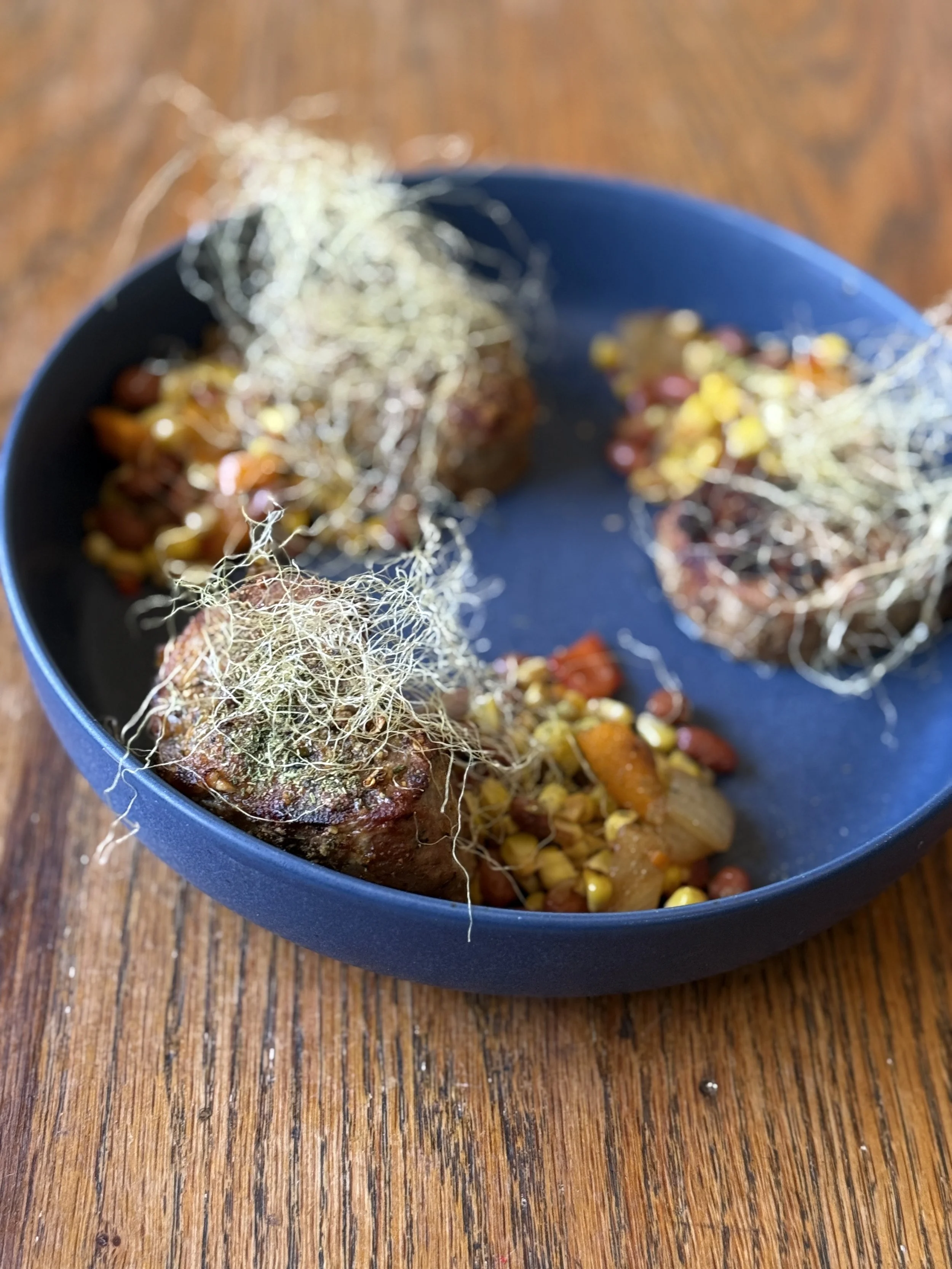
Miso herbed seared pork tenderloin | pink bean charred succotash | crispy corn silk
This dish is more than a plate. It is a meeting point between the cultures that shaped the food world and the journey that has shaped me.
When I use kasoori methi, cardamom, and fenugreek, I am paying respect to the Indian subcontinent, the cradle of spice that transformed global cuisine. When I braise pink beans, Cuban style, I honor my Floribbean roots. When I fold in miso and kimchi, I am drawing from Asian traditions I deeply admire.
But it is not just about the ingredients. It is about what they are teaching me. About restraint. About intention. About understanding that healing is not loud or showy. It is quiet, steady, and humble. This dish taught me that. And every time I cook like this, I heal a little more.
It is knowing that I am aware of my past, making sure I am healing, moving forward, learning, and most of all, believing in myself.
This is what the blog is about.
Not just showing respect for food and history, but honoring the healing that happens when we cook with heart.

Menus — So Much More Than Just Food
Ever sit down, look at a restaurant menu, and think: Damn, they’re trying to do everything.
As a chef, I see this all the time. But here’s the truth: more isn’t better, it’s just more.
• Prep load explodes
• Cross contamination risk rises
• Line cooks and pantry staff get slammed
• Guests can’t tell what the story is
• Waste skyrockets, and you end up with $200 of dried nectarines in dry storage. Money sitting on the shelf, not making the owner money, but tying up cash that could be used elsewhere
I recently looked at a menu with pork, lobster, duck, grouper, shrimp, a zillion sauces, and overlapping flavor profiles but no connective tissue.
The result? A stressed-out kitchen and a confused guest.
If you’re not looking at how you cross utilize proteins, sauces, and components, you’re heading for waste and confusion.
If you have a burger on the menu, why do you need four different types? Unless you’re a burger only joint, WHY?
If your menu needs ad space just to fit, are you in the restaurant business or selling ad space?
There’s an old saying: KISS, Keep It Simple Stupid. That’s not mean, that’s laser focused.
Let me show you why.
This menu I saw:
20 appetizers
6 flatbreads
5 salads
1 soup
6 sandwiches
5 burgers (one with eight touches, we’ll get to that)
12 entrees
2 pastas (why even have pastas then?)
7 sides (four frozen, two static veggies that never rotate)
That’s 74 items. I’m exhausted just thinking about the daily prep.
Food cost? Probably 45 to 50 percent.
You might think, isn’t that good?
Not if your fixed costs are 60 percent. Rent, CAM, you can’t change those. But you can change food cost and labor.
Here’s the trap.
The owner fires the chef, hires a new one, hoping they’ll fix it.
The new chef inherits the same mess; bloated inventory, no menu control, and has to blow through product.
Meanwhile, the owner beats up vendors for price cuts, looking for savings, without realizing the real problem: the menu.
The menu isn’t just a guest list, it’s the story of your restaurant.
If your place is called Dante’s, Lester’s, Gilbert’s, what’s your story? What’s your cuisine? How are you telling it to your guests?
The most consistent thing the restaurant industry does? Serve inconsistent food. Read that again!
When I was in culinary school, an instructor told us:
If you want consistency, go work at McDonald’s.
That’s not a dig, that’s a truth bomb.
Whether you’re in Texas, Florida, or France, you see the Golden Arches, you know exactly what you’re getting.
What if we took those 74 items and cut it in half?
37 items.
Now you can streamline ordering.
Streamline prep.
Streamline execution.
Get food out hot, right, and consistently.
Let’s go back to that burger with eight touches:
Bun, patty, LTO (lettuce, tomato, onion), cheese, sautéed mushrooms, wine reduction.
You get four of those at once, think they’re all coming out at temp?
Where’s the crunch? Where’s the acid?
What about pickled onions, a smart aioli, fresh herbs.
Simple, fast, flavorful.
Seasonal sides matter too.
If you list two veggies year-round, what happens when they’re out of season or get wiped out by weather?
Yes, we can import anything. But how does that taste?
What does it cost to your back door?
What’s the flavor loss and creativity loss when regulars get the same tired sides?
Guests: The Ones Who Pay the Bills
Here’s the kicker.
Don’t cater to them.
I know, you’re thinking, what is he talking about? They pay my bills!
Yes, but if you cater to everyone all the time, how big is that menu going to be?
I used to run special dinners once a month.
Inevitably, a guest would say, “OMG, you have to put this on the regular menu!”
No, I don’t.
It’s called a special for a reason.
It’s about FOMO, Fear of Missing Out.
Remember when you could only get Georgia peaches in season?
Now we get peaches year-round, and they taste like water.
I’ve heard owners say, “I can’t change the menu, we’ve done it this way for twenty years.”
Congrats on twenty years, but here’s the hard truth:
As your old clientele ages out, will the next generation come just because?
No.
They’re going to the new place, bold flavors, exciting menus, food that makes them want to be there.
If you don’t change, change changes you.
And while we’re at it:
If you have sesame seared tuna on your menu, WHY?
Are you stuck in the 90s?
Why not try:
Tandoori rubbed tuna, miso jicama slaw, crispy onions, green chutney.
Notice: balanced flavors. Texture contrast.
Simple, but exciting.
Final Word
Your menu is your voice.
It’s your story.
It’s your handshake with every guest.
You don’t have to do it all.
You just have to do you, with purpose, with clarity, and with the guts to evolve.
Because in the end, your menu isn’t just what’s on the plate.
It’s the promise you make to every single person who walks through your door.
Want a chef’s eye on your menu?
DM me or reach out. I’m here to help you cut the noise, sharpen your story, and build a menu that actually works.
The Never-Ending Quest For Greatness!
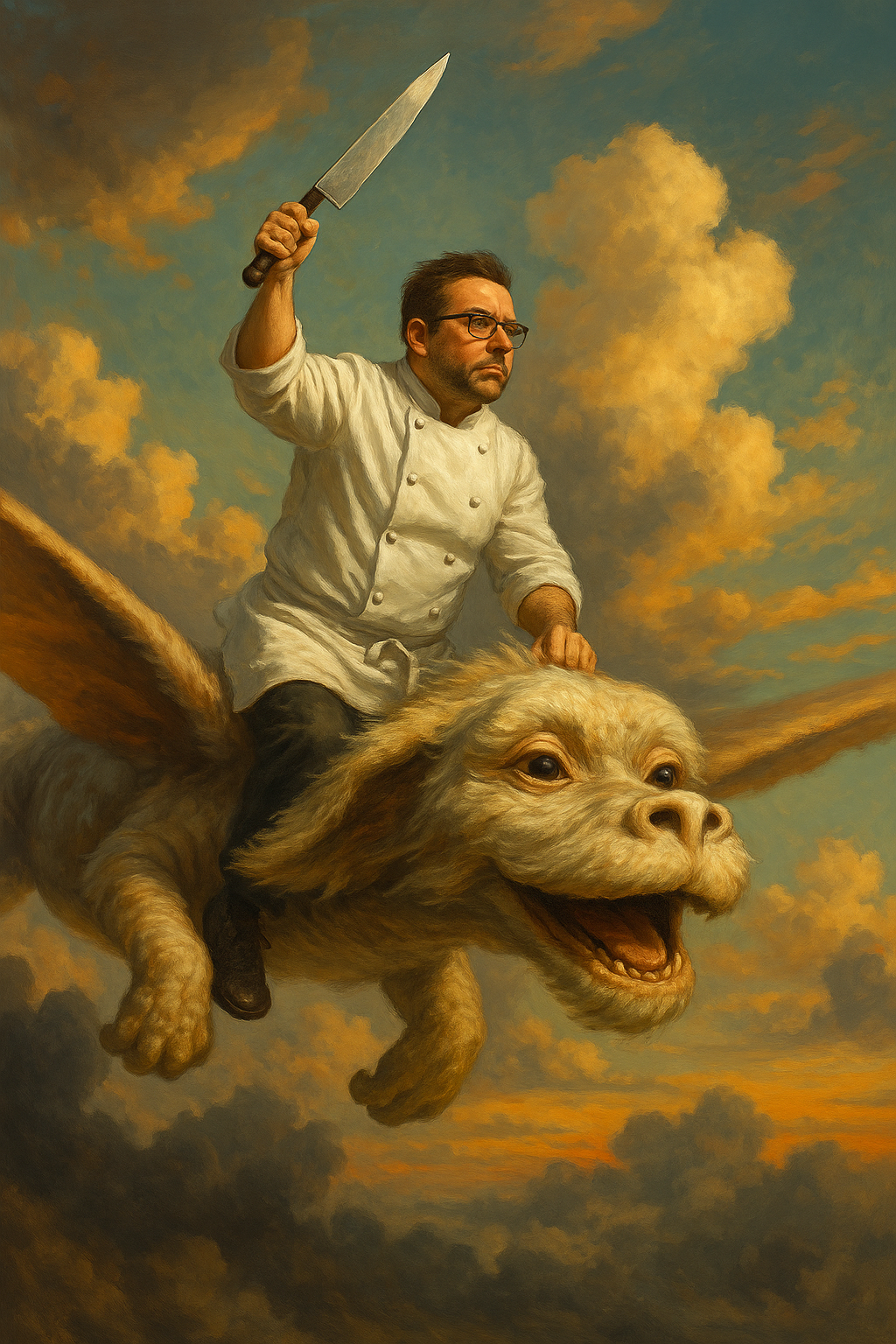
Greatness is not the absence of failure. It’s surviving the heat, owning the scars, and still walking back to the line, ready to feed someone’s soul.
Have you ever wondered how to become great at what you do?
Not what sets you apart from everyone else, not how to win against the crowd.
I’m talking about how YOU become the best version of yourself in your craft.
For me, that’s cooking. That’s being a chef.
We all have a mental image of what a great chef is.
Does it look like Thomas Keller, Rene Redzepi, Gordon Ramsay, Dominique Crenn, or Pichaya Soontornyanakij?
But here’s the real question:
Did they become great by copying someone else?
Or did they set their own path?
A great chef doesn’t follow. A great chef owns their story.
So what makes a great chef?
It’s not just skill.
It’s not just awards.
It’s not just technique.
Its purpose.
It’s emotion.
It’s a message on the plate.
Great chefs tell stories through food.
Mastery of fundamentals.
They know their craft. Knife work. Seasoning. Balance. Texture. Timing. Respect for ingredients.
Discipline and curiosity.
They never stop learning. They ask, “What if?” They study. They fail. They stay humble.
Leadership and mentorship.
They build up their team. They teach. They protect. They inspire. They know a kitchen runs on trust, not just orders.
Consistency under pressure.
Anyone can cook a great dish once.
A great chef can do it again and again, calm in the chaos, making sure the whole team shines no matter what’s happening behind the scenes.
Emotional connection.
They cook in a way that evokes emotions in people. Nostalgia, surprise, comfort, even discomfort. They leave a mark beyond just “that was good.”
Awareness and responsibility.
They understand they are part of a bigger picture. They respect where food comes from, who it represents, and the impact they make.
A great chef feeds stomachs, minds, and souls.
And they never think they’ve “arrived.”
How do I see myself?
I don’t just want to cook.
I want to express myself.
My food isn’t just about flavor.
It’s about storytelling, chaos, pain, beauty, and redemption.
I want people to taste my soul.
The layers of flavor and texture are the layers of me.
The twists and turns on the plate are the chaos and triumphs I’ve lived through.
It’s about connection, not applause.
I cook from scars, not just skill.
I own my scars.
I do not hide the dark, messy, painful parts of my story.
I put them on the plate.
Bitterness. Acidity. Unexpected textures. Quiet moments. Loud moments.
I am learning to balance chaos and control.
I tend to put everything on a plate.
To show the storm I’ve survived.
But the best art comes when I channel that storm into something intentional, not just chaotic.
My food is my story.
It is a tale of survival, grit, chaos, scars, and beauty.
I have walked through addiction, loss, mental health battles, family conflict, and deep failure.
And every bite carries the mark of that journey.
But it is not just pain.
It is resilience.
It is transformation.
It is finding light in dark places.
When you taste my food, I want you to feel layers you didn’t expect.
Moments that surprise you.
Moments that comfort you.
Moments that punch you right in the chest with truth.
I do not want perfection.
I want a connection.
I want you to finish the plate and say,
“I get him. And somehow, I get myself too.”
Who am I as a chef?
I am a chef of contradictions, chaos, and beauty.
I make people feel alive when they eat my food.
My food tells my guests that I am a survivor, a mad scientist, a storyteller, a rebel, a healer,
and someone who walks into fire, burns, and comes back with something unforgettable to serve.
Bottom line.
I am not trying to be the best chef in the world.
I am trying to be the most me chef I can be.
And that, to me, is greatness.
Drop your answer in the comments. I want to hear your voice.