
The Soul Behind The Flame

Alien
At my well-seasoned age, I have learned many valuable lessons. I know there is still so much more I could understand. Through this healing journey, I am constantly learning. I am learning who my true friends are, who support me, and who believe in me.
Funny story: I am known not just for being a chef, but also for advocating for mental health. Recently, I walked away from a project after I was told that “a sponsor” didn’t like the raw take I shared on my suicide attempt. It was a video I posted on my own social media, from my heart, as part of my own healing process.
I was shocked that in this day and age, someone would want to censor that. I wanted to know who that sponsor was, so I could ensure I never bought their products. However, whether it was a sponsor or not ultimately didn’t matter. What mattered was this: I knew it was time to move on.
As the movie says, “No one puts Baby in the corner.” And no one is going to censor me. No one.
Having a mental illness does not make you less of a man or less of a human. It is human nature to want to live. If you don’t believe me, put your hand on a hot stove. Do you move it?
I have seen the pain of suicide up close. My ex-father-in-law attempted suicide twice, and the third time, well… I won't go into details, but I know it takes immense strength to make that choice. Thirty-six years ago, I almost had the strength to take my life. And no one will ever silence me from telling that truth.
I know healing is not a straight line. It is a process that takes patience and, above all, understanding and kindness. And that kindness is not for anyone else; it is for yourself. Healing is not about never falling again. It is about how you show up for yourself when you do.
You will have days when it feels like you took two steps forward and one step back. Some days, it will feel like you are ten steps back. I realized something while journaling on one of those days.
When you grow up without affirmation, without hearing “I see you, I am proud of you,” it feels unnatural, even shameful, to celebrate yourself. Read that again.
It’s like this voice inside says, “Who am I to say I’m worth noticing? That’s for others to decide.”
That whisper, for a long time, sounded like my father. But the truth is, it was me. That voice was my own.
That voice is not the truth. That is the echo of someone else’s failure to love me the way I deserved. I learned that silence was safer. That needing affirmation was “too much.” Asking to be seen was selfish, rather than simply human.
This hits hard. And it feels alien to me, this work of learning to love and affirm myself.
I was eight years old when I first heard, “You will grow up to be a no one.”
Now, I am learning the truth.
I am Jeffrey Schlissel.
I am not an alien.
I am here. And I will not be silenced.

THE STRUGGLE
My father was never a man with much great advice. But he did teach me one thing.
One year, I was bitching because I found out I owed taxes. He looked at me and said, “I don’t mind paying taxes.” I gave him the look, you know the one, like WTF.
Then he said, “Because it means I’m making money.”
I think today, right here and now, a lot of us are battling how little money we have.
Shit. I have friends with medical issues looking to get donations, and for the first time in my life, I don’t have the money to help.
But that’s not why I’m struggling. Nope.
I realized another thing my father taught me, and he never even knew it.
In 2008, when the bubble popped, my father lost everything. E-V-E-R-Y-T-H-I-N-G.
He used to cry and tell me how little of a man he felt himself to be.
He always said, “I’m not contributing to society.”
Yeah, that’s a huge open wound for me.
Money. The root of all evil and my biggest trigger.
Yes, I have accomplishments and honors. I will never, ever negate them.
I’ve heard from so many of you, and thank you for that.
But truth be told, I am struggling.
Like most of you.
Robbing Peter to pay Paul.
Since we moved, I haven’t been able to secure a steady income, and it’s finally taken its toll on me.
I’ve made some poor choices. I’ve learned from them. I’m healing too.
The problem is that they’ve taken their toll on me and my bank account.
The last almost three years have taken a toll on me.
The move. Starting over. A podcast I never got paid for, truth be told.
The choices I made now leave me questioning my own trust in myself and my decisions.
But there’s light. There’s hope.
I have resilience.
I have walked through some fires in my life.
I’m literally still here after almost ending it.
Let that sink in.
What’s next?
I don’t have a fucking clue.
But I know this.
It’s round 15. It’s time to come out swinging.
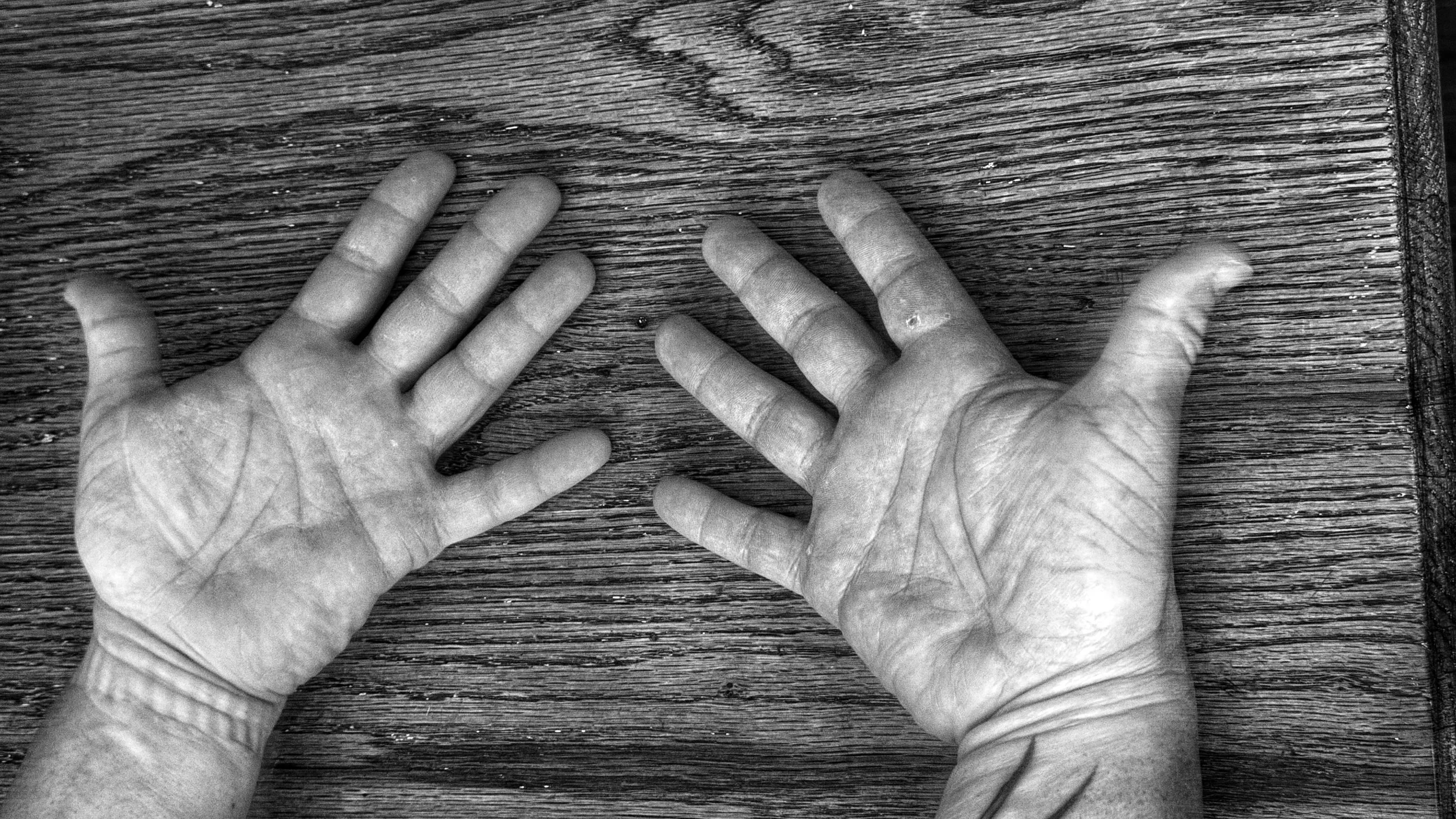
These Hands: The Story They Tell
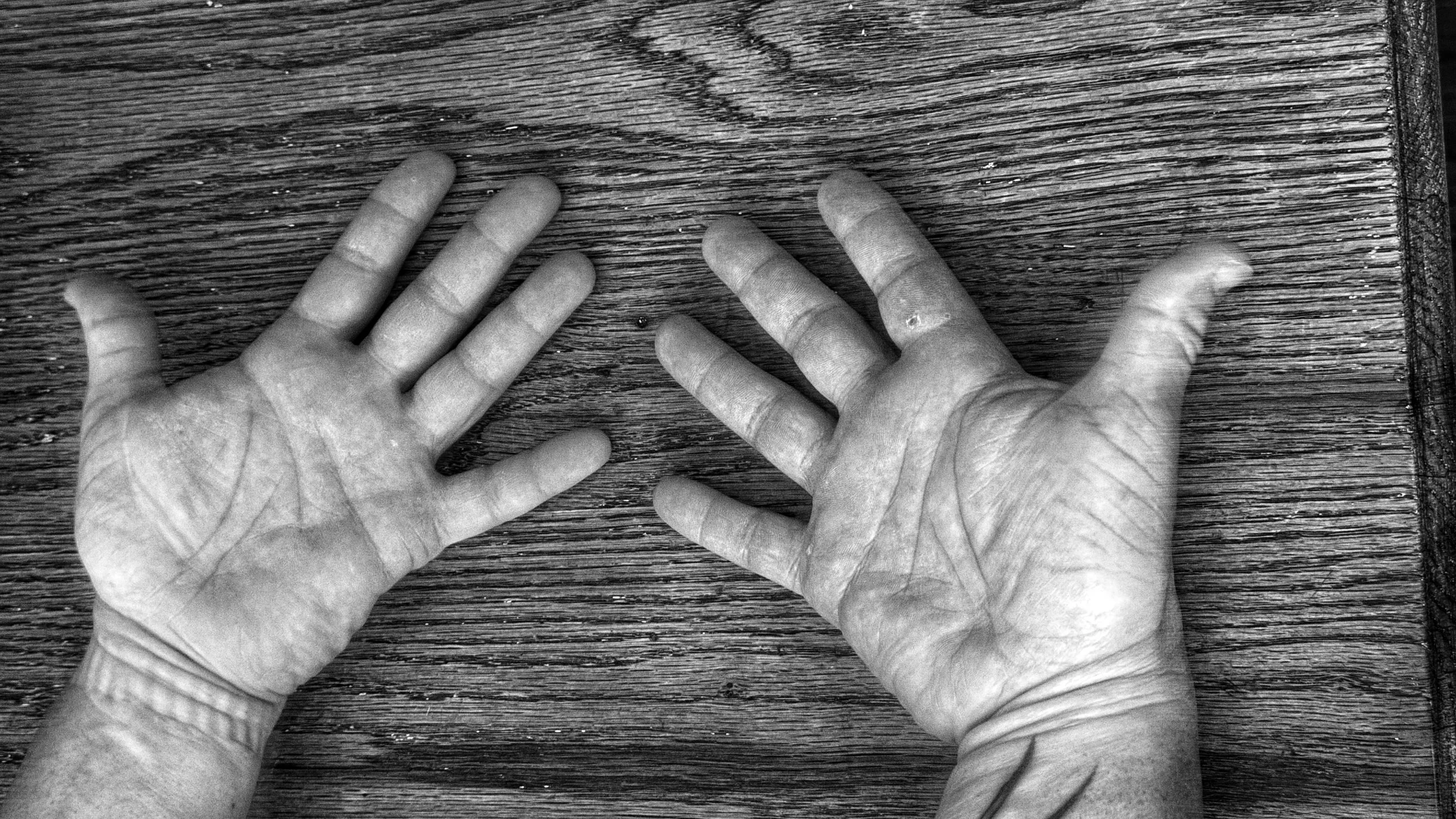
Look at these hands.
They can’t speak, but they hold a lifetime of stories.
Every scar, every callus, every burn is a memory, a badge of honor from a life in kitchens.
That speck on my finger? That’s the chef’s callus. That little knot of hardened skin is from thousands of hours gripping a sauté pan, flipping steaks, searing fish, feeding strangers, chasing perfection.
These hands have been broken, literally.
Every one of these fingers has been fractured at some point. There are stitches hidden in the folds of skin, like secret battle ribbons. That long scar down the side? I’ll never forget it.
It was a Saturday night. The shift had just started. I was bussing a table when a coffee mug disintegrated in my hand, slicing it open deep.
Three months of recovery. But it’s the story between the cut and the stitches, the blood, the adrenaline, the chaos, the laughter in the pain, that sticks with me most.
These hands are a paradox.
They can touch things that would make most people recoil in pain. In kitchens, we sadistically press fingers to hot pans, poke at blistering plates, half to test ourselves, half to mess with the new guy. It’s our dark little kitchen party trick:
“Look what I can do!”
(Yes, you just heard that in Little Stewart’s voice, didn’t you?)
But here’s the truth most people don’t see:
These hands carry more than just the physical load. They carry the emotional one, too.
They’ve held up my body when my mind was crumbling.
They’ve wiped tears no one saw.
They’ve fed people when I was starving emotionally.
They keep showing up, even when I wanted to disappear.
These hands are part of my story, but they’re also part of our story. The story of every chef, every line cook, every back-of-house warrior who has been through the fire, literally and figuratively, and kept feeding the world anyway.
So yeah, they’re scarred.
Yeah, they’re tired.
But they’re still here.

My Food Is My Silent Scream
One thing I’ve learned as my life becomes more seasoned: it’s about showing respect to the food, not just the cuisine.
How long did those ingredients take to grow before they made it to your plate? Consider the resources: time, soil, water, and labor. You can express your flavor profile with ingredients, but keep three as the star of the show. Let the others be supporting actors.
I’ve always said this about smoke. In BBQ, one of the hardest cooking mediums, the protein is the star. Not the smoke.
As I type this out, thinking about where to go next, it hits me. This dish represents something bigger. It’s about restraint to gain balance. It’s layered in texture, emotion, and spirit. It would send anyone straight to HSB, that’s Craveable. The kind that makes you close your eyes.
It’s about being purposeful. Thinking through every element: how it’s prepared, how it connects to the next. What flavor marries what texture? What story does each layer tell?
It’s about teaching yourself something new.
Stop telling yourself, “I’m not good at…”
That is you. That’s a story you’ve repeated. Reframe it: “I need to own it. I need to get better at it.” The only way to improve is to do it.
It’s like when I learned to use a Cantonese wok. I had to learn to breathe the motion. Let it become second nature. People call it muscle memory. But that phrase doesn’t do it justice. You don’t just move. You become it. That old saying, practice makes perfect?
No.
Practice makes peace.
I see growth. I see someone putting themselves out there and saying, “This is me.”
This is raw, unfiltered, and layered.
This person is not hiding anymore.
Look at the techniques used in this dish.
That takes patience.
But really? It’s passion. The two go hand in hand.
Braising.
You sear the meat for a perfect crust.
You sweat the mirepoix, deglaze, and scrape the fond.
You build the sauce layer by layer.
You reduce. You put the meat back in.
You cover it and let it take its beef bath.
That’s where the magic happens.
All this takes time.
And that’s the biggest thing I’ve learned.
I will never get it back.
So stop fucking worrying and believe in yourself.
So what if you’ve reinvented yourself so many times you don’t even know who the “real” you is anymore.
Surprise.
You’re a better human because of it.
The layers tell a story, too.
That sweet, cream-thick potato with deep, spicy, crunchy chili garlic crisp? That’s me.
Complex. Bold. Hidden sweetness. Pain with texture.
I’ve never really been heard. I’ve always had to fight to be seen. I’ve always battled just to exist out loud.
I’ve always known that.
But this hits differently now.
My food is my silent scream.
That’s why the flavors are layered. Like my trauma.
That garlic pistachio powder didn’t just add crunch. It added bite. Surprise. A twist.
Umami. Texture. Depth.
And I’m realizing something now.
When you understand things more simply,
Life doesn’t have to be so complex.
Food teaches you about life.
The DIsh - Mock smoked braised brisket | roasted asparagus | garlic chili crisp Okanawa sweet potatoes | wilted spinach | crispy garlic pistachio powder
If this hit home for you, share it. Someone else might need it today. #JustOneLife

What Needs to Change
– The abuse. The hazing. The ego-driven tyranny that treats people like disposable parts.
– The silence. The silence that kills careers, kills passion, kills people.
– The idea that burning ourselves down is the price for making beautiful food.
What Will Stay the Same
– The flame that draws us in. The thrill of the line. The hum of a kitchen when every person is moving as one.
– The pride in making something that nourishes and delights.
– The belonging that can be found when a team chooses to stand together, to rise together, and to honor the craft as much as the person making it.
This industry can evolve. Not by accident, but by design. Not through fear, but through strength. Not by silence, but by voice. Not by repeating the trauma, but by reshaping it into resilience.
If you’re reading this as a chef, cook, owner, server, or guest, this is your call.
– Will you stay quiet? Will you accept broken as “normal”? Will you hand down the knife as it was handed down to you?
– Or will you stand up? Will you draw a line? Will you carry forward the lessons learned and put an end to cruelty for good?
Because this is the truth:
We don’t own cuisine. We don’t own heritage. We don’t own the flame.
We’re stewards of it. All of us. And the flame can destroy, or it can illuminate. The choice is ours.
Here’s to ensuring that the next generation inherits more than scars and silence.
Here’s to making sure the next chef doesn’t have to break to belong.
Here’s to making sure the flame we pass down doesn’t consume the hands that carry it.
Break the silence. Break the cycle. Build better.
For you. For them. For all of us.
🗣️ Your Turn
This isn’t just my story—it’s ours.
👉 Have you witnessed or experienced this culture?
👉 What would you keep—and what must we leave behind?
Comment below. Share your truth.
Because someone out there needs to hear that they’re not alone.
#justonelife

Rewriting the Rules
The kitchen doesn’t have to kill you to teach you. The flame doesn’t have to consume you to make you a chef.
This is the moment where we decide who we are.
Not as line cooks. Not as chefs. Not as owners or servers.
But as people.
The old ways? The screaming. The hazing. The silence and sacrifice. The broken bodies and broken spirits?
They don’t make great chefs. They make great casualties.
We deserve better.
The people who walk through those kitchen doors deserve better.
The next generation, those who will inherit this industry, deserves better.
Here’s the thing:
A kitchen can be a crucible for mastery, discipline, belonging, and pride without being a war zone.
A chef can demand precision and still treat their team like human beings.
A shift can test your limits and still end with a handshake, a smile, and a sense that you’re growing, not just surviving.
Rewriting the rules means saying NO to ego masquerading as discipline.
It means calling out cruelty as cruelty.
It means honoring the worth of every person who puts on an apron and steps up to the line.
It means this:
– You can be passionate and balanced.
– You can lead and lift others, instead of breaking them down.
– You can build a team that doesn’t operate in fear, but in trust.
– You can create spaces where people don’t have to numb themselves to make it through the shift.
If this industry is to survive, it must evolve. Not because it’s popular. Not because it looks good on paper. But because it’s right.
Because the days of burning ourselves down for a plate must end.
Because no plate is worth a broken person.
Here’s the challenge:
If you’re an owner, chef, or manager, dare to break the cycle.
If you’re a line cook or a server, dare to ask for better.
If you’re a guest, recognize that every plate you’ve ever been served came from a room where people worked harder than you’ll ever know. Respect that.
The shift starts here. The shift begins with us. The shift begins when we acknowledge that creating beautiful food doesn’t have to mean creating broken people.
If you’ve felt this, if you’ve lived this, if you’re ready for a better way, share this. Speak this. Live this.
Break the silence. Break the cycle. Rewrite the rules.
More to come. Stay with me.
#justonelife

The Cost of Silence
We don’t talk about the nights we went home shaking, bleeding, unable to feel anymore. We don’t talk about it because we were told this is what it takes to make it.
Here’s the truth about silence in the kitchen: it doesn’t save you. It swallows you whole.
It turns passion into panic. Pride into pain. It buries itself in the spaces between shifts and settles like a weight on your chest.
I remember nights when I pushed down the burning in my legs, the sting in my hands, the ache in my heart, because stopping meant falling behind. And falling behind meant being called worthless, not just as a cook, but as a person. So you learn to carry it. To wear it like a badge. To say “OUI, Chef” when every bone in your body is screaming “no more.”
That silence? It doesn’t make you tougher. It doesn’t build character. It kills pieces of you. Slowly.
It’s the panic attacks at 2 a.m. when the shift is over.
It’s the pain that wakes you up in the morning.
It’s the ache in your chest when you walk through the kitchen door.
It’s the voice in your head telling you that if you don’t keep going, you’re nothing.
It’s how addiction slips in. The drinks. The pills. The escapes we justify because we’ve been taught that numbing the pain is part of the job.
And the biggest cost? It’s not just your body. It’s your heart. It’s every piece of belonging and worth that this industry grinds down until you forget why you started cooking in the first place.
I’ve watched too many chefs burn out. Too many line cooks walk away. Too many friends spiral down dark paths that end with no return. Too many broken hands and broken spirits because silence felt like the only option.
Here’s the truth I learned too late:
Silence kills. Speaking saves.
Connection heals. Isolation destroys.
We weren’t meant to walk this line alone.
So if you’re living this right now, hear this:
You’re worth more than the shift.
More than the burns.
More than the nights you can’t remember.
More than the days you can’t forget.
If you recognize yourself in these words, this is your moment to raise your hand and speak. To stand beside the rest of us and say, “Enough. This ends with me.”
Break the silence. Not just for yourself, for the next cook, the next chef, the next person who needs to hear it.
Break the silence so that the culture can finally change.
More to come. Stay with me.
#justonelife

The Culture of Abuse
It doesn’t matter how sharp your knife is when you’re too broken to hold it.
That’s where it starts. Day one. The moment you walk into the kitchen for the first time, green as hell, looking for belonging. You don’t know it yet, but you’re about to be baptized by flame and steel. Not the romantic version. Not the one you see on cooking shows. The brutal one. The one no one talks about until long after the burns have scarred over.
I remember those nights. The chef barking, “Move with urgency! Move with purpose! No excuses!”
I remember burning the tips of my fingers because I refused to slow down.
I remember the sting of being called worthless when the ticket times weren’t met.
I remember hauling ass, trying to carry a load meant for two, praying no one noticed how tired I was.
It doesn’t matter if you’re exhausted. You don’t ask for water. You don’t ask for rest. You don’t ask for help. You just keep going. You swallow the hurt, the anger, the fatigue, the fear, and you call it strength. You call it paying your dues.
That’s how this industry was built. Not on mastery. Not on discipline. Not even on passion. But on silence and sacrifice. You’re taught that your best will never be good enough. You’re taught that pain earns respect.
I worked under chefs who would scald your hand to prove a point. Owner after owner who treated staff like disposable parts. Line cooks would often brutalize prep cooks, making every shift feel like hazing. “If you can’t stand the heat, get out of the kitchen” wasn’t just a saying. It was a threat.
And the worst part? We accepted it. We passed it down like a family recipe. We called it a rite of passage.
Here’s the truth: this industry doesn’t have to be this way. The flame can refine you, not destroy you. The knife can shape, not scar. The shift can be a teacher, not a death march.
But first, we have to call it what it is.
This is abuse. This is trauma. This is brokenness disguised as belonging.
If this story sounds too familiar, you’re not alone. We can’t fix what we don’t acknowledge. We can’t save ourselves until we save each other.
If you’ve lived this, if you’re living this right now, I want you to know this:
You are worth more than the scars.
More than the burns.
More than the sleepless nights and shaking hands.
More than the “you’re not good enough” thrown across the line.
The days of accepting cruelty as a rite of passage must end.
The days of silence must end.
If this spoke to you, if you’ve lived this, if you’ve felt this in your bones, share it. Speak it aloud. Let this be the crack in the armor that lets the light in. We can’t fix what we don’t acknowledge. Let’s rewrite the rules. Let’s do better. Together.
#justonelife
This is just the first cut.
More to come.

“I don’t know what to do.”
That’s what my friend said when they opened up about their kid struggling with depression.
I didn’t give advice right away. I didn’t try to fix anything.
I just sat there and listened.
When they asked, “What do I say to them?”
I asked them one simple thing:
“When you’re feeling low and someone says, ‘Why would you think that? You’re so smart, so talented…’—what do you actually hear?”
You probably just heard Charlie Brown’s teacher in your head, right?
“Wah wah wah wahhh.”
There was a little silence, and they said,
“I hear: dumbass.”
And I said,
“If someone spoke to your kid like that, what would you do?”
Again, they went quiet.
So I asked,
“Why do we talk to ourselves that way?”
⸻
Look, I’m not a therapist. I’m just a chef. But I’ve been in that dark place. I know what it feels like to be buried in your own thoughts, to feel like no one hears you.
So I told them this:
“You don’t need to give answers. You just need to acknowledge what they’re feeling.”
They said, “But I do! I tell them they’re smart, they’re strong…”
And I stopped them.
“Yeah, I know. We all do that. We mean well. But when someone’s depressed, they’re not thinking straight. They’re not hearing that. It’s like yelling encouragement into a sealed room—they can’t hear you.”
Instead, try this:
“I see you. I see that you’re hurting. I won’t pretend to know what you’re feeling.
But I’m here. You lead the way. If you want to talk, I’ll listen. If you want help, I’ll show up.”
That alone can give someone the thing they’ve been craving:
To be seen. To be heard. To know they’re not alone.
⸻
This month is Men’s Mental Health Month.
It’s not about being strong. It’s about being real.
And maybe—just maybe—listening a little more.
That could change someone’s life.
Maybe even save it.
#JustOneLife
#MensMentalHealthMonth
#CraveableObsessed
#MentalHealthInTheKitchen
#ISeeYou

The Unseen
Have you ever wondered what it would feel like to be invisible?
When you saw Harry Potter get the invisibility cloak, you were like, “Lucky bastard!” I get it—why you’d feel that way.
But have you ever felt invisible without the cloak?
Like you’re screaming for someone—anyone—to hear you… but nothing comes back?
Let me break it down.
Picture yourself in a box, buried. Layers of soil packed on top.
Do you think anyone would hear your screams?
That’s what it feels like for a lot of us.
Do You SEE People? Really See Them?
How often do you go out of your way to say:
“Hey, I see you.”
“I love your energy.”
“It’s paying off—all that hard work.”
It’s interesting, isn’t it?
How 26 letters can be arranged to either uplift or destroy.
I’ve been going to the gym since I was 16. It’s my way of releasing negative energy.
I don’t expect strangers to come up and say, “Man, you are determined, it shows.”
But from someone close?
That hits different. And when it’s not there, it stings.
We see the people closest to us the most.
So how do we let them know we really see them?
We make them the point.
We choose to say, “Hey, I see you. You look great.”
Try it.
That one sentence might be the fuel someone’s been starving for.
When the Question Triggers the Truth
Funny thing—while typing this, I replayed a question someone recently asked me:
“What’s it like to be unseen?”
My brain started firing. But my mouth… paused.
I finally said, raw and unedited:
“I was going to answer… I’ve been unseen all my life.”
It wasn’t the question that triggered me.
It was the answer.
Because it was my truth. The version of me that doesn’t sugarcoat, doesn’t script.
All I ever wanted were words that lifted me.
Instead, most of them broke me.
The Hard Truth About Growing Up
Life is better now, but damn… adulting?
That thing we used to race toward? Not what we thought it would be.
People have walked in and out of my life.
I’ve done the same.
Some leave an imprint.
Some tattoo your soul and never let go.
And now, as I grow—not just in age but in finally figuring out who the f*** I am—I realize this:
Everything comes down to one word: choice.
On Forgiveness and Perspective
I’ve been hurt by people.
I’ve also hurt people. Let’s not pretend I haven’t.
But I get to choose how I see those relationships:
• As pain?
• Or as the curriculum of growth?
Someone asked me, “What was it like to forgive your father?”
It was a lot.
But here’s what I felt: not pain. I heard his pain.
And I was—am—at peace with that.
From Shadows to Sight
Depression amplifies loneliness. It pushes us deeper into the dark, where our voice doesn’t echo back.
That’s when we feel most unseen.
So, if you’re reading this—thank you.
Yes, you.
For seeing me.
For letting me vent.
For loving me in your own way.
And most of all—for teaching me.
I made a choice:
To see our connection as an opportunity.
To grow.
To heal.
To become the version of me that doesn’t just survive—but lives.
Final Words
Letters. Arranged in certain ways, they make words.
And some words? They can save someone.
Even a simple:
“Hello.”
“I see you.”
“I’m proud of you.”
Those words can stop someone from sinking.
So, be the reason someone feels seen.
And if you feel buried? I see you too.

Cooking from the Heart Isn’t Just a Saying.
At 54, Chef Jeffrey Schlissel finally understood what it means to “cook from the heart.” This raw, soul-baring post reveals why feeding others became his lifeline—and how selfless service, food, and fire saved him from silence.
Why I became a chef.
Why I’m on this path.
Why I keep going—when the fire burns low and the noise in my head gets loud.
There’s a word in Hindi: Seva. It means selfless service. And that? That’s me to the core.
I’ve spent years carrying weight I couldn’t name. Depression. Food addiction. Doubt that clung to me like kitchen grease. I didn’t have a voice back then. Hell, I didn’t think I deserved one. So now? I am the voice—for the ones who feel invisible in the back of the house, or trapped behind a smile they can’t keep holding.
As a chef, I get to do something sacred: I feed people’s souls.
That’s Seva.
That’s Bushidō.
It’s not about the spotlight. It’s about the service. The duty. The why.
I’ve always said: “If we could just cook the food we want to eat, how much better would it be?”
Now? I get it.
At 54, I finally understand that cooking from the heart isn’t some Hallmark bullshit. It’s survival. It’s passion, yes—but it’s also pain, and healing, and respect.
Respect for the ingredients.
Respect for the farmers.
Respect for the gift I’ve been given—to turn chaos into beauty on a plate.
It’s a dance.
A messy, gritty, beautiful dance between fire and flavor, discipline and intuition, trauma and triumph.
And when I cook like that—when I show up like that—I’m not just feeding people.
I’m serving something deeper than just a meal. I’m healing something primal. It’s my calling and that is why I am still here serving

To Be Seen
I go days…
Weeks…
Months…
Posting content. Pouring my story into the void. Not knowing if anyone is actually listening.
But then something happens.
A message.
A moment.
A mirror I didn’t ask for, held up by someone who saw me—really saw me.
Yesterday, that mirror came from a fellow cook I used to work with—Damon Hebert. Out of nowhere, he messaged me and said I was his Bourdain.
And let me be real—this wasn’t a comparison. That’s not what hit me.
What hit me was this:
To Damon, I was what Bourdain was to so many.
Not because of fame. But because of truth.
Because I dared to tell the story others were too afraid to say out loud.
Because I didn’t wrap my pain in ribbon—I lit it on fire and plated it with purpose.
Because I survived—and made that survival loud.
And in doing that, I left a mark.
See, I don’t do this for clicks.
I don’t do this for comments.
I don’t do this for clout.
I do it for you.
The one person sitting in the dark, scrolling with a heavy heart.
The one who thinks, “Nobody gets it.”
The one who wonders if it’ll ever get better.
If that’s you—I want you to hear this:
You’re not alone.
Not in your cravings.
Not in your chaos.
Not in your healing.
I share my scars, my story, my food…
Because no one did that for me.
And it cracked the silence wide open.
To be seen—it’s not about ego. It’s about connection.
It’s the wind beneath your wings when you’re too tired to flap.
It’s the whisper that says, “Keep going.”
I don’t just cook to feed people. I cook to show them:
There’s life after pain.
There’s purpose in the mess.
And there’s power in choosing to stay.
So if this post landed in your feed today—
It’s not an accident.
You matter.
You’re seen.
You’re not crazy.
You’re not broken.
You’re just healing in real time.
Pull up a seat.
This table was set for you.
#HealingTable #YouAreNotAlone #MentalHealthAwareness #FoodAddictionRecovery #ChefLifeUnfiltered #CraveableObsessed #FloribbeanSoul #SeenAndStillHere

Fresh Perspective
“Do you know what I’m craving? A little perspective. That’s it. I’d like some fresh, clear, well-seasoned perspective. Can you suggest a good wine to go with that?”
— Anton Ego, Ratatouille
As chefs, we always talk about the freshness of our ingredients. We look for the best because we know fresh is best. Period.
There’s an old saying we use about coming ingredients coming through the back door:
“You can put lipstick on a pig… It’s still a pig.”
We say that to mean the product is shit. No matter what you do to it, the result will still be shit. If you’ve been in the business, you’ve heard it and you know exactly what it means. It’s one of those hard lessons we all learn.
Those “tricks of the trade” are passed down from the generation before us. In the industry, we often call that mentorship. But for me, mentorship is so much more.
Here’s how I define the relationship between mentor and mentee in our world:
🔪 Mentor:
A mentor in the culinary world is typically a seasoned chef or experienced professional who provides guidance, knowledge, and support to less experienced cooks or chefs. They share their expertise on techniques, kitchen management, and the business side of the industry. More than just a teacher, a mentor also helps mentees navigate the personal challenges that come with a demanding career, offering advice, inspiration, and a model of professional conduct. Mentors often shape a mentee’s culinary identity and career path in ways they may not even realize at the time.
🔥 Mentee:
A mentee is usually a cook or junior chef who’s eager to learn and grow under the guidance of someone more experienced. They want to refine their skills, understand the complexities of the kitchen, and develop professionally and personally. A mentee looks to a mentor not just for technical know-how but also for career advice, industry insight, and, often, life guidance.
In this industry, the mentor-mentee relationship is intense and hands-on. The mentor passes down not just recipes and techniques, but also the ethos and soul of the kitchen. It’s a bond built on mutual respect, shared passion, and a commitment to growth.
And that relationship should be symbiotic.
In a healthy mentorship, learning flows both ways. Mentors share their experience and wisdom, but mentees bring fresh eyes, new ideas, and skills that challenge the status quo. This dynamic keeps both parties evolving, especially in an industry that moves as fast as ours.
Being open to learning from your mentees isn’t just helpful—it’s necessary. It keeps you relevant. It keeps you human. It keeps you from becoming the crusty old cook yelling at clouds.
But there’s a dangerous, slippery slope too.
Because of the closeness, sometimes boundaries blur. Lines get crossed. And that can send the whole relationship spiraling. I’ve had mentees go down paths I disagreed with. Full disclosure? Some of those choices hit my soul hard.
You start questioning yourself:
Why the hell do I keep giving my heart to people who might not stick around, or worse, go off the rails?
It’s a brutal place to be.
But here’s the truth: the culinary world is relentless. It often attracts people who thrive in high-pressure chaos, and sometimes, that comes with addiction, instability, or deep emotional wounds.
That’s where boundaries matter.
You can only do so much as a mentor. You’re there to guide, support, and offer what you’ve learned—but you can’t walk the path for them. Not every mentee will stay the course or reach the potential you see in them. That’s not a reflection of your value or effort.
It also doesn’t mean you failed.
Every mentee’s journey is different. Some of the lessons you offer might not land until years later. The fact that I still reach out to people like Alan Lazar shows that the impact is real, even if it takes time to be felt.
💡 So, what have I learned from decades in this game? Here’s the short list:
Select Mentees Wisely
Be intentional about who you mentor. Make sure there’s mutual respect and shared commitment to the process.
Set Clear Boundaries and Expectations
Define what mentorship looks like—goals, communication, and limits. That clarity creates a healthy space for both of you.
Acknowledge the Non-Linear Nature of Growth
Success isn’t a straight line. Growth can be messy, slow, or silent. Your impact might not be visible right away, but it’s there.
Focus on the Journey, Not Just the Outcome
The process itself is meaningful. Support and guidance are the key to success, not just the mentee’s accolades.
Protect Your Own Energy
You can’t pour from an empty cup. Take care of yourself. Set limits. Find your support network, too.
Accept the Natural Flow
Mentees might leave, change paths, or outgrow the relationship. That’s normal. Let it happen with grace and pride.
If you notice a mentee struggling, don’t try to be everything for them. Help guide them toward someone who can help—whether that’s a sponsor, a therapist, or another mentor. We say “it takes a village” to raise a child… why wouldn’t it take a village to help someone grow into their best self?
Being a mentor doesn’t mean you carry the whole burden. It means you help them build a network of support so they can keep growing, without burning yourself out in the process.
Who planted a seed in you that still grows today? Tag them.
And if you’re mentoring someone now, what’s the fresh perspective they bring to your life?
In the end, mentorship—like great cooking—isn’t about control. It’s about balance. It’s about seasoning.
And sometimes, all it takes to realign… is a little fresh, clear, well-seasoned perspective.

When Helping Others Becomes a Disguise
A powerful reflection on emotional burnout, isolation, and the painful truth behind over-giving. Learn what happens when helping others becomes a mask—and how to reclaim yourself piece by piece.
Have you ever felt like you were completely alone?
Do you feel like there is no one you can turn to in your moment of need?
Are you someone who believes most people only show up when they want something — but disappear when it’s time to reciprocate?
Gary Chapman wrote a popular book called The Five Love Languages. If you nodded at that title, you’re likely a seeker. What are you seeking? That’s your journey to figure out. But I know this:
That old saying? “It’s not about quantity, it’s about quality.”
It’s not just a slogan.
It’s a survival truth.
Lately, I haven’t felt like myself. There are days I feel like I’m halfway up the summit of Mount Everest and all my gear broke — and my guide is gone. Panic sets in. Survival mode takes over. Desperation whispers louder than logic.
Growth is not easy.
It’s not a straight line.
It’s uncomfortable.
It’s vulnerable.
It’s choosing to leap into darkness and trust that something on the other side will catch you. And when you ask: “How do I reclaim who I am if I really don’t know who I’m supposed to be?”
The answer is: You reclaim yourself in pieces.
You remember what lights a fire, what feels like truth — even when everything else feels foggy.
⸻
So ask yourself:
• What makes me feel most alive — even for a moment?
• When do I feel proud without applause?
• What am I doing when I feel the least like I’m performing?
• What kind of peace do I want to protect?
• What kind of pain do I want to stop repeating?
The answers become your compass. Not a map. Just the next right turn.
And here’s a deeper truth:
You were shaped by survival.
Loyalty. Silence. Sacrifice.
But now? You are being shaped by choice.
And every boundary you set, every truth you speak, every meal you cook that nourishes you — is a declaration:
“I’m still here. I’m still becoming.”
⸻
The ache of isolation? It hits differently when you’ve always been the one holding everyone else up. You built a brand around nourishment. But sometimes, you feel starved. Not just for food. But for presence. For peace. For the purpose.
And still — you show up.
So let’s play devil’s advocate:
Did you stay too long with people who couldn’t show up for you? Maybe.
Did you say “I’m fine” when you weren’t, because you didn’t know how to fall apart? Probably.
But that doesn’t make your pain invalid.
It doesn’t make your help a mistake.
It makes you human.
Helping others wasn’t just a purpose. It was armor.
It kept you from looking too hard at the wreckage in your own story.
Because facing that?
Facing what you did to yourself?
That was terrifying.
But now?
Now you’re done pouring from a broken cup.
You’re not asking for pity.
You’re asking the fundamental question:
“What about me?”
That question isn’t selfish. It’s sacred.
It’s the first time you’ve looked inward and said:
“I deserve peace. I deserve presence. I deserve to be at the table I’ve served everyone else from.”
So this is the beginning.
Of a different kind of healing.
Of setting boundaries not from anger — but from love.
Of becoming the version of you that’s not built to endure, but built to live.
You don’t need everyone.
You need the ones who show up when you’re not performing.
When you’re not cooking.
When you’re just… real.
It’s not about quantity. It never was.
It’s about the few who hold space for your whole damn soul.
And this time?
You’re holding space for yourself, too.
Have you ever asked yourself, ‘What about me?’ Drop a ‘YES’ in the comments if this hits home, or share your version of reclaiming peace.

Matzo Ball Soup Wasn’t Supposed to Save Me—But It Did
Jewish Penicillin: What Matzo Ball Soup Really Healed
Jewish Penicillin
noun
A traditional Jewish chicken soup, typically with matzo balls, believed to provide comfort and healing properties—especially when someone is sick.
⸻
It’s funny to think that a simple soup could hold so much meaning. But matzo ball soup?
It’s not just a dish. It’s a time machine. It’s protection. It’s therapy with a side of schmaltz.
According to Haaretz, matzo ball soup has been around since at least the 12th century. Maimonides—yes, that Maimonides—claimed in his book On the Cause of Symptoms that chicken soup could relieve colds, nourish pregnant women, and even cure asthma and leprosy.
(Now that’s a Yelp review.)
⸻
The First Spoonful
Growing up in a Jewish household, matzo ball soup was our go-to when we weren’t feeling well. I was born in a time when boxed matzo ball mix wasn’t the norm. You made them. From scratch.
Let’s be real: there are two types of people in this world—those who love “floaters,” and those who are just plain wrong. Dense matzo balls? That’s stucco. Use them to patch a wall.
Most cultures have a cold remedy soup. But matzo ball chicken soup? That one hits different.
It’s sacred. It’s the warm hug that showed up when everything else felt unsafe.
⸻
The Seder Food Orgy
Passover was a food orgy. Two nights. Two sides of the family. And yes—food orgy is the correct term.
“Chef, how many courses are in a traditional seder dinner?”
Answer: Too many. Your brain will explode.
Matzo ball soup was always the first real food—after wandering the symbolic desert for what felt like 40 years. It came with yelling across the house:
“Bernie, how many balls do you want?!”
Now read that in Fran Drescher’s voice. You’re welcome.
“I’ll have two with a carrot!”
“Are they floaters? If not, I don’t want any!”
⸻
Memory, Trigger, and Truth
We always say “simpler times.” But typing those words triggered something.
Simpler for who?
I flashed back to my younger self—and saw the truth:
The abuse. The silence. The fear. Matzo ball soup wasn’t just food. It was a shield. It was protection.
My grandparents? Guardian angels. Their presence brought peace. When they were around, people behaved. That soup was peace. It was the hug that got you through the meal without breaking down.
⸻
Time Travel with Schmaltz
Food is the only real time machine we have.
Ratatouille nailed it when Ego took that first bite and went straight back to childhood.
Not long ago, I made matzo ball soup for a close friend. He took a bite and said:
“I could follow your recipe to the T and it would never taste like this.”
That stopped me cold. Until then, it was just soup. Something both sides of my family made. But in that moment, I realized—it wasn’t just what I made.
It was why.
That soup came from memory. From scars. From love. From protection. It wasn’t just anti-inflammatory. It was a fucking emotional safety net.
⸻
So, What Does It Represent?
Matzo ball soup is healing.
It’s memory.
It’s armor.
It’s me, learning who I’ve become—and honoring who I’ve always been.
And yes… I’ll still take two with a carrot

Enough: The Day I Chose Strength Over Scars
Life.
Throughout our lives, we face challenges. We all get opportunities. We all have struggles.
But how many times have you looked at your life and said,
“For fuck sake—enough already!”
Or maybe mumbled,
“My shit show of a life just gave me a bonus round—who had ‘loved one has cancer’ on their bingo card?”
And here’s the gut-punch:
“I’m just fucking done adulting today.”
Let’s not even start on the people who say,
“God only gives us what we can handle.”
Yeah? Not today.
⸻
In 2017, my father ended his life.
At best, our relationship was complicated. Painful. Tumultuous.
I’ll never forget the call from my mother:
“Call your father. He wants to talk to you. He’s not doing well.”
I called.
He asked for forgiveness.
I gave it.
He left this world with peace… but I didn’t find mine until recently.
It’s been eight years. And now—for the first time—I see me.
And while that might not seem like much to most people, for someone who was abused by their own father, it means everything.
For years, I thought he was the villain looping in my head.
But here’s the truth I finally faced:
The real abuser… was me.
Read that again.
Let that sink in.
⸻
I find myself with a plate full of food—and life just keeps slapping more on.
Every time I try to clear it, something else gets dumped.
It’s not a break—it’s a test. And it’s relentless.
But now…
I finally see who I need in my corner.
And maybe more importantly, I see who never really stood in it.
⸻
The ones who should’ve nurtured me?
Protected me?
They looked the other way.
They let someone else break me—over and over again.
They ignored the calls I asked them to make.
They had chance after chance—and chose silence.
This isn’t self-pity.
It’s truth.
And the fact that I’m feeling this now, at 54, doesn’t make it less real.
It makes it finally real.
I’ve been surviving on scraps of hope, trying to rewrite a story that was never mine to fix.
But today? I’m done.
I’ve broken the cycle.
We don’t have to sacrifice our mental health on the altar of toxic relationships.
We don’t have to explain our pain.
We don’t have to wait for them to change.
Because here’s the truth I’m walking in now:
My empathy is a gift—not a requirement.
And if I choose to give it, it’ll come from my strength, not my scars.
⸻
And then there’s BBQ.
Learning BBQ is a lot like my life.
The fire is chaotic. You can’t control it. You have to let it do its work.
When you first try to cook with just fire and smoke, the variable isn’t the wood or the wind—it’s you.
You could be a cook for 30 years and still get burned.
The smoke blinds you.
The embers float through the air and scorch your skin.
You burn briskets. You dry them out. You fail.
You throw things away in frustration and doubt yourself.
You fight the weather, the wood, the wind—and even your own mind.
But still… you come back.
Because BBQ teaches you patience.
It teaches humility.
Resilience.
Perseverance.
For every F.A.I.L., you analyze.
You take notes.
You learn.
And if we never failed—we’d never grow.
Every time I light that fire, it could blow up in my face.
Literally.
So why do I keep doing it? Even when it’s 95 degrees with 90% humidity?
Because the end result is worth it.
The food is deep. Rich. Layered. It tells a story.
It’s peaceful.
The crackle of wood. The dance of the flame.
It slows everything down.
It lets me breathe.
It lets me see.
Cooking isn’t just my job. It’s not just my passion.
It’s how I’m learning to live.
It’s teaching me how to be a better version of me.
Because every scar—emotional or physical—has shaped me.
They remind me that I’ve walked through fire…
and I’m still here.
I Switched the Kitchen Playlist from Rancid to Mozart—and Everything Changed
How music hits…
I’ve always been curious about how music can affect mood and behavior. Turns out, I’m not the only one. Do a quick search and you’ll find that in just the past two years, over 8,000 studies have been written on this exact topic. That’s not a coincidence—it’s a chorus of data backing up what many of us in high-stress environments have known intuitively for years: music isn’t background noise. It’s a damn mood-altering drug.
Think about it: when you’re working out, are you bumping classical music? If you’re in a melancholy space, you’re probably not jamming out to Walking on Sunshine. And when you’re angry at the world, I bet you’re not reaching for Hello, is it me you’re looking for?
Back in the ’90s—peak flannel, when everyone was in nirvana and jamming with some pearls—we were getting rancid with our nine inch nails. I was deep into my externship at the Bonaventure Health and Spa, working at La Cucina Toscana (The Tuscan Kitchen). Chef Smail ran the kitchen. The Executive Sous of the place was Frank Liberoni. It was only open for dinner, but prep started early, and everything was made from scratch. We butchered whole animals. We cooked.
Eric, one of the line cooks, blasted Metallica like it was religion. Frank loved punk rock. Me? If it was Pearl Jam or Rage Against the Machine, I was in my zone. But here’s the thing—I started noticing something. When service started and the music was all high-octane, we were amped, but not in a good way. We were wired tight. No patience. A server would come back for a Caesar salad to be cut, and all I could think was, I want to jump the line and beat this guy with a head of romaine. I’m not proud of it. That music made me want to burn down the world—or at least the expo line.
One night, right in the middle of the rush—Rancid blasting from the “Boom Box”—I switched the playlist. Mozart came on.
And just like that, everything changed.
I didn’t feel sedated. I didn’t feel like it was nap time. What I didfeel was clarity. I moved with purpose. When someone asked me for something that would normally trigger my Tourette’s-lite response, I just… did it. No grumbling. No snapping. Just focus.
Even the other cooks started to chill out. The vibe in the kitchen shifted from chaos to flow.
From that day forward, my philosophy changed: prepping gets the bangers. Service gets the symphony.
I still rock out during prep. When I’m searing off mushrooms or mincing shallots, it’s all high-energy—Rage, Soundgarden, maybe some Beastie Boys if I’m feeling funky. But when it’s go time? When it’s plating, perfecting, locking in? Classical, lo-fi, or anything that keeps my heart steady and my mind sharp.
It’s funny how music triggers memories, too. A single song can transport me to a different kitchen, a different moment in time. Sometimes I’ll be deep into service and a tune comes on that makes me realize: Damn. I’ve been doing this for over thirty years. That’s a lot of kitchens. A lot of stories. A lot of lives cooked into the marrow of who I’ve become.
I’ve cooked in places where, if someone told me in culinary school I’d be standing in that kitchen, I’d have laughed them out of the building. And yet—I’ve always said: I just cook food.I’ve always called myself a forever student.
I never saw myself as anything special. But music—just like my journey—has been my guide. It grounds me. It focuses me. It helps me get shit done without losing my soul.
I may not be one of the Top 100 chefs in the world. I’m not trying to be.
What I am is the best version of me today.
And that’s enough.
Because life? Life has seasoned me. My story, my scars, my soundtrack—they’ve all molded me into the chef I am right now. And I’m damn lucky, because there’s still so much more for me to discover.
And you better believe that future will be filled with great fucking music.
Now tell me—what’s on your kitchen playlist?
• What do you listen to when you’re deep in prep?
• What’s your go-to when you’re in the weeds and need to lock in?
Drop your recs in the comments. Let’s build a Chef’s Soundtrack together.

Cooking with Scars: Finding Strength, Self, and a Place to Belong

Have you ever had that sense—or that need—to belong to something? Isn’t it just human nature to crave community?
By definition, belongingness is a fundamental human need: to feel accepted, valued, appreciated, and to be a vital part of something bigger than yourself. It’s a psychological concept that reflects our perception of social support and acceptance. Belonging is tied to social identity—a set of shared beliefs, values, and purpose.
I’ve always said that being a chef… our industry is different. We work long hours. We thrive in chaos. We work hard, and play even harder.
The amount of stress we’re under sometimes boggles even my mind. We juggle home life, menu development, employee growth, recipe creation, inventory, ordering, logistics, food costs, catering events, employee drama, food inspections, fire inspections, guest complaints, salespeople, receiving, kitchen maintenance, scheduling—and that’s just Monday.
And through all of that, we’re expected to maintain an image. A consistency. A presence. In a world where someone can throw up a video, get a million views, and suddenly call themselves a “chef” or “foodie,” those of us on the line carry a different kind of weight.
We have this bravado—the kind where the four letters C-H-E-F used to mean something. Some of us still hold that title with honor and commitment, and we’ll say or do anything to protect it. Those of us who still work a position on the line deserve that respect.
Marco Pierre White once told a friend of mine, “Always keep a foot in the kitchen, chef.”
What does that mean? It means: never lose sight of why you went through all the blood, sweat, burns, and bruises to earn that title. You deserve that respect.
I never looked at myself as a “great” chef. I never thought I could change the way this industry is perceived. I sure as hell never saw myself as a “celebrity” chef—nor will I ever.
Truth is, I never believed in myself.
That damn tape in my head was always on loop: “You’re not that good.”
That self-doubt—about who I was as a person and as a chef—has held me back from my true potential. My confidence level? Nowhere near what my experience level is. I always lacked that sense of community. That sense of belonging.
Coming up through the ranks, I got beat down constantly. Made to feel like I didn’t matter.
“Move faster. What the fuck is wrong with you?”
I remember one night at Brio in West Palm Beach. Chef Boyd (what a fucking prick) was running the show. Both of our grill cooks called out. Saturday night. I had to jump on the line.
Chef kept yelling, “How long on this table?!”
I shouted back, “Two minutes, Chef!”
He snapped, “It’s been twenty-two minutes! I need that NOW!”
I said, “I’m doing the best I can, Chef!”
He came back with, “I guess your best isn’t good enough!”
Man, I wanted to walk out right then and there.
The rush ended. Tickets were cleared. Chef was getting ready to leave. As I was cleaning down my station, he mumbled, “I’d never be able to keep up like you did tonight. Amazing job, Chef.”
My blood boiled.
You spent the entire night tearing me down—in front of guests, in front of my crew—and now you have the nerve to whisper praise?
I looked him dead in the eye and said, “I’m sorry—can you repeat that, but louder this time so my staff can hear it?”
I turned in my resignation soon after.
Because how can you work for someone who doesn’t lift people up? Who doesn’t promote a sense of community? Of respect?
I never truly felt like I belonged in this industry—until now.
It’s been a long fucking journey. Over thirty years.
But now, I’m no longer afraid of what I can do. Because what I do comes from my soul. From my heart. I make craveable food—and I will never fucking apologize for that.
I know what weakness are. But today? I’ve got support. I’ve got a community.
I’m open to help now. I don’t look at it as a dig at my flavor profiles. Some folks just don’t get my flavors—hell, some don’t even have the palate. And that’s okay.
I still overthink dishes sometimes. That inner voice kicks in:(that would be my community)
“Strip it down until you break the dish.”
“Keep it simple. Move with purpose.”
But now, I know—I don’t have to prove anything to anyone.
Not even myself.
My experience and my palate lead me.
My community says, “Tell me why. Why this ingredient? Why this method?”
And I listen.
I learn. I teach. I share the wisdom wrapped in every one of these gray hairs. (Wisdom whiskers, baby.)
The only way for all of us to grow—not just as chefs but as passionate, purpose-driven humans—is to keep our minds open. To learn from each other. To teach each other.
Travel helps me do that. It plugs me back into my community. It recharges me. It shows me new flavor paths I wouldn’t discover if I just stayed still and existed.
So to my family, my friends, and my community—thank you.
You’ve given me something I chased for decades: a sense of belonging.
And I can never repay you in this life.
But I can help you grow—through my experience, through my strength, and yeah, through my scars.
Together?
We’re fucking unstoppable.

Truth Be Known
Last week, I had the honor of presenting at Catersource, which is right in my hometown. Two of my buddies flew in to present as well, and every night, it was the same question:
“What do you want to do tomorrow?”
One night, it was “Let’s go on a boat!” That’s how I met Captain Mark—a helluva dude! For the first time, I saw my hometown through the eyes of a tourist. The streets, the stories, the places I’d passed by for years…they felt different.
Then, someone asked, “Hey, what’s going on with the YouTube channel?”
And just like that, it happened.
“What are we doing today?”
I paused. Then the words came out before I could think—“Want to see where my story almost ended?”
(Okay, let’s be honest—I cleaned that up. What I actually said was, “Want to see where I almost killed myself?”)
If this is your first time reading my blog, let me introduce myself.
I’m Jeffrey Schlissel. At 18 years old, I almost drove my car into the bay to drown myself.
I spent two years in therapy after that. But here’s the part I haven’t always discussed: I still thought about it for those two years. I wondered what cold steel would taste like.
Then, in 2018, Chef Anthony Bourdain ended his story.
And I saw too much of myself in him.
That moment lit a fire inside me. If I could tell my story and help just one person feel less alone, it would be worth it. So, I wrote my book: Craveable Obsessed: Journals of a Food Addicted Chef.
And last week, I found myself standing at the place where my story almost ended—36 years later.
There’s some irony in that number.
In Judaism, 18 represents life.
When I was 18, I wanted to end mine.
Now, 36 years later—double life—I stand here, still breathing.
I released a teaser about this moment on social media, and the response has been overwhelming. People reached out.People who had been there. People who needed to hear it.
Walking back to that spot after more than 20 years was surreal. Because I am not the same person who stood there 36 years ago. My abuser is gone—he ended his journey eight years ago. But the loop in my head? That tape that used to be his voice?
It’s not him anymore.
It’s me.
(Read that again.)
IT’S. ME.
Was I nervous filming there? No.
Was I afraid I’d lose my shit on camera? No.
What you see (or will see) is raw. Unfiltered. Just a guy who is trying to be the best version of himself.
I was telling someone about my memory of that night—the way I see it play out like a movie. I was back in that car, staring out at the water. I could smell the air from that night. I could feel it. And yeah, I started to tear up.
But you know what brought me back?
The people who were there. The people who hugged me when they saw it happening.
Talking about this now doesn’t hurt—not in the way you might think.
It doesn’t make me want to die.
It makes me want to live.
If I was given a second chance, I refuse to waste it. If I can help others, then #justonelife.

Bullets
Bullets
According to Unbabel, the most complex languages to learn are Mandarin, Arabic, Japanese, and many more. I disagree. Communication itself is the most complicated language to master.
The English alphabet has twenty-six letters; we can all agree on that. Those twenty-six letters combine to become some of the most potent weapons known to man. They hold more energy and power than all the nuclear arsenals worldwide. Think about it: those same twenty-six letters can be arranged to destroy a person and lift them higher in the next breath than they’ve ever been.
As children, our race wasn’t about schooling. It wasn’t about learning everything we could or being the best at this or that. Our race was to become adults. We used to say, “When I grow up, I am going to…” Then we did grow up. And now, as adults, there are more memes than ever about not wanting to be adults anymore. But such is life! According to Monash University, the phrase “such is life” may have been Ned Kelly’s last words before he was hanged. The Cambridge Dictionary states it may have originated from the Latin Sic vita est hominum. Who would have thought you’d be learning that today?
Words cannot kill, but they can inflict a pain so deep that someone may want to die. Those twenty-six letters can ignite emotions that cause people to lose themselves, to spiral out of control. Words can be arranged like bullets, shattering a heart into millions of pieces. The wounds left behind by careless words can create a darkness like no other. And yet, those same letters—rearranged—can lift, heal, and support someone at their lowest.
On my journey to being the best version of myself, I have learned to process what is said to me. This practice gives my mind time to think and lets my emotions flow through me so that I can find the correct response. I realize that setting boundaries is essential to mental health. We have the ability to make our points without destroying the other person. It is not about winning; it is about being happy. Read that again: It is about being happy.
Trust me, I have my share of days when I don’t feel like adulting. Anyone who is an entrepreneur knows that feeling all too well. There are days when every front of life feels like a losing battle—the sense of collapse, loneliness, and the fear that everything you love is fading. You think, I know so many people—surely, they’ll come try my food! Or this is so different; everyone will want to experience it! You constantly ensure you have enough gigs lined up to stay afloat, but financial survival isn’t the only reason we do what we do. Once in a while, you create something for someone, and their response reminds you why you started in the first place. They use those twenty-six letters to lift you.
Ultimately, life would be better if we used what we have more wisely. We have two ears and one mouth—it’s time to use them proportionately. How much better would our world be if we spoke with empathy first? If we asked ourselves how we would react if someone said this to our child, how different would our conversations be before speaking? There’s a saying in the restaurant industry: If you wouldn’t serve it to your mother, don’t serve it to a guest. Why don’t we apply the same standard to our words? If you wouldn’t say it to someone you love, why say it at all?
The next time you have a difficult conversation, remember this: the words you load into your mouth can never be taken back. You have the power to destroy someone—or to lift them. Choose wisely.